
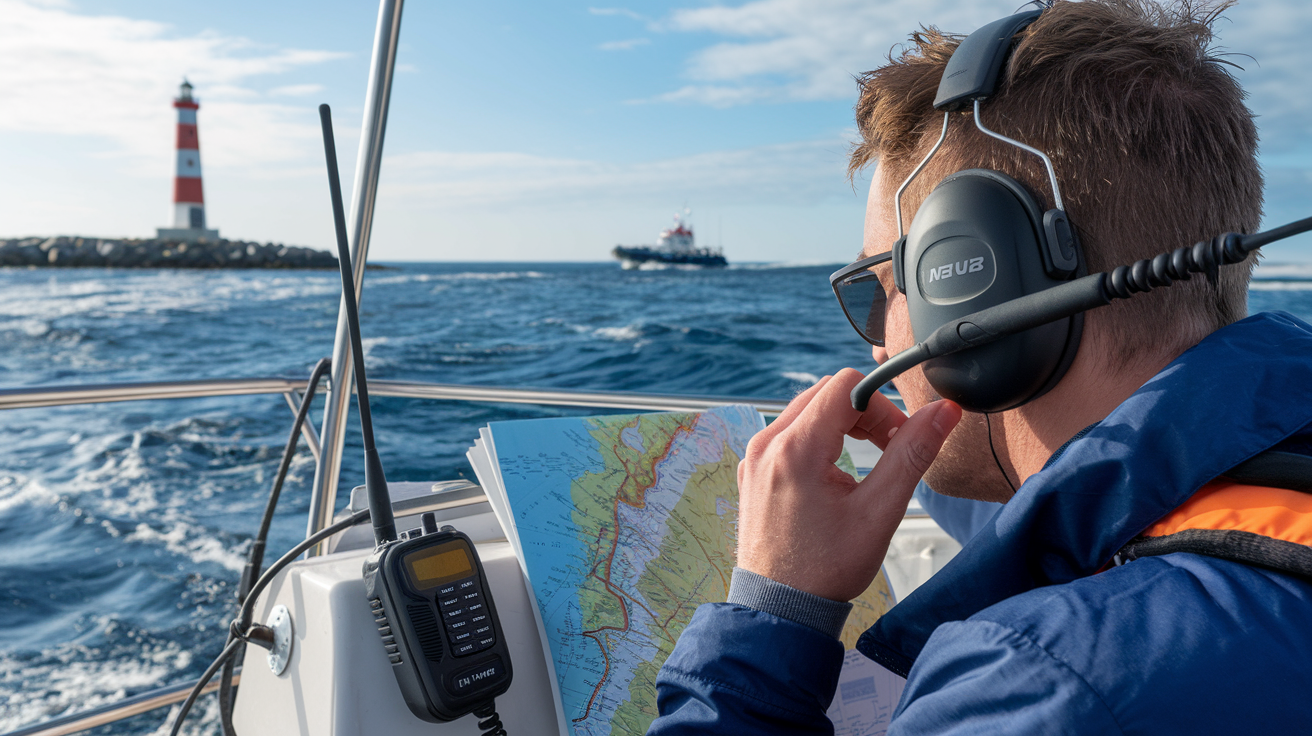
A marine vhf radio with headset provides hands-free communication that allows boaters to maintain control of the vessel while staying in contact with other ships or shore stations. This setup eliminates the struggle of holding a microphone in high-wind conditions or while docking. By using a specialized headset, you ensure that incoming audio is directed straight to your ear, bypassing the loud roar of engines or crashing waves. Modern marine systems now offer both wired and wireless Bluetooth options to suit different deck layouts and personal preferences.
Key Takeaways
- Hands-free operation increases safety by allowing you to keep both hands on the helm or rigging during critical maneuvers.
- Active noise cancellation in modern marine headsets filters out engine drone and wind noise for clearer transmissions.
- IPX7 or IPX8 waterproofing is essential for any headset used in open-cockpit environments to prevent salt-water corrosion.
- VOX (Voice-Operated Exchange) technology enables automatic transmission when you speak, though manual PTT (Push-to-Talk) remains the standard for reliability.
- Bluetooth integration in 2026 models allows seamless pairing between handheld units and wireless earpieces without snagging cables.
- Situational awareness is maintained by using single-ear (monaural) headsets, which leave one ear open to hear ambient boat sounds.
Enhancing Safety Through Hands-Free Communication
A marine vhf radio with headset improves vessel safety by allowing the operator to communicate without releasing the steering wheel or engine throttles. When you are navigating through a busy harbor or narrow channel, your focus must remain on your surroundings. Fumbling for a handheld microphone can lead to a momentary loss of control. A headset keeps the communication link open while your hands remain free to manage the boat’s physical controls.
Marine VHF Radios & Headsets
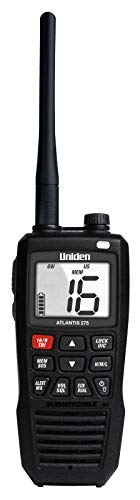
Uniden Atlantis 275 Handheld Two-Way VHF Marine Radio, Floating IPX8 Submersible Waterproof, Large Dual-Color Screen, 6-Watt, All USA/International/Canadian Marine Channels, NOAA Weather Alerts
Uniden Atlantis 275 Handheld Two-Way VHF Marine Radio, Floating IPX8 Submersible Waterproof,…
VIEW LATEST PRICE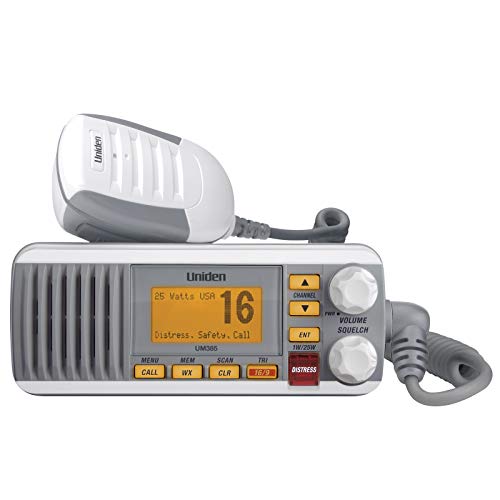
Uniden UM385 25 Watt Fixed Mount Marine Vhf Radio, Waterproof IPX4 with Triple Watch, Dsc, Emergency/Noaa Weather Alert, All Usa/International/Canadian Marine Channels, Memory Channel Scan, White
Uniden UM385 25 Watt Fixed Mount Marine Vhf Radio, Waterproof IPX4 with…
VIEW LATEST PRICE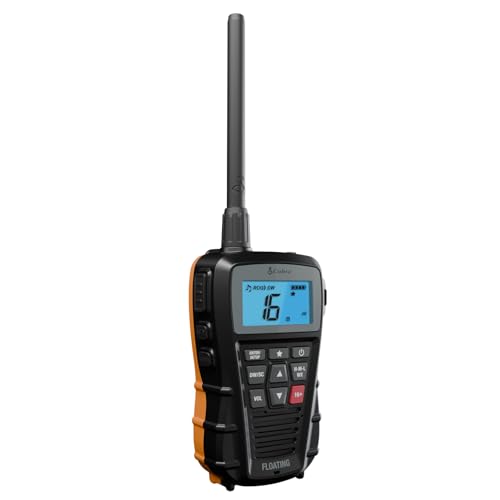
Cobra BlueBound 150 VHF Handheld Marine Radio – Black – 3-Watt, Floating, Long Range, NOAA Weather Alerts, International Functionality, IPX7 Waterproof, USB-C, Submersible, LCD Screen, Belt Clip
Cobra BlueBound 150 VHF Handheld Marine Radio – Black – 3-Watt, Floating,…
VIEW LATEST PRICEReliable communication is the backbone of maritime safety. During an emergency, you might need to relay your position while simultaneously tending to a bilge pump or a medical issue. A headset ensures that the transmission stays clear even if you move away from the radio unit itself. The direct audio feed to your ear also ensures you do not miss vital instructions from the Coast Guard or nearby vessels during heavy rain or high-speed transits.
| Feature | Safety Benefit | Practical Application |
|---|---|---|
| Hands-Free | Uninterrupted vessel control | Docking in heavy crosswinds |
| Direct Audio | Guaranteed message reception | Hearing a Mayday over engine noise |
| Integrated Mic | Clearer outgoing voice | Reporting hazards while winching sails |
| Secure Fit | Prevents dropped equipment | Communicating from the bow in rough seas |
Selecting the Right Headset Type for Your Radio
Marine headsets generally fall into two categories: wired connections for maximum reliability and wireless Bluetooth models for increased mobility. Wired headsets connect via a 3.5mm jack or a proprietary multi-pin connector found on most fixed-mount and handheld radios. These are favored by commercial mariners because they do not require separate batteries and cannot suffer from signal interference.
Wireless headsets use Bluetooth technology to pair with your radio, offering a range of about 30 feet from the base unit. In Q1 2026, Bluetooth 5.4 has become the standard for marine electronics, providing lower latency and better battery efficiency. While wireless models offer freedom of movement, they do require regular charging. Many recreational boaters prefer these for casual cruising where they might move from the helm to the galley while still monitoring the radio.
- Wired Headsets: Best for permanent helm stations or heavy-duty commercial use.
- Bluetooth Headsets: Ideal for solo sailors or those who move around the deck.
- Single-Ear (Monaural): Recommended for maintaining environmental awareness on the water.
- Dual-Ear (Binaural): Best for extremely high-noise environments like engine rooms.
Understanding Waterproofing and IPX Ratings
Marine headsets must have at least an IPX7 rating to withstand the constant exposure to spray, rain, and occasional submersion. The “IP” stands for Ingress Protection, and the second digit specifically refers to liquid resistance. An IPX7 rating means the device can survive being submerged in one meter of water for up to 30 minutes.
For offshore use or professional search and rescue, an IPX8 rating is the gold standard. This indicates the equipment is designed for continuous immersion under conditions specified by the manufacturer. Beyond just water, marine headsets must also feature corrosion-resistant materials. Look for gold-plated connectors and UV-stabilized plastics that will not become brittle after weeks of sun exposure. Saltwater is incredibly abrasive, so rinsing your headset with fresh water after each trip is a mandatory maintenance step.
Overcoming Ambient Noise in High-Speed Environments
Noise-canceling technology in marine headsets uses secondary microphones to sample background noise and phase it out of the transmission. Engine roar, wind shear, and the sound of splashing water can easily drown out a standard microphone. By choosing a headset with a “noise-canceling boom mic,” you ensure that the person on the other end hears your voice rather than the wind.
Many headsets designed for 2026 use digital signal processing (DSP) to further isolate the human voice frequency. This is particularly useful for those operating open-console powerboats or RIBs (Rigid Inflatable Boats). If you frequently travel at speeds over 20 knots, a headset with a wind-sock or muff over the microphone is necessary. This physical barrier prevents “wind puff” from triggering the VOX or distorting your audio.
Noise Mitigation Comparison
- Passive Isolation: Thick ear cushions that block out sound physically.
- Active Noise Cancellation (ANC): Electronics that create “anti-noise” to silence engine hum.
- Mic Directionality: Cardioid or hyper-cardioid patterns that only pick up sound from your mouth.
- Wind Shielding: Foam or synthetic covers that break up air currents hitting the microphone element.
Integrating Headsets with Handheld VHF Units
Most modern handheld VHF radios feature a dedicated accessory port located on the top or side of the chassis. These ports are often protected by a screw-down cap or a rubber flap to maintain the radio’s waterproof seal. When you use a handheld VHF radio guide to select a device, check if the connector is a standard 3.5mm jack or a multi-pin thread.
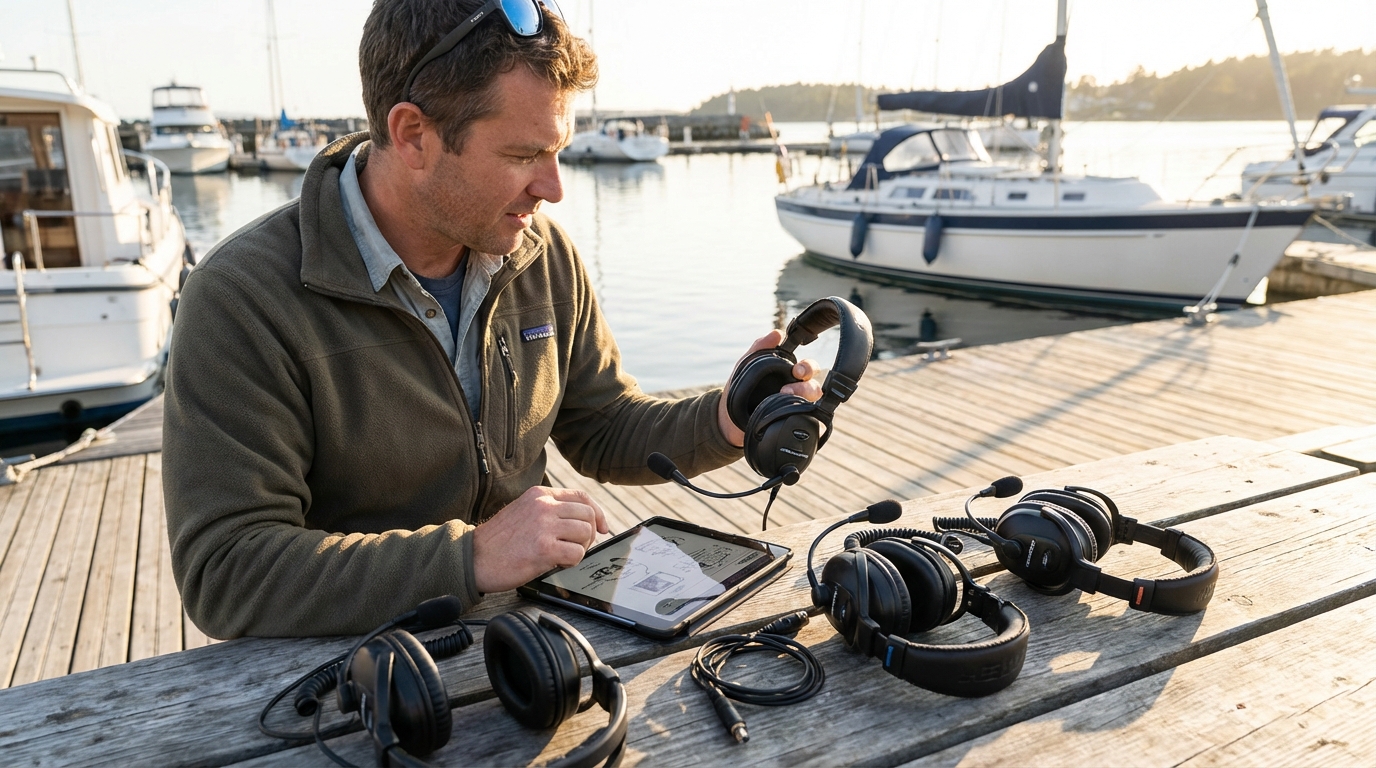
Threaded connectors are superior because they prevent the headset from accidentally unplugging if the cable catches on a life jacket or railing. To get the most out of your portable setup, look for units with high battery capacity. Using a headset—especially a Bluetooth one—draws additional power from the radio. If you plan on long days on the water, choosing the Best Handheld Vhf Marine Radio With Gps ensures you have both navigation and reliable communication in one power-efficient package.
Choosing Between VOX and PTT Operations
Voice-Operated Exchange (VOX) allows the radio to transmit automatically when it detects your voice, but Push-to-Talk (PTT) is generally more reliable in marine settings. VOX can be problematic on a boat because loud gusts of wind or a slamming hull can accidentally trigger the transmitter. This results in “clogging” the channel with dead air or background noise, which is a violation of maritime radio etiquette.
Most high-end headsets feature an inline PTT button or a button located on the earcup itself. This gives you total control over when you are broadcasting. For those who absolutely require VOX, look for a headset with adjustable sensitivity levels. This allows you to set a threshold so that only your direct speech—not the engine—activates the radio. Many professionals use a “remote PTT” which is a button strapped to their finger or the boat’s throttle for even faster access.
Optimizing Fixed-Mount Radios with Remote Headsets
Fixed-mount VHF radios can be upgraded with wireless handset extensions or headset adapters to provide coverage throughout the entire vessel. In 2026, many fixed units come with built-in Bluetooth modules that allow you to pair several headsets simultaneously. This is perfect for a captain and a first mate to stay in sync during complex docking procedures.
If your fixed radio is located in the cabin, a headset allows you to monitor Channel 16 while you are up on the flybridge or back on the swim platform. You won’t have to yell over the distance or run back to the console to answer a call. For a detailed look at which units support these features, you can refer to our Best Fixed Mount Vhf Marine Radio analysis.
- Range: Ensure the headset stays connected at the maximum distance from the helm.
- Intercom Function: Some systems allow the captain to talk to the crew via the headsets without broadcasting over the VHF.
- Multi-Point Pairing: The ability to connect the headset to both the VHF and a mobile phone.
- Battery Life: Fixed-mount accessories should offer at least 12 hours of talk time.
Evaluating Comfort for Long-Duration Boating
A headset that feels comfortable in the store may become painful after four hours of salt spray and sun. Look for “on-ear” or “over-ear” designs that use breathable materials rather than non-porous plastic. Marine environments are humid, and sweat buildup under a headset can lead to skin irritation.
Adjustability is another critical factor. A headset must fit snugly enough to stay on your head during a bouncy ride but loose enough to prevent “headset fatigue.” Many sailors prefer a “behind-the-neck” band style. This design allows you to wear a wide-brimmed sun hat or a safety helmet without the headset getting in the way. Lightweight models weighing under 150 grams are usually the best choice for all-day wear.
Regulatory Compliance and Proper Radio Etiquette
Using a headset does not change the legal requirements for properly using a VHF radio as dictated by the FCC and Coast Guard. You must still monitor Channel 16 for distress calls and follow standard calling procedures. The convenience of a headset might tempt you to engage in casual “chatter,” but remember that VHF frequencies are for operational and safety use only.
When using a headset, be mindful of your “hot mic” status. If your VOX is too sensitive, you might be broadcasting private cockpit conversations to every boat within 10 miles. Always perform a “radio check” on an appropriate channel (like Channel 9 in many areas) when you first plug in your headset. This confirms that your volume levels are correct and that the microphone is functioning without excessive distortion.
Technical Specifications to Look for in 2026
When shopping for a marine vhf radio with headset, ignore marketing jargon and focus on specific technical data points. Frequency response for the microphone should be optimized for the human voice, typically between 300 Hz and 3.5 kHz. This narrow range helps naturally filter out very low-frequency engine rumbles and high-frequency wind whistles.
| Specification | Target Value | Why it Matters |
|---|---|---|
| Speaker Sensitivity | 100 dB+ | Vital for hearing over loud wind |
| Microphone Type | Electret Condenser | Better clarity in humid air |
| Bluetooth Version | 5.2, 5.3, or 5.4 | Better range and battery life |
| Weight | < 200 grams | Prevents neck strain over time |
| Charging Port | USB-C (Waterproofed) | Universal compatibility in 2026 |
Battery chemistry also matters for wireless models. Lithium-Polymer (Li-Po) batteries are common in 2026 because they can be molded into thin shapes, allowing for sleeker headset designs. Check the “standby time” vs. “talk time.” A good marine headset should offer at least 48 hours of standby time, as you will likely spend most of your time listening rather than talking.
Troubleshooting Common Headset Issues on the Water
Connection drops and “scratchy” audio are the two most common problems when using a headset with a marine radio. If you have a wired headset, the culprit is usually salt buildup in the connector jack. A quick spray of electronic contact cleaner can often solve this. For wireless models, interference from other onboard electronics like radar or high-powered Wi-Fi routers can sometimes cause audio clipping.
If your headset pairs but you hear no audio, check the “Audio Routing” settings on your radio. Some units require you to manually toggle the speaker off when a headset is plugged in, while others do it automatically. If the person you are calling says you sound muffled, ensure the boom microphone is positioned exactly two fingers’ width from your mouth. Even the best noise-canceling mics will struggle if they are positioned too far away or directly in the path of your exhaled breath.
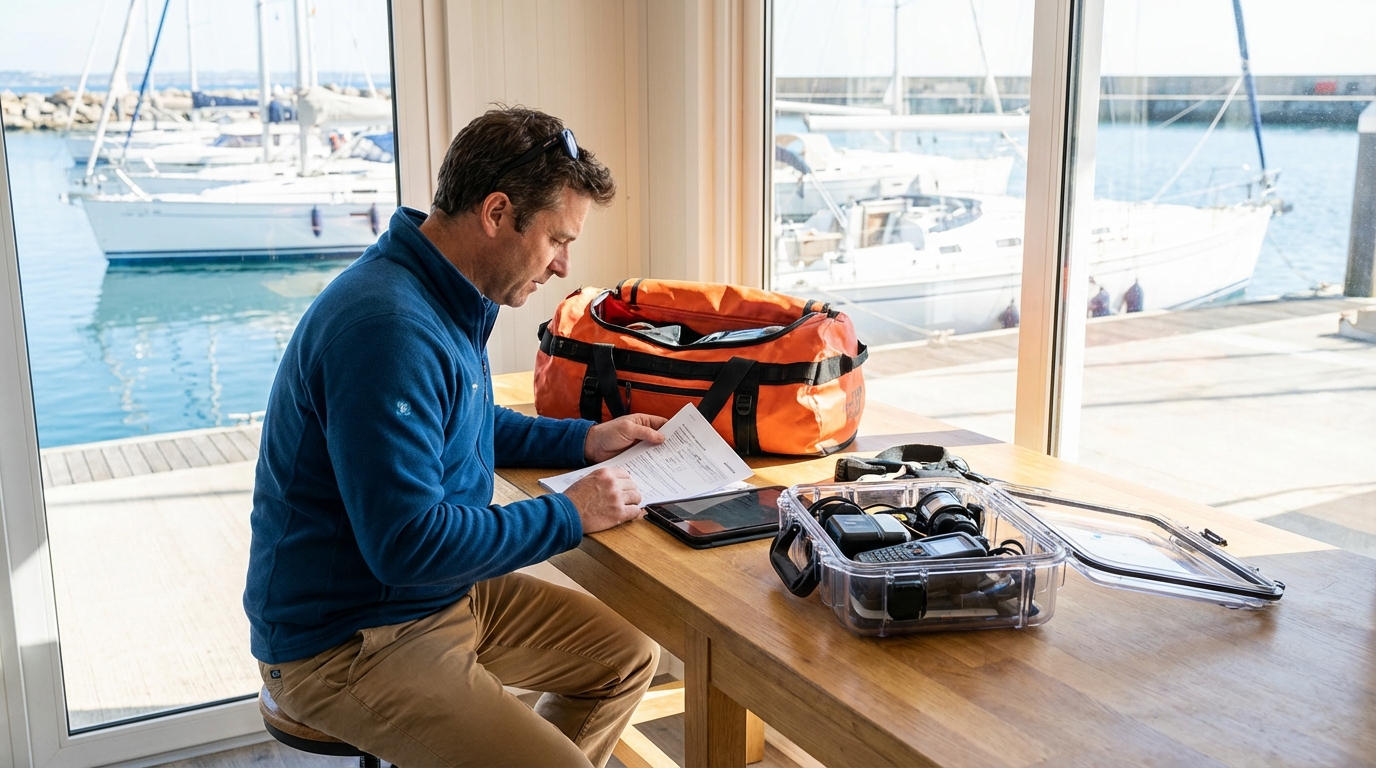
- Check Physical Connections: Ensure the plug is fully seated and threaded.
- Verify Battery Levels: Low power often causes distorted audio before the unit dies.
- Inspect Cables: Look for “green death” (copper corrosion) inside the wire casing.
- Reset Pairing: Clear the Bluetooth cache on both the radio and the headset if they won’t sync.
- Firmware Updates: In 2026, many headsets can be updated via a smartphone app to fix bugs.
Specialized Headsets for Different Boating Activities
Different types of boating require different headset configurations to be effective. For example, commercial tugboat captains often use heavy-duty, dual-ear headsets with high-attenuation ear cups to block out massive engine noise. In contrast, a solo kayaker needs a small, clip-on earpiece that is completely submersible and won’t fall off during a roll.
Sailboat racers often use headsets to communicate between the bowman and the helmsman. In this scenario, a “full-duplex” system is preferred, allowing both parties to talk at the same time without pressing buttons. For those interested in the latest portable gear for these activities, our Best Marine Vhf Radio Handheld reviews cover the top-rated units for 2026.
- Tournament Fishing: Requires sweat-resistant headsets that don’t interfere with polarized sunglasses.
- Search and Rescue: Needs high-visibility (orange/yellow) headsets with extreme IPX8 durability.
- Cruising Families: Simple, comfortable Bluetooth earpieces for coordinating anchor drops.
- Offshore Racing: Integrated helmet headsets that provide both protection and communication.
Maintaining Your Equipment for Longevity
The marine environment is hostile to electronics, and a headset is particularly vulnerable because it is frequently handled. You should establish a post-trip routine to ensure your gear lasts for several seasons. After every use in salt air, wipe down the headset and the radio’s accessory port with a damp cloth.
Store your headset in a padded, ventilated case rather than leaving it on the dashboard where it will be baked by UV rays. If the ear cushions are removable, take them off occasionally to clean the speaker mesh underneath. Salt crystals can accumulate in the mesh, eventually hardening and muffling the sound. For more advice on choosing durable gear, consult our Vhf Marine Radio Buying Guide.
FAQ
Can I use a standard mobile phone Bluetooth headset with my marine VHF?
While many 2026 marine radios use standard Bluetooth protocols, consumer headsets are rarely waterproof or salt-resistant. A standard headset will likely fail quickly due to corrosion. Furthermore, consumer headsets lack the noise-canceling profiles specifically tuned for wind and engine roar. It is always better to use a headset specifically rated for marine use.
Does using a headset reduce the range of my VHF radio?
No, using a headset does not affect the broadcast range of your radio. The range is determined by the radio’s wattage (usually 1W or 5W for handhelds, 25W for fixed) and the height of the antenna. The headset only changes how you hear and speak into the device. However, a poor headset connection can make your voice sound weak, which might be mistaken for a range issue.
Is it legal to wear a dual-ear headset while operating a boat?
Laws vary by region, but in many jurisdictions, it is discouraged or illegal to wear dual-ear headphones that completely block out external sound. Operators need to hear sirens, foghorns, and the sound of other engines. It is highly recommended to use a single-ear (monaural) headset to ensure you remain aware of your environment.
What should I do if my headset falls into the water?
If your headset is rated IPX7 or higher, immediately retrieve it and rinse it with fresh water to remove the salt. Dry the exterior with a towel and let it air dry completely before attempting to charge it or plug it back in. If it is a wireless model, do not turn it on until you are certain no moisture remains in the charging port.
Can I connect multiple headsets to one marine VHF radio?
In Q1 2026, many high-end fixed-mount radios support multi-point Bluetooth connections. This allows a captain and crew members to all hear the radio traffic simultaneously. Some systems even include an internal intercom feature, allowing the crew to talk to each other through the headsets without broadcasting over the VHF airwaves.
The Future of Integrated Marine Audio
The transition toward integrated headsets marks a significant shift in how we interact with marine electronics in 2026. We are moving away from the era of shouting over wind and toward a more controlled, “cockpit-style” communication environment. Whether you are a solo sailor needing a third hand or a professional navigator managing a busy deck, a marine vhf radio with headset is no longer a luxury—it is a core safety tool. By choosing equipment with the correct IPX ratings and noise-canceling technology, you ensure that your voice is heard when it matters most. As we continue to review the latest hardware at VHF Radio, the focus remains on reliability and clarity in the toughest conditions.
📅 Last updated: