
A boat is a major investment, and leaving it unattended can create security concerns. Boats stored at marinas, in boatyards, on trailers, or at private docks may be vulnerable to theft, unauthorized use, vandalism, and water damage.
The best boat security system combines several layers of protection rather than relying on one device. A GPS tracker can help locate a stolen boat, while alarms, cameras, physical locks, and battery monitoring can deter criminals and provide early warnings.
This guide explains how boat security systems work, which features matter most, and how to choose the right setup for your vessel.
Emergency communication devices are important, but keeping your phone and small electronics charged can also be useful during long trips on the water. For portable backup power options, check out our guide Best Waterproof Power Bank for Boating: What to Look For.
What Is a Boat Security System?
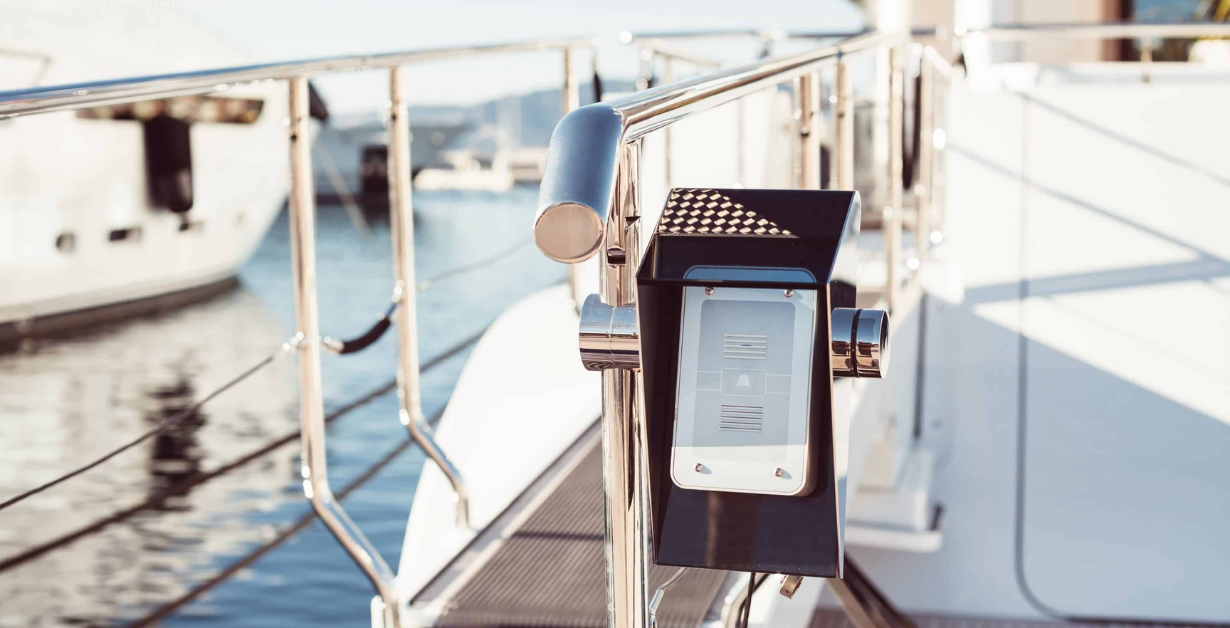
A boat security system combines equipment designed to protect a vessel and its onboard equipment. Depending on the system, it may monitor:
• Boat location
• Cabin doors and hatches
• Motion and vibration
• Battery voltage
• Shore-power status
• Bilge-water levels
• Engine activity
• Trailer movement
• Temperature and humidity
• Cameras and onboard access
A security system can alert you through a smartphone app, text message, email, audible alarm, or professional monitoring service.
The best system depends on your boat’s size, location, electrical setup, communication coverage, and the risks you are most concerned about.
What Makes the Best Boat Security System?
An effective marine security system should provide several layers of protection:
1. Deterrence: Make the boat a less attractive target.
2. Detection: Identify unauthorized entry, movement, or tampering.
3. Notification: Alert you quickly when something unusual happens.
4. Tracking: Show the vessel’s location if it moves unexpectedly.
5. Recovery assistance: Provide information for law enforcement and insurance claims.
A complete system may include:
• GPS tracking
• Geofencing
• Motion sensors
• Door and hatch sensors
• Audible alarms
• Security cameras
• Battery monitoring
• Bilge-water alerts
• Outboard and trailer locks
• Backup power
No single product can prevent every type of theft or damage. Layered protection is more effective because it addresses different stages of a potential incident.
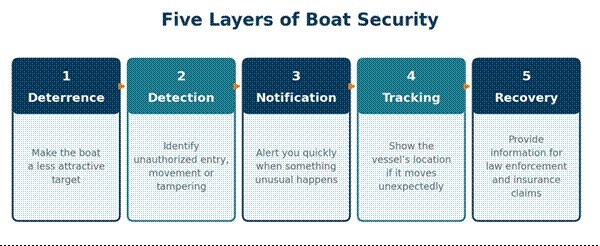
Figure 1: The five layers of an effective boat security system.
GPS Tracking for Boats
A GPS tracker is one of the most useful components of a modern boat security system. It determines the vessel’s location using GPS or another satellite-positioning system, then sends the information through a cellular or satellite network.
A marine GPS tracker may allow you to:
• View the boat’s current location
• Receive movement alerts
• Set a virtual boundary
• Review travel history
• Monitor battery voltage
• Detect unauthorized towing
• Receive low-power notifications
• Share access with trusted users
How geofencing works
A geofence is a virtual boundary placed around the boat’s normal location. If the tracker detects that the boat leaves the designated area, it can send an alert.
Geofences are useful for boats kept:
• In a marina slip
• On a trailer
• At a storage yard
• At a private dock
• At a vacation property
• In a boatyard during maintenance
Set the boundary wide enough to account for GPS variation, dock movement, and normal repositioning. A boundary that is too small may trigger unnecessary alerts.
Cellular vs. satellite tracking
Most recreational boat trackers use cellular networks. This can work well near marinas, lakes, rivers, and coastal areas with dependable coverage.
Cellular tracking may be limited when the boat travels offshore or into remote areas. If you regularly operate beyond cellular range, consider a satellite or dual-network tracker.
Satellite systems can provide broader coverage but may involve higher equipment costs, subscription fees, and power requirements.
Motion and Vibration Sensors
Motion and vibration sensors can detect activity that may indicate tampering, boarding, towing, or unauthorized use.
Depending on the system, sensors may respond to:
• Hull movement
• Trailer movement
• Engine vibration
• Impact
• Door movement
• Hatch opening
• Changes in the vessel’s position
Adjustable sensitivity is important. A system that is too sensitive may send alerts whenever the boat moves in wind, waves, or wakes. A system that is not sensitive enough may fail to detect an intrusion.
Different operating modes can be useful. For example, you may want one setting while the boat is stored on a trailer and another while it is secured in the water.
Door, Hatch, and Compartment Sensors
Contact sensors can monitor openings around the boat, including:
• Cabin doors
• Companionways
• Deck hatches
• Engine compartments
• Electronics lockers
• Battery compartments
• Storage lockers
These sensors typically consist of two pieces. When the door or hatch opens, the pieces separate and trigger an alert.
Compartment sensors are particularly useful if the boat carries expensive electronics, fishing equipment, tools, or personal gear.
Install sensors where they are protected from water and will not be knocked loose during normal use. Test each sensor after installation to ensure the system recognizes the opening correctly.
Boat Security Cameras
Security cameras can provide visual confirmation of activity and may help identify people, vehicles, or events near the boat.
Depending on the model, a marine camera system may include:
• Motion-triggered recording
• Night vision
• Live remote viewing
• Cloud storage
• Local memory-card storage
• Wide-angle coverage
• Two-way audio
• Weather-resistant construction
Interior cameras
Interior cameras can monitor:
• Cabin entrances
• Helm stations
• Engine compartments
• Companionways
• Equipment lockers
Exterior cameras
Exterior cameras may cover:
• Cockpits
• Swim platforms
• Decks
• Trailer areas
• Outboard motors
• Dock approaches
Cameras require a reliable power and communication connection. A cellular camera may work without marina Wi-Fi, but it generally requires a data plan.
Respect passengers’ and crew’s privacy. Avoid installing cameras in private areas, and inform regular users that cameras are operating.
Audible Alarms
A local alarm can discourage an intruder and attract attention from nearby boat owners, marina personnel, or security staff.
An alarm may activate when the system detects:
• Unauthorized entry
• Motion
• Vibration
• Hatch opening
• Battery disconnection
• Engine activity
• High bilge water
• Trailer movement
Audible alarms are most effective where people are nearby. At an isolated storage location, remote notifications and GPS tracking may be more useful than a siren alone.
A strong setup can combine both:
• A local alarm for deterrence
• A phone notification for remote awareness
Battery and Shore-Power Monitoring
A boat security system needs a reliable power source. Battery monitoring can alert you when voltage drops or an unusual electrical load is detected.
A low-voltage alert may indicate:
• A failing battery
• Shore-power failure
• A disconnected battery
• A bilge pump running repeatedly
• An unauthorized electrical load
• A charging-system problem
• A security system being tampered with
Hardwired systems should be installed so they do not drain the battery excessively during long periods of storage. A backup battery can help keep the tracker or alarm active if the main battery is disconnected.
Check the backup battery regularly. It must also be charged and replaced according to the manufacturer’s instructions.
Bilge and Water Leak Monitoring
Water intrusion is a major threat to an unattended boat. A security system with water-level monitoring can provide an early warning before flooding causes severe damage.
Useful alerts may include:
• High bilge water
• Bilge-pump activity
• Rapid water-level changes
• Cabin leaks
• Temperature changes
• Loss of shore power
These alerts can help identify problems involving:
• Leaking hoses
• Failed through-hull fittings
• Damaged hatch seals
• Heavy rain
• Failed bilge pumps
• Plumbing failures
• Hull damage
A bilge sensor does not replace regular inspections or a properly maintained bilge pump, but it can give you valuable time to respond.
Outboard Motor Security
Outboard motors are common theft targets. Physical protection should be combined with tracking whenever possible.
Useful outboard security equipment includes:
• Engine locks
• Locking transom bolts
• Security nuts
• Steering locks
• Tamper alarms
• Hidden GPS trackers
• Serial-number records
• Permanent identification markings
Choose a lock made for marine use and inspect it regularly for corrosion or looseness. Keep the outboard’s serial number, photographs, purchase records, and other identifying information in a secure location.
If installing a tracker near an outboard, protect it from water, heat, vibration, and interference.
Many boat owners rely on shore power and onboard electrical equipment, making safe power connections an important part of boating. Learn what to consider when choosing a durable cord in our guide Best Marine Extension Cord: How to Choose the Right One for Your Boat.
Trailer Security
A boat on a trailer can be moved quickly if the trailer is not secured. Trailer protection should include more than a coupler lock.
Consider using:
• Coupler locks
• Wheel locks
• Tongue locks
• Hitch-pin locks
• Lug-nut locks
• Safety-chain locks
• Trailer GPS trackers
• Parking barriers
When possible, store the trailer in a well-lit area covered by security cameras. Remove or secure spare tires, hitch accessories, and other equipment that could be stolen.
Parking the trailer with the tongue positioned against a wall or barrier can also make unauthorized towing more difficult.
Physical Locks and Access Control
Electronic systems work best when combined with strong physical security.
Secure:
• Cabin doors
• Hatches
• Engine compartments
• Electronics lockers
• Battery compartments
• Outboard motors
• Trailer couplers
• Steering systems
Use corrosion-resistant marine locks designed for outdoor exposure. Avoid leaving spare keys in obvious locations such as under cushions, inside dock boxes, or near the helm.
If multiple people need access, use a controlled key system or a marine-compatible electronic lock. Make sure the lock can still be operated manually if its battery fails.
Cellular, Wi-Fi, and Satellite Connections
A security device must be able to send alerts. The best communication method depends on where the boat is stored and operated.
Cellular security systems
Cellular systems are common for recreational boats because they can provide:
• Smartphone alerts
• GPS updates
• Remote monitoring
• Movement notifications
• Affordable service plans
Their main limitation is coverage. A cellular tracker may stop reporting offshore or in remote areas.
Wi-Fi security systems
Wi-Fi-based systems can work well when the boat has a dependable marina or onboard Wi-Fi connection. However, they may stop functioning if the network fails or the boat moves away from the access point.
Wi-Fi is often useful as one connection method but may not be ideal as the only communication method for a vessel requiring continuous monitoring.
Satellite systems
Satellite systems can support tracking and alerts in areas without cellular coverage. They are useful for offshore cruising and remote operations but often cost more and consume more power.
Before choosing a system, confirm coverage in the places where you store and operate the boat.
Subscription Fees and Ongoing Costs
Many boat security systems require a monthly or annual subscription for communication and cloud services.
Possible subscription features include:
• GPS tracking
• Movement alerts
• Historical location data
• Cellular or satellite connectivity
• Cloud video storage
• Professional monitoring
• Multiple users
• Battery and bilge alerts
• Customer support
Review the complete cost before purchasing. Check whether the plan includes:
• Activation fees
• Data limits
• Tracking frequency
• International coverage
• Multiple vessels
• Cloud storage
• Pausing service during winter storage
• Cancellation fees
A low-cost device may become expensive if essential features require a premium plan.
Best Boat Security System by Use Case
Best for a small trailerable boat
A practical system may include:
• A cellular GPS tracker
• Movement alerts
• An internal backup battery
• An outboard lock
• A trailer coupler lock
• A wheel lock
This setup provides basic protection without requiring a complex installation.
Best for a boat in a marina
Consider adding:
• GPS tracking with geofencing
• Cabin and hatch sensors
• Battery monitoring
• Shore-power alerts
• Bilge-water monitoring
• An audible alarm
• An outboard security lock
• A visible security camera
Best for a larger cruiser
A larger vessel may benefit from:
• Multiple GPS trackers
• Interior and exterior cameras
• Engine-compartment sensors
• Battery and shore-power monitoring
• Bilge-water alerts
• Backup power
• Cellular or satellite communication
• Professional monitoring
Best for offshore boating
Prioritize:
• Satellite or dual-network communication
• Low-power operation
• Backup batteries
• Reliable position reporting
• Bilge and engine monitoring
• Water-resistant sensors
• Emergency communication capability
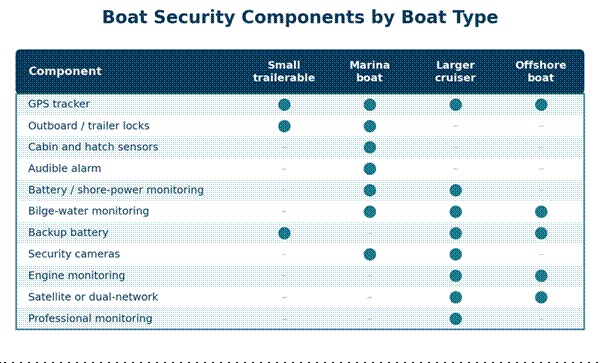
Figure 2: Recommended boat security components by boat type.
Common Boat Security Mistakes
Relying on a GPS tracker alone
A tracker can help locate the boat, but it does not prevent theft. Pair it with locks, alarms, sensors, and secure storage.
Installing the tracker in an obvious location
A visible tracker may be removed quickly. Install it securely in a protected location with adequate GPS and communication reception.
Connecting everything to one battery
If the main battery fails or is disconnected, the entire security system may go offline. Consider backup power for critical equipment.
Ignoring false alarms
Repeated false alarms can cause you to ignore a genuine alert. Adjust sensitivity and create appropriate settings for different storage conditions.
Forgetting the trailer
A boat can be stolen with its trailer even when the cabin and engine are locked.
Leaving valuables visible
Remove portable electronics, fishing equipment, tools, and personal items whenever possible.
Using non-marine equipment in wet areas
Cameras, sensors, routers, and power supplies should be suitable for their installation environment. Moisture can cause failure and corrosion.
Not updating contact information
Keep your phone number, emergency contacts, boat registration details, and insurance records current.
How to Maintain a Boat Security System
Test your security system regularly:
1. Confirm the tracker reports the correct location.
2. Test geofence and movement alerts.
3. Open each monitored hatch or door.
4. Check battery-voltage readings.
5. Test the bilge-water sensor according to the instructions.
6. Inspect wiring and connectors for corrosion.
7. Check backup batteries.
8. Confirm the subscription is active.
9. Update software and firmware as recommended.
10. Review authorized users and remove outdated access.
11. Inspect cameras and clean their lenses.
12. Check that locks and alarms remain secure.
Test the system again after electrical work, boat repairs, long-term storage, or a change in the marina location.
Staying connected on the water can involve more than emergency beacons alone. If you want better internet access while boating, see our guide, Best Boat Wi-Fi Extender: How to Improve Internet on the Water for practical tips on extending wireless coverage.
Frequently Asked Questions
What is the best boat security system?
The best system combines GPS tracking, geofencing, movement or entry sensors, battery monitoring, physical locks, and remote alerts. The ideal setup depends on the boat and where it is stored.
Is a GPS tracker enough to protect a boat?
No. A GPS tracker can assist with detection and recovery, but physical locks, alarms, secure storage, and visible deterrents can help prevent or delay theft.
Can boat security systems work without Wi-Fi?
Yes. Cellular and satellite systems can send alerts without Wi-Fi. Check coverage and subscription requirements in your operating area.
How can I protect my outboard motor?
Use a marine-grade outboard lock, record the motor’s serial number, secure the boat in a monitored location, and consider adding a hidden tracker or tamper sensor.
Should a boat security system have backup power?
Backup power is useful because a thief, electrical fault, or dead main battery may otherwise disable the system. Check how long the backup battery operates and how it is maintained.
Do boat cameras work without internet?
Some cameras can record locally to onboard storage without internet access. Remote viewing and smartphone notifications usually require cellular or Wi-Fi connectivity.
Final Thoughts
The best boat security system is a layered setup that deters theft, detects unauthorized activity, sends timely alerts, and supports recovery if the vessel or equipment is stolen.
For many boat owners, a strong starting point includes:
• A GPS tracker with geofencing
• Movement or hatch sensors
• Battery and bilge monitoring
• An outboard and trailer lock
• A local alarm
• Cellular or satellite connectivity
• Backup power
Larger or higher-value boats may also benefit from cameras, engine monitoring, shore-power alerts, and professional monitoring.
No security system can guarantee that a boat will never be stolen or damaged. However, combining physical protection with remote monitoring can reduce risk, improve response time, and provide useful information when you are away from the vessel.
📅 Last updated: