

A boat GPS tracker can help you monitor your vessel’s location, receive movement alerts, track battery voltage, and improve the chances of recovery after theft. It can also provide useful information when a boat is stored at a marina, kept on a trailer, or left unattended for extended periods.
However, choosing the best GPS tracker for a boat involves more than comparing location accuracy. You also need to consider cellular coverage, battery life, installation, waterproofing, subscription fees, geofencing, and the type of boat you own.
This guide explains how boat GPS trackers work, which features matter most, and how to choose the right marine tracking system for your needs.
Emergency communication devices are important, but keeping your phone and small electronics charged can also be useful during long trips on the water. For portable backup power options, check out our guide Best Waterproof Power Bank for Boating: What to Look For.
What Is a GPS Tracker for a Boat?
A boat GPS tracker is a small electronic device that uses satellite positioning to determine the vessel’s location. The tracker then sends that information to you through a cellular, satellite, or other communication network.
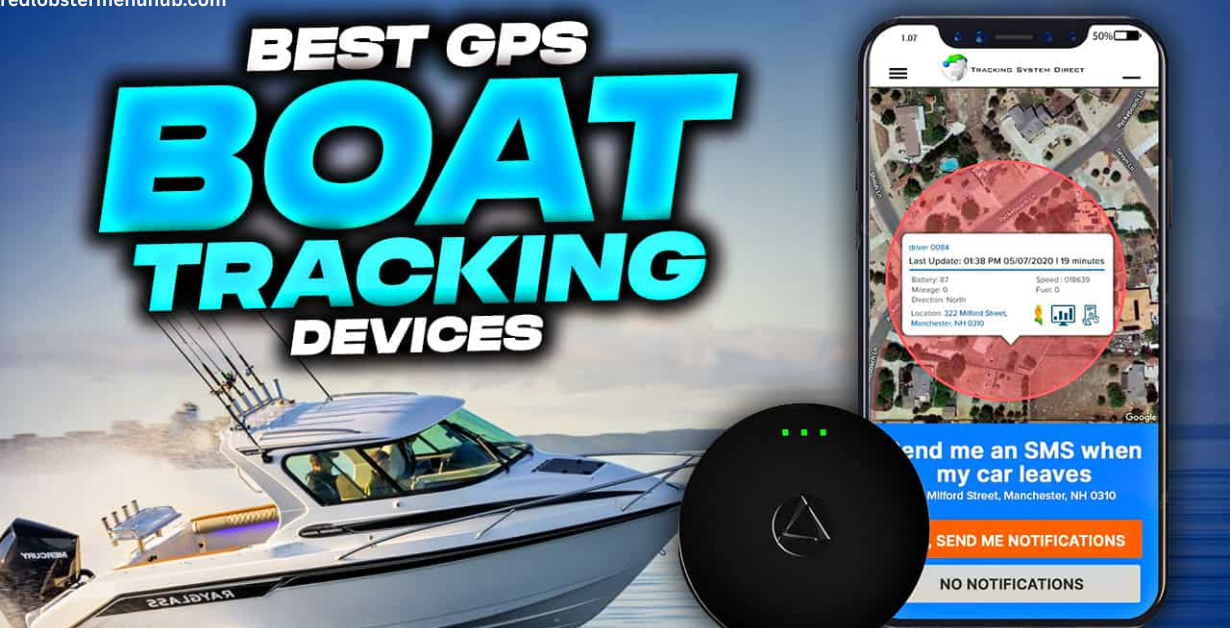
Depending on the model, a marine GPS tracker may allow you to:
• View your boat’s current location
• Receive movement or tampering alerts
• Set a virtual perimeter
• Review location history
• Monitor battery voltage
• Track engine activity
• Detect shore-power loss
• Monitor bilge or water levels
• Share access with family or crew
• Support recovery after theft
A GPS tracker does not physically prevent a boat from being stolen. Its main purpose is to provide information that can help you respond quickly and assist law enforcement or recovery professionals.
How Does a Boat GPS Tracker Work?
A tracking system usually relies on two separate technologies:
1. GPS or GNSS satellites determine the tracker’s position.
2. Cellular or satellite networks transmit the location and alerts to an app or online account.
The tracker may send data at scheduled intervals or when a specific event occurs. For example, it might send an update when:
• The boat leaves its normal location
• The battery voltage drops
• The device detects movement
• The engine starts
• The boat crosses a geofence boundary
• The tracker is disconnected
• A sensor detects water
The exact features vary by device and subscription plan.
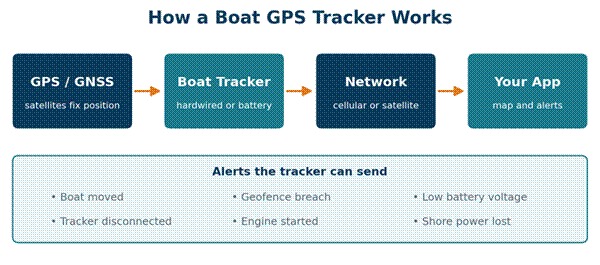
Figure 1: How a boat GPS tracker sends location data and alerts to your app.
What Makes the Best GPS Tracker for a Boat?
The best boat GPS tracker should provide a strong combination of:
• Reliable location accuracy
• Coverage where the boat is stored and used
• Movement alerts
• Geofencing
• Long battery life
• Marine-suitable construction
• Low power consumption
• Tamper detection
• Easy installation
• Useful app features
• Clear subscription pricing
No tracker is ideal for every vessel. A small trailerable boat used near a marina may need a different system from an offshore cruiser or commercial fishing boat.
Cellular vs. Satellite GPS Trackers
The communication network is one of the most important factors when selecting a tracker.
Cellular GPS trackers
Cellular trackers use mobile networks to transmit location data and alerts.
Advantages
• Often lower purchase cost
• Usually affordable subscription plans
• Frequent location updates
• Convenient smartphone apps
• Good performance near shore
• Commonly available for recreational boats
Limitations
• Require cellular coverage
• May stop reporting offshore
• Can be affected by weak signal or network congestion
• May need an external antenna in some installations
A cellular tracker is often the best choice for boats stored and operated near coastal areas, lakes, rivers, and populated marinas with dependable network coverage.
Satellite GPS trackers
Satellite trackers use satellite communications rather than local cellular towers.
Advantages
• Coverage in remote areas
• Useful for offshore cruising
• Suitable for isolated anchorages and expeditions
• Less dependent on local mobile networks
Limitations
• Higher equipment or subscription costs
• May use more power
• Can require a clearer view of the sky
• May provide less frequent updates depending on the plan
If your boat regularly travels beyond cellular coverage, a satellite-enabled tracker may be worth the added cost.
Dual-network trackers
Some systems can use more than one communication method, such as cellular and satellite networks. A dual-network tracker can offer better flexibility, but it may have higher equipment and service costs.
Before buying, check whether the device automatically switches networks or whether you must change the setting manually.
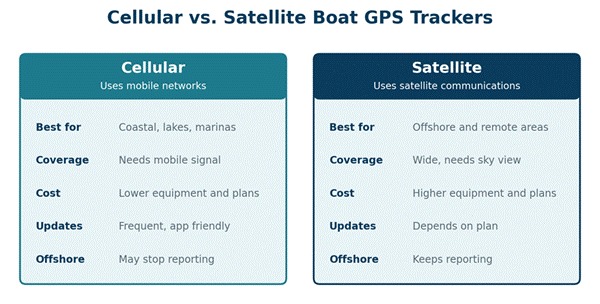
Figure 2: Cellular and satellite boat GPS trackers compared.
How Accurate Is a Boat GPS Tracker?
GPS and GNSS trackers can often provide a location accurate enough for practical vessel monitoring. However, accuracy depends on:
• Satellite visibility
• Antenna position
• Obstructions
• Device quality
• Weather and atmospheric conditions
• Whether the boat is inside a covered storage area
• The communication network used to send the update
A tracker may have difficulty obtaining a strong position inside a metal building, below deck, beneath heavy covers, or in a location surrounded by tall structures.
A good installation location usually has a reasonably clear view of the sky while remaining protected from water, heat, and impact.
Geofencing: One of the Most Useful Features
A geofence is a virtual boundary created around a location. When the boat leaves or enters that area, the tracking system sends an alert.
Geofencing can be useful when your boat is:
• Stored at a marina
• Parked at home
• Kept in a boatyard
• Left at a vacation property
• Moored in a permanent slip
• Transported on a trailer
You may create different geofences for:
• The marina
• Your home
• A storage facility
• A normal cruising area
• A launch ramp
• A maintenance yard
A useful system should allow you to adjust geofence size and notification settings. If the boundary is too small, normal movement caused by GPS variation or dock swing may trigger false alerts.
Movement and Tamper Alerts
A boat tracker should be able to distinguish between ordinary movement and possible unauthorized activity.
Useful alerts may include:
• Boat moved
• Boat towed
• Tracker disconnected
• Main battery disconnected
• Low battery voltage
• Engine started
• Excessive vibration
• Geofence breach
• Shore power lost
• Water detected
Movement alerts can help identify theft, trailer movement, unauthorized use, or severe weather. However, boats may move naturally because of waves, wakes, wind, and tidal changes.
Choose a tracker that lets you adjust sensitivity or create different operating modes. For example, you may want a more sensitive setting while the boat is on a trailer and a less sensitive setting while it is moored.
Battery Monitoring
Battery monitoring is a valuable feature for unattended boats. The tracker can notify you when the voltage falls below a selected level.
A low-voltage alert may indicate:
• A failing battery
• A disconnected battery
• A bilge pump running repeatedly
• An unauthorized electrical load
• Shore-power failure
• A charging-system problem
• A security system being disabled
Battery monitoring can also help prevent the boat from becoming unusable because the starting battery has been drained.
Check how the tracker connects to the electrical system. Some devices use a hardwired connection, while others run from an internal battery or a combination of both.
Hardwired vs. Battery-Powered Trackers
Hardwired GPS trackers
A hardwired tracker connects to the boat’s electrical system.
Advantages
• Long-term operation
• No need to recharge frequently
• Can monitor battery voltage
• Suitable for permanent installation
• May support additional sensors
Limitations
• Requires installation
• Can stop operating if the main battery is disconnected
• May create a small continuous electrical load
• Needs an appropriate backup-power plan
A hardwired tracker is often the best choice for a boat that remains stored for long periods and has a reliable electrical system.
Battery-powered GPS trackers
A battery-powered tracker operates independently of the boat’s main battery.
Advantages
• Easy to install
• Portable
• Can continue operating if the main battery is disconnected
• Useful for trailers, tenders, and portable equipment
Limitations
• Requires periodic charging or battery replacement
• Location-update frequency affects battery life
• May provide fewer features than hardwired systems
• Can be discovered and removed if installed poorly
A battery-powered tracker may be suitable for smaller boats or as a backup to a hardwired system.
Trackers with backup batteries
A tracker with internal backup power can continue sending alerts if the primary electrical connection is cut. This feature can be valuable because disconnecting the battery is a common way to disable an improperly installed tracking system.
Check how long the backup battery can operate and whether the system alerts you when it switches to backup power.
Many boat owners rely on shore power and onboard electrical equipment, making safe power connections an important part of boating. Learn what to consider when choosing a durable cord in our guide Best Marine Extension Cord: How to Choose the Right One for Your Boat.
Where Should You Install a Boat GPS Tracker?
A tracker should be hidden enough to discourage tampering but accessible enough for maintenance and signal reception.
A suitable location should be:
• Protected from direct water exposure
• Away from excessive engine heat
• Secure against vibration
• Clear of heavy metal shielding
• Near a practical power connection
• Accessible for service
• Difficult to identify quickly
Avoid placing the device:
• In the bilge
• Near fuel vapors
• Directly against an engine
• Inside a sealed metal enclosure
• Where water can collect
• Near high-temperature exhaust components
• In a location that blocks the GPS antenna
Follow the manufacturer’s installation instructions. Poor placement can reduce GPS accuracy, shorten battery life, or cause unreliable communication.
Waterproofing and Marine Durability
A boat tracker may be exposed to humidity, salt spray, condensation, vibration, and temperature changes. Check the product’s water-resistance rating and installation requirements.
Look for:
• A verified IP rating
• Sealed housing
• Corrosion-resistant connectors
• Protected wiring
• Vibration resistance
• UV-resistant materials
• Marine-compatible mounting hardware
An IP rating does not mean the tracker can be submerged indefinitely. Even a water-resistant device should be installed where it will not be exposed unnecessarily to water.
Protect cable connections with appropriate marine-grade sealing methods, and inspect them periodically for corrosion.
Subscription Costs
Most GPS trackers require an ongoing service plan because the device must transmit location data through a cellular or satellite network.
Subscription features may include:
• Location updates
• Geofence alerts
• Historical tracking
• Battery notifications
• Sensor alerts
• App access
• Customer support
• Satellite coverage
• Data storage
Before purchasing, review:
• Monthly or annual cost
• Activation fees
• Contract requirements
• International coverage
• Data limits
• Update frequency
• Cancellation terms
• Whether the subscription can be paused during storage
A tracker with a low purchase price may cost more over time if the service plan is expensive or essential features require a premium tier.
How Often Should a Boat GPS Tracker Update Its Location?
Update frequency depends on the tracker and service plan. Some systems send updates only when the boat moves, while others report at fixed intervals.
Frequent updates can help you follow a moving boat more closely, but they also use more power and may increase subscription costs.
Consider the intended use:
• Storage monitoring: Occasional updates may be sufficient.
• Theft response: Frequent movement alerts are valuable.
• Offshore cruising: Battery life and communication coverage may matter more than constant updates.
• Fleet management: Regular scheduled reporting may be important.
• Tender tracking: Frequent updates may help when the small craft is away from the main vessel.
The fastest update rate is not always the best choice. Balance tracking detail with power consumption and cost.
Can a GPS Tracker Prevent Boat Theft?
A GPS tracker does not physically prevent theft, but it can improve detection and recovery.
A tracker may help by:
• Sending an early movement alert
• Showing the boat’s current location
• Recording its travel history
• Identifying unauthorized towing
• Monitoring battery disconnection
• Providing information to law enforcement
For better protection, combine the tracker with:
• Trailer locks
• Outboard locks
• Engine security devices
• Motion sensors
• Hatch and door alarms
• Security cameras
• Secure marina storage
• Visible lighting
• Removal of portable valuables
A tracking device should be part of a layered boat-security plan rather than the only security measure.
GPS Tracker vs. AIS Tracker
A GPS tracker and an AIS device serve different purposes.
GPS tracker
A GPS tracker is designed for private monitoring. It sends the boat’s location to the owner or authorized users through an app or online account.
AIS
An Automatic Identification System, or AIS, broadcasts vessel information to nearby ships and shore-based receivers. Depending on the equipment, it may transmit:
• Vessel identity
• Position
• Course
• Speed
• Heading
• Navigation status
AIS is primarily a navigation and collision-awareness system, not a theft-recovery tracker. A GPS tracker is generally more appropriate for monitoring an unattended boat.
Some marine systems integrate GPS, AIS, cellular, and satellite functions, but you should understand what each feature actually does.
GPS Tracker vs. Marine Security System
A GPS tracker provides location information. A complete marine security system may also include:
• Intrusion sensors
• Motion detectors
• Cameras
• Bilge alarms
• Battery monitoring
• Shore-power monitoring
• Audible alarms
• Remote engine monitoring
If you only need theft tracking, a basic GPS tracker may be sufficient. If the boat is valuable or frequently unattended, a broader security system may provide more complete protection.
Staying connected on the water can involve more than emergency beacons alone. If you want better internet access while boating, see our guide Best Boat Wi-Fi Extender: How to Improve Internet on the Water for practical tips on extending wireless coverage.
How to Choose the Best GPS Tracker for Your Boat
For a small trailerable boat
Consider a compact cellular tracker with:
• Geofencing
• Movement alerts
• Internal battery backup
• Low power consumption
• Simple installation
Add a trailer lock and outboard security device for better protection.
For a boat stored at a marina
Look for:
• Reliable cellular coverage
• Hardwired power
• Battery-voltage monitoring
• Shore-power alerts
• Movement notifications
• Water resistance
• A secure installation
For offshore cruising
Prioritize:
• Satellite or dual-network capability
• Reliable location reporting
• Low-power operation
• Backup battery
• Weather-resistant construction
• Simple emergency communication
• Coverage in your operating area
For a commercial or high-value vessel
A professional monitoring system may be appropriate. Consider:
• Multiple tracking devices
• Engine and battery monitoring
• Bilge sensors
• Geofencing
• Fleet management
• Tamper alerts
• Satellite backup
• Professional response services
Common Boat GPS Tracker Mistakes
Choosing a tracker without checking coverage
A cellular tracker will not provide reliable offshore updates if there is no cellular service.
Installing it where GPS signals are blocked
Metal compartments, engine areas, and enclosed structures can reduce positioning accuracy.
Connecting it to the main battery without backup power
A thief or electrical fault may disable the system by disconnecting the battery.
Ignoring power consumption
A hardwired tracker continuously draws some power. Over long storage periods, this may contribute to battery discharge.
Setting the geofence too tightly
GPS variation, dock movement, and signal errors may create false alerts.
Hiding the tracker without considering maintenance
A device that is impossible to reach may be difficult to test, update, replace, or troubleshoot.
Forgetting subscription renewal
A tracker may stop sending updates if the service plan expires.
Treating the tracker as a complete security system
Tracking can aid recovery, but physical security and intrusion detection may help prevent or identify theft earlier.
How to Maintain a Boat GPS Tracker
Regular maintenance helps ensure the tracker is ready when needed.
1. Check the device’s connection and location through the app.
2. Confirm that geofence alerts are working.
3. Inspect wiring and connectors for corrosion.
4. Test the backup battery if the device has one.
5. Check the main boat battery.
6. Verify that the subscription is active.
7. Update the app and firmware when recommended.
8. Inspect the housing for cracks or water damage.
9. Confirm that the tracker remains securely mounted.
10. Review authorized users and remove outdated accounts.
Test the system after the boat has been stored for an extended period or after electrical work has been completed.
Frequently Asked Questions
What is the best GPS tracker for a boat?
The best tracker is one that provides reliable coverage where your boat is stored and operated, includes geofencing and movement alerts, has suitable power options, and can withstand the marine environment.
Can a boat GPS tracker work without cellular service?
A cellular tracker generally cannot transmit updates without cellular coverage. A satellite tracker or dual-network device may continue working in remote areas, depending on its service plan and view of the sky.
How much does a boat GPS tracker cost?
Costs vary by device, features, installation, and subscription plan. Compare both the initial equipment price and the ongoing communication fees.
Does a GPS tracker need its own battery?
Not always. Some trackers are hardwired to the boat’s electrical system, while others use internal batteries. A backup battery is useful if the main power supply is disconnected.
Can I install a boat GPS tracker myself?
Some battery-powered or plug-in trackers are simple to install. Hardwired systems and sensor networks may require proper marine electrical installation. Follow the manufacturer’s instructions and consult a qualified technician if necessary.
Where should I hide a boat GPS tracker?
Install it in a dry, protected location where it can receive GPS signals and communicate with the network. Avoid fuel compartments, bilges, high-heat areas, and sealed metal enclosures.
Final Thoughts
The best GPS tracker for a boat depends on how and where you use your vessel. For most boats operating near shore, a cellular tracker with geofencing, movement alerts, battery monitoring, and backup power can provide useful protection. Boats traveling offshore or into remote areas may need satellite connectivity or a dual-network system.
Before choosing a tracker, consider:
• Cellular and satellite coverage
• Location-update frequency
• Battery life
• Hardwired and backup-power options
• Geofencing
• Tamper alerts
• Marine durability
• Installation location
• Subscription costs
• Compatibility with your security system
A GPS tracker cannot guarantee that a boat will not be stolen, but it can provide early warnings, valuable location information, and support during recovery. Combine tracking with strong locks, secure storage, alarms, and regular inspections for a more complete boat-security strategy.
📅 Last updated: