
Keeping a boat cabin comfortable during hot weather can be challenging. A small interior can heat up quickly, and sunlight through windows, limited ventilation, humidity, and warm engine compartments can make conditions even worse.
A portable air conditioner for a boat can provide welcome relief without requiring a permanent marine air-conditioning installation. However, not every portable AC unit is suitable for use aboard a vessel. You need to consider power availability, ventilation, condensate drainage, cabin size, noise, and the marine environment.
This guide explains how portable boat air conditioners work, which features matter most, and how to choose the best unit for your vessel.
Emergency communication devices are important, but keeping your phone and small electronics charged can also be useful during long trips on the water. For portable backup power options, check out our guide Best Waterproof Power Bank for Boating: What to Look For.
What Is a Portable Boat Air Conditioner?
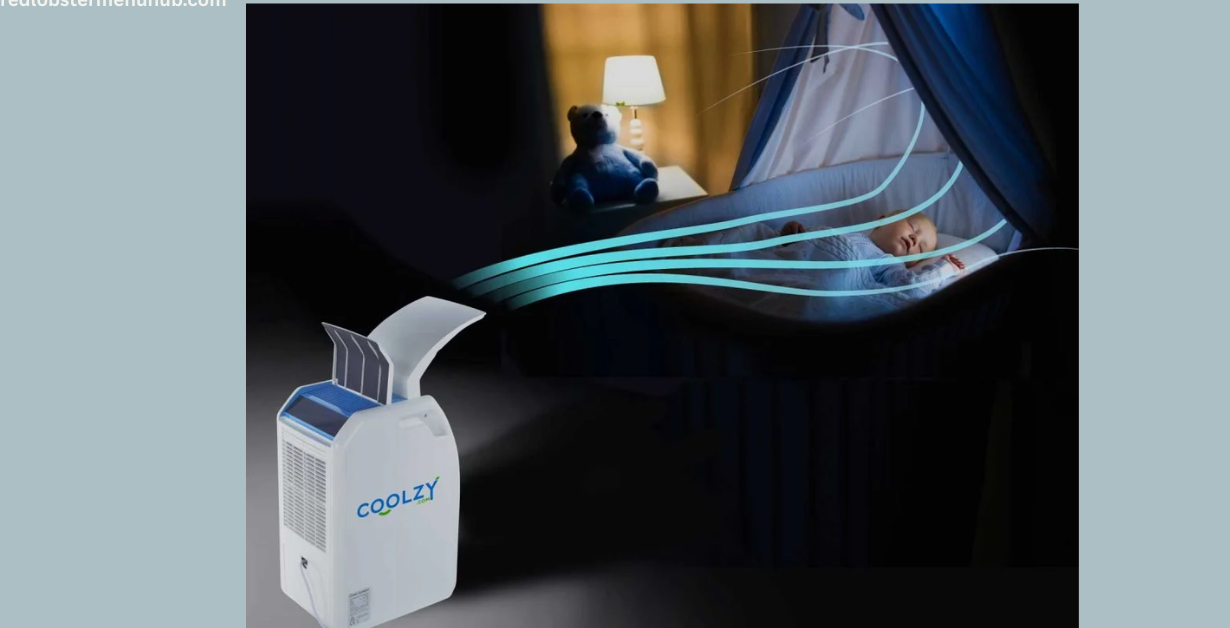
A portable boat air conditioner is a movable cooling unit designed to lower the temperature inside a cabin, berth, saloon, or enclosed cockpit.
Most portable units include:
• A compressor
• An evaporator coil
• A condenser coil
• A fan
• A thermostat
• A condensate collection system
• An exhaust outlet
• A power cable
The unit draws warm, humid air from the cabin, removes heat, and sends cooled air back into the space. The heat must then be discharged outside through an exhaust hose or another approved ventilation arrangement.
This last point is crucial: a portable air conditioner cannot cool a boat effectively if its hot exhaust air is released back into the same cabin.
What Makes the Best Portable Air Conditioner for a Boat?
The best portable AC for a boat should have:
• Sufficient cooling capacity for the cabin
• A practical power requirement
• A reliable exhaust solution
• Dehumidification capability
• A manageable condensate system
• A compact and stable design
• Reasonable noise levels
• Protection from moisture
• Simple controls
• Automatic restart after power interruption, if needed
The right unit depends on whether you will use it at a marina with shore power, aboard a boat with a generator, or from an inverter and battery bank.
How Many BTUs Does a Boat Air Conditioner Need?
Portable air conditioners are commonly rated in BTUs, or British thermal units. The BTU rating describes the unit’s cooling capacity.
A rough starting point may be:
• 5,000–8,000 BTU: Small cabin or berth
• 8,000–12,000 BTU: Medium cabin or compact saloon
• 12,000 BTU or more: Larger cabin or open-plan interior
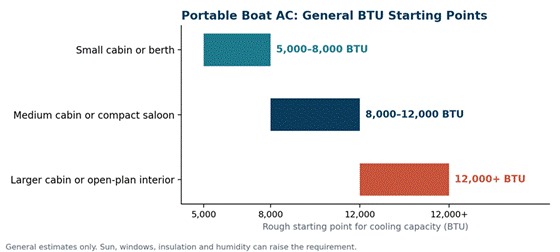
Figure 1: General BTU starting points for a portable boat air conditioner.
These ranges are only general estimates. Boat cabins can require more cooling than similarly sized rooms because they may have:
• Large windows
• Direct sunlight
• Limited insulation
• Warm fiberglass or metal surfaces
• High humidity
• Frequent door and hatch opening
• Heat from electronics and appliances
• Poor airflow between compartments
A unit that is too small may run continuously without reaching the desired temperature. A unit that is too large may cool the air quickly without adequately removing humidity, and it may cycle on and off more frequently.
Portable AC Capacity: Cooling Area Is Not the Only Factor
Cabin volume matters, but surface exposure and ventilation matter just as much.
When estimating the required cooling capacity, consider:
• Cabin length, width, and height
• Number and size of windows
• Amount of direct sun
• Whether the cabin is insulated
• Number of people aboard
• Heat from electronics
• Outside temperature and humidity
• Whether doors and hatches remain open
• Whether the space is enclosed or connected to other cabins
A portable air conditioner usually works best when cooling one enclosed area rather than an entire boat with multiple open compartments.
What Type of Portable Air Conditioner Is Best?
Single-hose portable air conditioners
A single-hose unit draws cabin air into the machine, uses some of that air to cool the condenser, and exhausts warm air outside through one hose.
Advantages
• Usually less expensive
• Simple to install
• Compact and widely available
• Suitable for smaller enclosed cabins
Limitations
• Can create negative pressure inside the cabin
• May draw warm air through cracks, hatches, or vents
• May be less efficient than a dual-hose design
• Requires a reliable exhaust opening
A single-hose unit may be adequate for occasional cooling in a small cabin, but sealing around the exhaust connection is important.
Dual-hose portable air conditioners
A dual-hose unit uses one hose to bring in air for condenser cooling and another to discharge hot air outside.
Advantages
• More efficient in many installations
• Reduces the amount of cooled cabin air exhausted outside
• Better suited to larger or hotter spaces
• May maintain cabin temperature more effectively
Limitations
• Requires two external connections
• Takes more installation space
• May be more expensive
• Can be more difficult to position aboard a small boat
If you plan to use portable AC frequently and have enough space for two hoses, a dual-hose design may offer better overall performance.
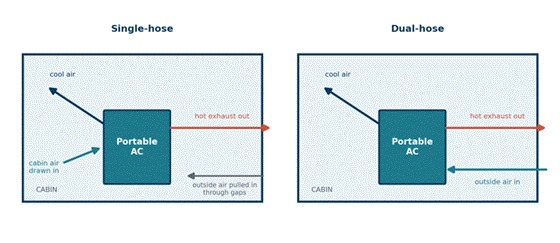
Figure 2: Airflow in single-hose and dual-hose portable air conditioners.
Evaporative coolers
Evaporative coolers use water evaporation to reduce air temperature. They are not conventional air conditioners and perform best in dry climates.
Advantages
• Low power consumption
• Lightweight
• Simple operation
• No compressor in many designs
Limitations
• Add humidity to the air
• Perform poorly in humid marine environments
• Do not work like refrigerated air conditioning
• May provide limited cooling in a closed cabin
Because boats are often humid, evaporative coolers are usually less suitable than compressor-based portable air conditioners.
Portable spot coolers
Spot coolers direct cooled air toward a specific person or small area rather than cooling the entire cabin.
They may be useful for:
• Helm stations
• Small sleeping compartments
• Work areas
• Engine-room access during maintenance
• Temporary cooling
A spot cooler may be a practical low-power alternative when whole-cabin cooling is not necessary.
Power Requirements for a Portable Boat AC
Power is one of the most important considerations. A portable air conditioner may require substantially more electricity than a fan, dehumidifier, or small appliance.
Before choosing a unit, check:
• Operating voltage
• Running amperage
• Startup current
• Wattage
• Plug type
• Generator requirements
• Inverter compatibility
• Shore-power circuit capacity
Shore power
Shore power is usually the most practical source for a portable air conditioner. Confirm that the dockside circuit and boat’s electrical system can safely support the unit.
Do not overload the boat’s shore-power connection by running the air conditioner alongside high-demand equipment such as:
• Water heaters
• Electric cooking appliances
• Battery chargers
• Space heaters
• Refrigeration systems
• High-output tools
Generator power
A generator may operate a portable air conditioner, but the generator must support both the unit’s running load and its startup demand.
Check the generator’s continuous and surge ratings. Do not assume that a generator capable of supplying the air conditioner’s running wattage will automatically handle compressor startup.
Use generators only in accordance with marine safety requirements. Never operate a fuel-burning generator in an enclosed cabin, cockpit, engine compartment, or other area where exhaust gases can accumulate.
Inverter and battery power
Running a portable air conditioner from batteries through an inverter can drain the battery bank quickly.
The total energy demand includes:
• Air-conditioner consumption
• Inverter losses
• Battery charging limitations
• Other devices running at the same time
• Compressor cycling
• Ambient temperature
As a basic example, a 1,000-watt appliance can consume approximately 1 kilowatt-hour for each hour of continuous operation, before accounting for inverter losses. Actual consumption varies, but the example illustrates why battery-powered cooling requires substantial energy storage.
A portable AC may be suitable for short periods from an inverter, but it is rarely an efficient solution for all-night operation from a modest battery bank.
Can You Run a Portable AC on a Boat’s Shore Power?
Yes, if the unit’s electrical requirements are compatible with the boat’s shore-power system and the installation is safe.
Before connecting the unit:
1. Check the air conditioner’s voltage and amperage.
2. Check the shore-power circuit rating.
3. Confirm that the boat’s wiring and outlets are suitable.
4. Use appropriate ground-fault protection.
5. Keep plugs and connections away from water.
6. Avoid overloading the circuit.
7. Follow the air conditioner and boat manufacturer’s instructions.
Do not use damaged cords, loose adapters, improvised wiring, or household connections that are not suitable for marine conditions.
Ventilation Is Essential
A portable air conditioner removes heat from the cabin, but the extracted heat must go somewhere. Most units use an exhaust hose that should be routed outside.
Possible exhaust arrangements include:
• A window insert
• A hatch adapter
• A custom companionway panel
• A purpose-built vent
• A temporary duct opening
The exhaust connection should:
• Keep hot air outside
• Prevent rain from entering
• Remain secure while the boat moves
• Minimize air leaks
• Avoid sharp hose bends
• Keep the outlet away from the unit’s intake
• Avoid blocking emergency exits or required ventilation
Do not vent the hot exhaust into a cockpit enclosure, storage locker, engine compartment, bilge, or another enclosed space.
Creating a Hatch or Window Insert
Many boaters create a removable panel for the exhaust hose. A suitable panel may be made from a marine-appropriate material and fitted to an existing hatch, port, or companionway opening.
The insert should:
• Fit securely
• Resist rain and spray
• Support the exhaust hose
• Prevent the hose from collapsing
• Remain removable in an emergency
• Avoid interfering with hatches or escape routes
Do not permanently modify a structural component or watertight opening without understanding the consequences. If you are unsure, consult a qualified marine technician.
Many boat owners rely on shore power and onboard electrical equipment, making safe power connections an important part of boating. Learn what to consider when choosing a durable cord in our guide Best Marine Extension Cord: How to Choose the Right One for Your Boat
Condensation and Water Drainage
Portable air conditioners remove moisture as they cool the air. That water must be collected or drained.
Common condensate options include:
• Internal collection tank
• Continuous drain hose
• External container
• Pump-assisted drainage, on some models
A collection tank may fill quickly in a hot, humid cabin. If it fills, many units automatically shut off.
For continuous drainage:
• Secure the hose against movement.
• Keep the hose free of kinks.
• Make sure water flows downhill when possible.
• Prevent discharge near electrical equipment.
• Use a container that cannot overflow.
• Check for leaks regularly.
• Keep condensate separate from fuel, batteries, and sensitive electronics.
Do not assume that condensate can be discharged into the bilge without consequence. Excess water may increase humidity, promote odor, or create problems for bilge equipment.
Dehumidification Is a Major Benefit
A portable air conditioner can improve comfort by lowering both temperature and humidity. This is particularly useful in marine environments where muggy air can make a cabin feel hotter than the actual temperature suggests.
Reduced humidity may also help limit:
• Condensation
• Musty odors
• Mold growth
• Mildew on cushions
• Moisture damage to electronics
• Fogging on windows
However, an air conditioner does not replace proper ventilation, leak prevention, cleaning, or moisture control.
Noise Levels Matter on a Boat
Portable air conditioners can be louder than expected because they include a compressor and fan. In a small cabin, even moderate noise may be noticeable.
Consider:
• Compressor noise
• Fan speed
• Vibration
• Location relative to sleeping areas
• Whether the unit cycles on and off
• Sound from the exhaust system
Place the unit on a stable surface and use vibration-reducing pads if recommended. Do not block the intake or exhaust to reduce noise, as this can cause overheating or poor performance.
Size and Storage
Space is limited on most boats. Before buying, measure:
• The available floor or counter space
• Door and hatch openings
• Clearance around the air intake
• Clearance around the hot-air exhaust
• Storage space when not in use
• Height under shelves or bunks
• Cable and hose routing distance
A portable AC should not block walkways, companionways, emergency exits, ventilation openings, or access to safety equipment.
Choose a unit that can be secured while underway. A heavy appliance can shift or fall during rough conditions.
Marine Environment Considerations
Most portable air conditioners are designed for indoor household use rather than direct marine exposure. That means they should be installed in a dry, protected cabin space.
Keep the unit away from:
• Spray
• Bilge water
• Condensation drips
• Fuel vapors
• Battery compartments
• Engine heat
• Direct sunlight
• Standing water
Salt air can corrode electrical contacts and metal components. Inspect the unit regularly and store it in a dry location when it is not in use.
Features Worth Considering
Adjustable thermostat
A thermostat helps maintain a comfortable temperature without requiring constant manual adjustment.
Multiple fan speeds
Variable fan speeds allow you to balance cooling performance and noise.
Sleep mode
Sleep mode may reduce fan speed or adjust operation overnight. Check how the feature affects temperature control.
Dehumidification mode
This setting may allow the unit to remove moisture with less cooling, depending on the design.
Timer
A timer can limit operation when cooling is needed only during certain hours.
Auto-restart
Auto-restart allows the unit to resume operation after a power interruption. This can be helpful at a marina, although you should still verify that unattended operation is appropriate.
Washable air filter
A washable filter is useful in a dusty or salty marine environment. Clean it regularly to maintain airflow.
Remote control or app
Remote controls can be convenient in a cabin. App-based control may be useful, but it depends on reliable Wi-Fi or cellular connectivity.
Built-in pump
Some portable AC units include a condensate pump. This can simplify drainage where gravity drainage is not possible, but the pump itself requires maintenance.
Portable AC vs. Marine Air-Conditioning System
A portable unit is different from a permanent marine air-conditioning system.
Portable air conditioner
Advantages:
• Lower upfront cost
• No permanent installation
• Can be moved between cabins
• Useful for occasional trips
• Suitable for boats without built-in AC
Limitations:
• Requires space
• Needs an exhaust arrangement
• Can be noisy
• May use significant power
• Requires manual setup
• May not cool multiple cabins effectively
Permanent marine air conditioner
Advantages:
• Integrated appearance
• Better suited to multiple cabins
• Often quieter at the point of use
• Designed for marine installation
• Can connect to seawater cooling systems
Limitations:
• Higher installation cost
• Requires permanent space
• May need through-hull fittings
• More complex maintenance
• Not practical for every boat
A portable unit may be the best choice for a small boat, a rental boat, a temporary installation, or occasional use. A permanent marine system may be better for a larger vessel used regularly in hot climates.
How to Install a Portable Air Conditioner on a Boat
A typical setup involves the following steps:
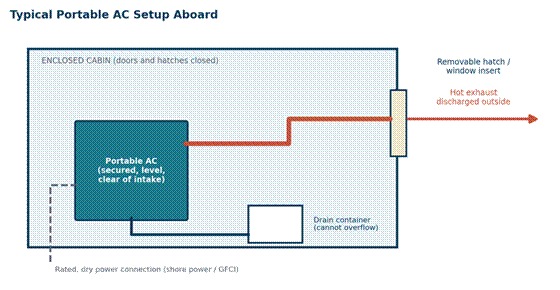
Figure 3: Typical portable AC setup aboard, showing exhaust, drainage, and power.
1. Select the cabin
Choose an enclosed area with the smallest practical volume. Close doors, hatches, and curtains where possible.
2. Position the unit
Place the AC on a stable, level surface with sufficient clearance around the intake and exhaust.
3. Route the exhaust
Connect the exhaust hose and lead it outside through a properly fitted opening.
4. Set up drainage
Install the condensate tank or drain hose. Ensure collected water cannot reach electrical equipment.
5. Connect power
Use an appropriately rated outlet and circuit. Keep the connection dry and protected.
6. Test operation
Run the unit while checking:
• Airflow
• Exhaust temperature
• Condensate collection
• Power draw
• Hose connections
• Unusual noise
• Water leaks
• Overheating
7. Secure the installation.
Use suitable restraints or positioning methods so the unit cannot shift while the boat is moving.
Common Mistakes to Avoid
Choosing a unit based only on BTUs
Cooling capacity matters, but power, exhaust, drainage, noise, and cabin layout are equally important.
Venting hot air indoors
This defeats the purpose of the air conditioner and can make the cabin hotter.
Ignoring condensate
A full tank or leaking drain hose can shut down the unit or create water damage.
Running the unit in an enclosed compartment
The AC needs air circulation and safe heat discharge. Never place it in a locker, bilge, or engine compartment unless specifically designed for that location.
Overloading the electrical system
Check the total load on the shore power or generator circuit before operating the AC with other appliances.
Leaving the unit unsecured
A portable unit can shift, fall, or damage the cabin during movement.
Using a household unit in wet conditions
A portable AC should be kept inside a dry cabin and protected from spray, rain, and bilge water.
Blocking emergency access
Never install hoses, panels, or equipment in a way that prevents access to emergency exits, life jackets, fire extinguishers, or required ventilation.
Staying connected on the water can involve more than emergency beacons alone. If you want better internet access while boating, see our guide Best Boat Wi-Fi Extender: How to Improve Internet on the Water for practical tips on extending wireless coverage.
How to Maintain a Portable Boat Air Conditioner
Regular maintenance improves cooling performance and reduces the risk of failure.
1. Clean the air filter regularly.
2. Inspect the exhaust hose for cracks or collapse.
3. Check the condensate tank and drain hose.
4. Clean dust and salt residue from the exterior.
5. Confirm that the intake and exhaust are unobstructed.
6. Inspect the power cable and plug.
7. Look for signs of water leakage.
8. Keep the unit level.
9. Store it in a dry place during the off-season.
10. Follow the manufacturer’s instructions for coil and filter cleaning.
If the unit smells hot, trips a breaker, leaks water, or makes unusual noises, disconnect it safely and investigate before continued use.
Best Portable Boat AC by Use Case
Best for a small cabin
A compact portable unit with modest cooling capacity, low power demand, and a single exhaust hose may be sufficient.
Best for a larger cabin
A higher-capacity dual-hose unit may provide better performance if the cabin has room for the installation and a suitable exhaust arrangement.
Best for weekend boating
Choose a portable unit that is easy to carry, quick to install, and simple to drain.
Best for dockside use
A shore-power-compatible unit with a reliable thermostat, washable filter, and continuous drainage can provide convenient cooling while the boat is in its slip.
Best for low-power operation
A smaller unit may be preferable when running from a limited generator or inverter, but confirm that its cooling capacity is sufficient for the cabin.
Frequently Asked Questions
Can I use a regular portable air conditioner on a boat?
You may be able to use a standard portable AC in a dry, protected cabin if its power, ventilation, and drainage requirements are compatible with the boat. It should not be exposed to spray, rain, bilge water, or fuel vapors.
What size portable AC do I need for a boat?
The required size depends on cabin volume, sunlight, insulation, humidity, windows, and ventilation. A small enclosed cabin may need approximately 5,000–8,000 BTU, while a medium cabin may need 8,000–12,000 BTU. Treat these figures as a starting point, since direct sun, large windows, poor insulation, and high humidity can raise the requirement.
📅 Last updated: