
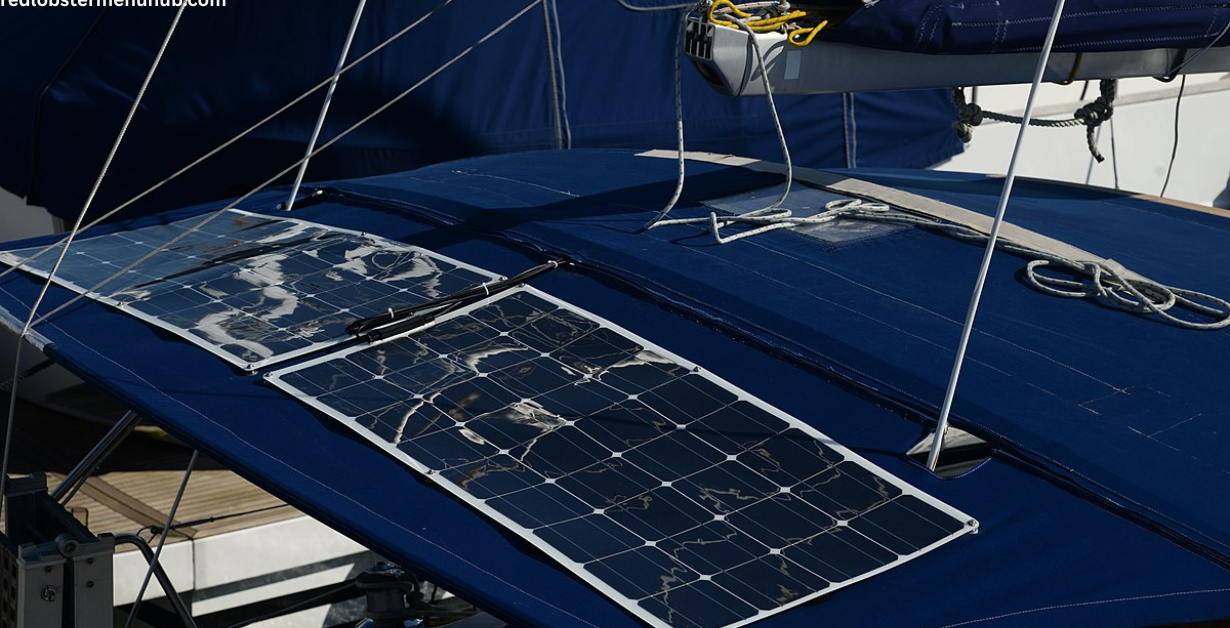
A solar panel can help keep your boat battery charged while reducing dependence on shore power, generators, and engine charging. Whether you want to maintain a starting battery, support a house battery bank, or power a trolling motor system, the right marine solar panel can provide useful energy during storage and on the water.
However, choosing the best solar panel for a boat battery involves more than buying the highest-wattage panel available. You also need to consider battery type, panel size, charge-controller compatibility, available sunlight, mounting space, wiring, and your boat’s typical electrical usage.
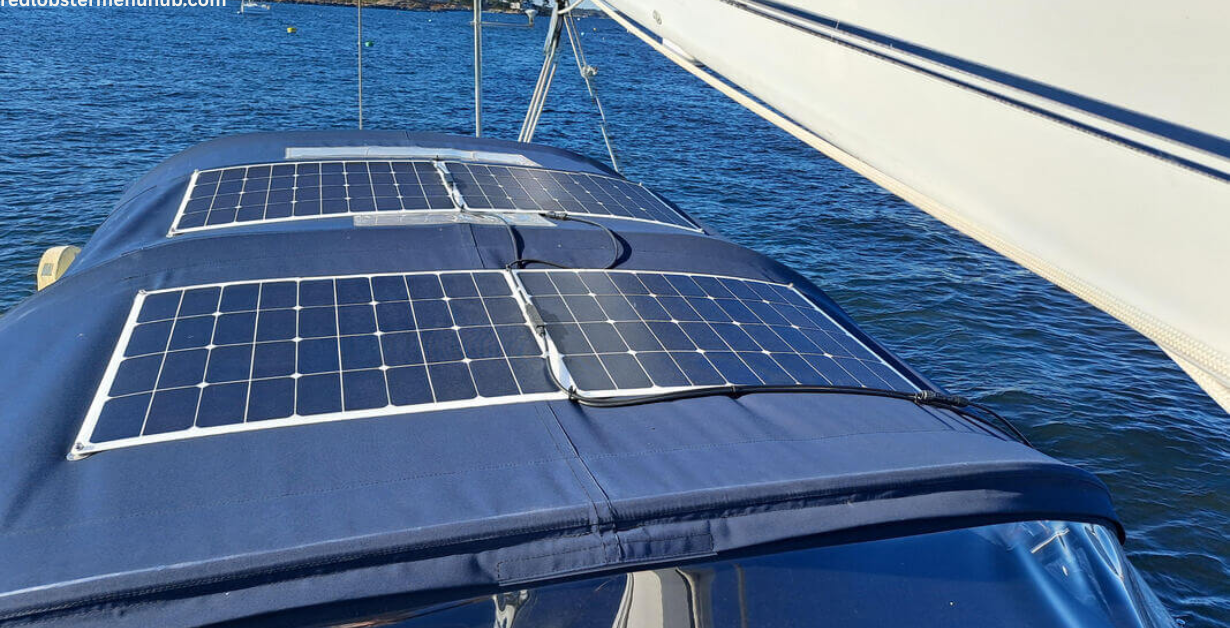
This guide explains how marine solar charging works and how to choose a reliable solar panel system for your boat.
Emergency communication devices are important, but keeping your phone and small electronics charged can also be useful during long trips on the water. For portable backup power options, check out our guide Best Waterproof Power Bank for Boating: What to Look For.
What Is a Solar Panel for a Boat Battery?
A boat solar charging system uses sunlight to generate electricity and replenish a marine battery. A typical system includes:
• One or more solar panels
• A solar charge controller
• Wiring and connectors
• Inline fuses or circuit protection
• Mounting hardware
• A marine battery or battery bank
The solar panel produces electrical energy, but it should generally not be connected directly to a battery without a suitable charge controller. The controller regulates voltage and current to help prevent overcharging and ensure the battery receives the correct charging profile.
A properly designed system can:
• Maintain a starting battery during storage
• Offset standby electrical loads
• Recharge energy used by electronics
• Support house batteries
• Extend time at anchor
• Reduce battery sulfation caused by chronic undercharging
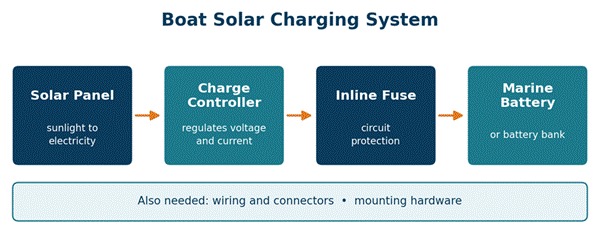
Figure 1: The main parts of a boat solar charging system.
What Makes the Best Solar Panel for a Boat Battery?
The best panel depends on your battery size and energy needs, but a quality marine solar system should offer:
• Appropriate wattage
• Compatibility with the battery chemistry
• A suitable charge controller
• Durable, weather-resistant construction
• Efficient performance in changing sunlight
• Secure mounting or portable deployment
• Corrosion-resistant wiring and connectors
• Low standby losses
• Safe overcurrent protection
For many boat owners, a rigid or semi-flexible marine solar panel paired with a quality MPPT charge controller provides a strong balance of durability and charging performance.
Solar Panel Types for Boats
Rigid solar panels
Rigid panels use a framed glass or composite construction.
Advantages
• Durable
• Often more efficient
• Better heat dissipation
• Long service life
• Suitable for permanent mounting
Limitations
• Heavier than flexible panels
• Require more mounting space
• May be more difficult to install on curved surfaces
• Can create wind resistance when mounted high
Rigid panels are a good choice for cabins, hardtops, arches, and other flat or reinforced mounting locations.
Flexible solar panels
Flexible panels can bend slightly and conform to curved surfaces.
Advantages
• Lightweight
• Low profile
• Easier to mount on curved decks or cabin tops
• Less visually intrusive
• Useful where weight matters
Limitations
• May be more vulnerable to foot traffic and abrasion
• Can operate at higher temperatures
• May have a shorter service life if poorly installed
• Difficult to replace once permanently bonded
• May not tolerate repeated bending
Flexible panels are useful on sailboat decks, curved cabin tops, and lightweight craft. They should not be stepped on unless specifically designed for foot traffic.
Portable folding solar panels
Portable panels can be deployed when the boat is anchored or stored.
Advantages
• Easy to move and reposition
• Useful for small boats
• No permanent installation
• Can be aimed toward the sun
• Simple to store when underway
Limitations
• Must be secured against wind
• More vulnerable to theft or damage
• Require setup and storage
• May not charge while unattended
• Cables can create trip hazards
Portable panels are practical for camping, boats, kayaks, small cruisers, and boats without suitable permanent mounting space.
Solar charging mats
Solar mats are lightweight and easy to deploy. They may be convenient for portable use, but their durability and output vary considerably.
Before choosing a mat, check:
• Actual rated wattage
• Water resistance
• Connector quality
• Charge-controller compatibility
• Resistance to salt, sand, and abrasion
• Whether it can be stored without creasing or damage
How Many Watts Do You Need?
The required solar-panel wattage depends on the battery capacity and the amount of energy your boat uses.
Small maintenance systems: approximately 5 to 20 watts
Small panels may be suitable for:
• Maintaining a starting battery
• Offsetting a low standby draw
• Small boats in storage
• Alarm or tracker systems
• Seasonal battery maintenance
A small panel may not fully recharge a heavily discharged battery.
Medium systems: approximately 30 to 100 watts
A medium-sized panel can help support:
• Starting and house batteries
• Navigation electronics
• USB devices
• Small refrigeration loads
• Bilge-pump standby consumption
• Weekend cruising
This range is often practical for small cruisers, fishing boats, and sailboats with moderate electrical demand.
Larger systems: 100 watts or more
Larger arrays may be useful for:
• Liveaboard boats
• Extended anchoring
• Refrigeration
• Autopilots
• Communication equipment
• Multiple electronics
• Larger house battery banks
• Electric trolling motors
A larger array requires more mounting space, heavier wiring, appropriate fusing, and a charge controller sized for the total output.
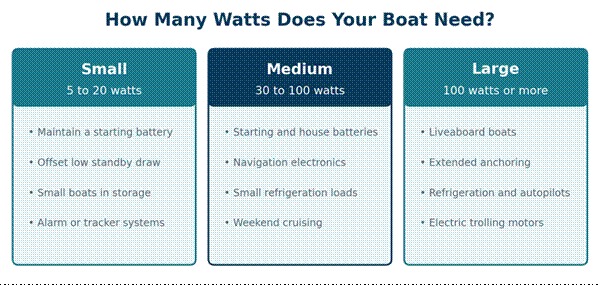
Figure 2: Solar panel wattage ranges for boat battery systems.
Solar Panel Wattage Is Not the Same as Daily Energy
A panel’s wattage describes its maximum output under standard test conditions. Actual energy production depends on sunlight and installation.
A simple estimate is:
Daily energy = panel wattage × peak sun hours × system efficiency
For example, a 100-watt panel receiving four peak sun hours with an overall efficiency of approximately 75% might produce roughly:
100 × 4 × 0.75 = 300 watt-hours per day
Actual output can be lower because of:
• Cloud cover
• Shade
• Salt or dirt on the panel
• Poor panel angle
• Heat
• Short winter days
• Cable losses
• Charge-controller losses
• Battery charging limitations
Use conservative estimates when sizing a system. A panel that produces enough energy under ideal conditions may not provide enough power during cloudy weather or winter storage.
Match the Panel to the Battery Type
Solar charging systems must be compatible with the battery chemistry.
Flooded lead-acid batteries
Flooded batteries are common in boats and require a charging profile with bulk, absorption, and float stages. They also need ventilation and periodic maintenance.
AGM batteries
AGM batteries are sealed lead-acid batteries that are resistant to vibration and spills. The charge controller should include an AGM setting or a profile recommended by the battery manufacturer.
Gel batteries
Gel batteries can be sensitive to excessive charging voltage. Use a controller with a proper gel setting if specified.
Lithium batteries
Lithium iron phosphate, or LiFePO4, batteries require a lithium-compatible charge controller. The correct charging voltage and battery-management protections are important.
Do not assume that a controller designed for lead-acid batteries is automatically suitable for lithium batteries. Check the battery and controller specifications carefully.
PWM vs. MPPT Charge Controllers
The charge controller is a key part of the solar system. Two common types are PWM and MPPT.
PWM charge controllers
Pulse-width modulation, or PWM, controllers are generally:
• Less expensive
• Simple to install
• Suitable for small systems
• Effective when the panel voltage closely matches the battery voltage
Their limitations include lower efficiency when panel voltage and battery voltage differ significantly.
MPPT charge controllers
Maximum power point tracking, or MPPT, controllers are generally:
• More efficient
• Better in cooler or changing conditions
• More effective with higher-voltage panels
• Suitable for larger systems
• Better at converting excess panel voltage into useful charging current
An MPPT controller often costs more but may recover more energy from the available sunlight. For a permanent marine system or larger panel, the additional efficiency may justify the price.
Do You Need a Solar Charge Controller?
In most cases, yes. A solar panel should not be connected directly to a marine battery unless the system is specifically designed for that purpose and includes appropriate regulation.
A charge controller helps manage:
• Charging voltage
• Charging current
• Battery state
• Float maintenance
• Overcharging
• Reverse current at night
• Battery-specific charging profiles
Some small maintenance panels include an integrated controller. Verify this before connecting a panel to a battery.
Single-Battery vs. Dual-Battery Charging
Many boats have separate starting and house batteries. If you want one solar panel to charge both, you need a suitable battery-management arrangement.
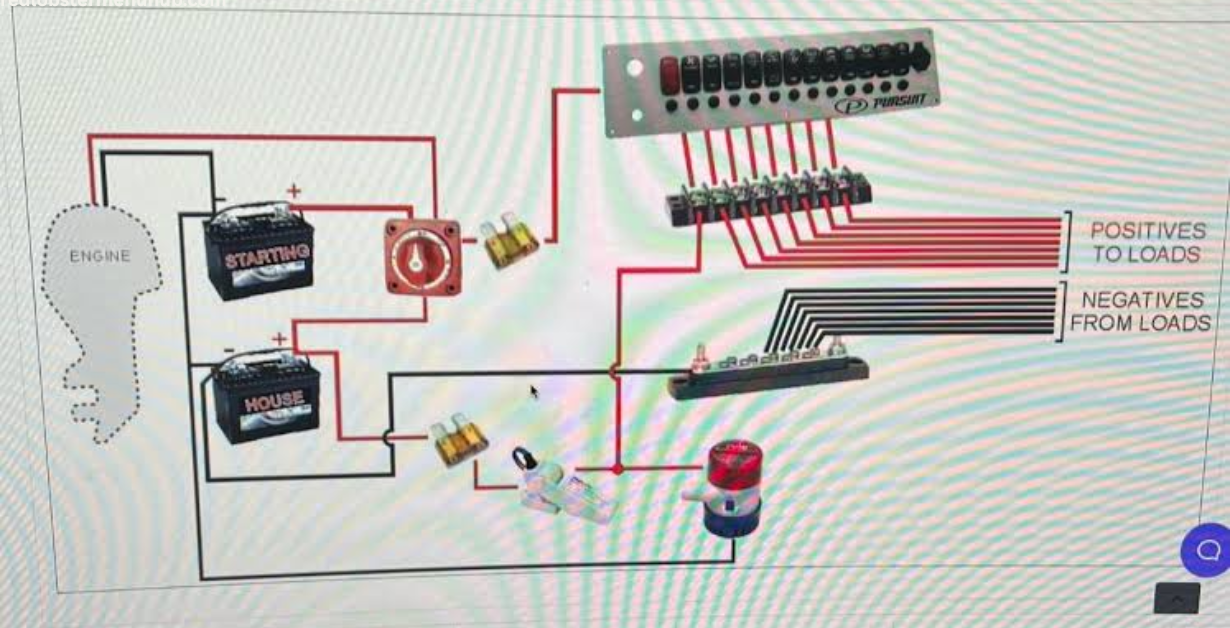
Possible solutions include:
• A dual-bank solar charge controller
• A battery combiner
• A voltage-sensitive relay
• Separate panels and controllers
• A battery-to-battery charging system
Do not connect batteries of different types, ages, or capacities in parallel unless the system is designed for that arrangement.
A dual-bank controller can independently manage two battery banks, but check the manufacturer’s wiring requirements. Some controllers divide the solar output between banks rather than charging both at full output.
Battery Capacity and Solar Sizing
Battery capacity is usually expressed in amp-hours, or Ah. A battery bank’s voltage also matters when converting capacity into energy.
For example, a 12-volt battery rated at 100 Ah has a nominal energy capacity of approximately
12 volts × 100 amp-hours = 1,200 watt-hours
Usable energy is lower than the nominal figure, especially for lead-acid batteries, which should generally not be deeply discharged. Lithium batteries may allow a greater usable percentage, depending on the manufacturer’s specifications and battery-management system.
When sizing solar, consider:
• Total battery capacity
• Recommended depth of discharge
• Daily energy consumption
• Solar availability
• Charging losses
• Backup charging sources
• Expected cloudy periods
A small maintenance panel may be enough for a fully charged battery in storage but inadequate for a heavily used house bank.
Many boat owners rely on shore power and onboard electrical equipment, making safe power connections an important part of boating. Learn what to consider when choosing a durable cord in our guide, Best Marine Extension Cord: How to Choose the Right One for Your Boat.
Shading Can Greatly Reduce Solar Output
Shading is one of the biggest challenges on a boat. A panel may be partially shaded by:
• Masts
• Booms
• Radar arches
• Antennas
• Rigging
• Bimini frames
• Trees
• Other boats
• Dock structures
Even partial shade can reduce the output of a panel, depending on its design and cell wiring.
To improve performance:
• Mount panels away from common shadows where practical.
• Use separate panels with individual controllers if shading is unavoidable.
• Clean the panel regularly.
• Avoid placing equipment directly over active cells.
• Consider portable panels that can be repositioned.
A smaller panel in full sun may produce more useful energy than a larger panel that is shaded for much of the day.
Solar Panel Placement on a Boat
Common mounting locations include:
• Cabin tops
• Hardtops
• Bimini frames
• Arch systems
• Rails
• Decks
• Transom areas
• Portable brackets
The ideal location should provide:
• Maximum sunlight
• Minimal shading
• Secure mounting
• Good ventilation beneath the panel
• Protection from foot traffic
• Safe cable routing
• Minimal interference with navigation equipment
Avoid placing panels where they can be hit by dock lines, anchors, fishing gear, sails, or loading equipment.
Marine Wiring and Connectors
A solar panel system should use marine-appropriate wiring and connectors.
Look for:
• Tinned copper cable
• UV-resistant insulation
• Waterproof connectors
• Properly sized conductors
• Heat-shrink terminals
• Drip loops
• Secure cable support
• Weatherproof deck glands
Use cable sized for the current and length of the run. Long cable runs create voltage drop, which can reduce charging efficiency.
Keep solar wiring away from:
• Fuel lines
• Hot engine components
• Sharp edges
• Moving equipment
• Bilge water
• Areas exposed to chafe
Every positive power connection should have appropriate overcurrent protection located near the battery or power source, according to the system design and manufacturer’s instructions.
Rigid vs. Flexible Panels for Boating
Choose a rigid panel if:
• You have a flat, reinforced mounting area.
• You want long-term durability.
• Weight is not a major concern.
• You can install a fixed frame.
• You want better airflow beneath the panel.
Choose a flexible panel if:
• Your mounting surface is curved.
• You want a low-profile appearance.
• Weight is important.
• You have limited mounting options.
• The panel will not receive heavy foot traffic.
Choose a portable panel if:
• You want temporary charging.
• You operate a small boat.
• You do not want permanent installation.
• You can safely deploy and store the panel.
Can a Solar Panel Charge a Boat Battery While Underway?
Yes. A solar panel can charge a battery while the boat is underway, provided the panel receives sunlight and the system is correctly installed.
However, the panel may not produce enough energy to offset all onboard loads. Devices such as the following can consume more power than a small solar array produces:
• Refrigerators
• Autopilots
• Fish finders
• Radar
• Audio systems
• Inverters
• Electric trolling motors
• Cabin fans
• Navigation displays
Use solar as one part of the boat’s charging system rather than assuming it will replace the alternator or shore charger.
Can a Solar Panel Maintain a Boat Battery During Storage?
Yes. A small solar panel can help maintain a fully charged battery during storage, especially when the boat is not connected to shore power.
For storage use:
• Choose a panel with enough output for the battery’s standby load.
• Use a charge controller.
• Keep the panel clean.
• Ensure the battery is healthy.
• Check the system periodically.
• Protect wiring and connectors from moisture.
• Consider a low-voltage disconnect if the system supports one.
A solar panel cannot reliably maintain a battery that is damaged, heavily discharged, or connected to large hidden loads.
Solar Panel vs. Shore Power Charger
A solar panel and a shore-power charger serve different purposes.
Solar charging
Advantages:
• Uses renewable energy
• Useful away from the dock
• Can maintain batteries during storage
• Reduces engine-running time
• Works without shore power
Limitations:
• Depends on sunlight
• Produces less power at night or in cloudy conditions
• Requires mounting space
• May not support heavy loads alone
Shore-power charging
Advantages:
• Reliable when connected to shore power
• Provides higher charging output
• Works day and night
• Suitable for larger battery banks
Limitations:
• Requires dockside power
• May involve marina fees
• Does not help when away from shore power
• Requires proper shore-power equipment
Many boat owners use both systems for greater flexibility.
Features Worth Considering
Built-in charge controller
A small maintenance panel may include its own controller. This simplifies installation but may offer limited features.
MPPT controller
An MPPT controller can improve energy harvest, especially with larger panels or variable sunlight.
Battery-type selection
Choose a controller that supports your battery chemistry and charging requirements.
Temperature compensation
Battery charging voltage can vary with temperature. A controller with a temperature sensor may improve charging performance.
Monitoring
Bluetooth, display, or app-based monitoring can show:
• Solar voltage
• Charging current
• Battery voltage
• Battery state
• Energy produced
• Fault conditions
Multiple charging banks
A dual-bank controller can be useful when maintaining separate starting and house batteries.
Low-light performance
No panel produces full output in poor light, but some panel designs and controllers perform better than others in changing conditions.
Common Solar Panel Mistakes
Connecting a panel directly to the battery
This can lead to overcharging or improper charging. Use an appropriate controller unless the panel includes suitable regulation.
Choosing based only on peak wattage
Real-world output depends on sunlight, shading, angle, heat, wiring, and controller efficiency.
Ignoring the battery chemistry
Different battery types require different charging profiles.
Using household wire or connectors
Marine conditions can quickly damage unsuitable cable and connections. Use tinned copper wire and protected marine connections.
Installing the panel where it will be shaded
A large panel in partial shade may produce less energy than a smaller panel in full sunlight.
Forgetting circuit protection
Solar charging wiring needs appropriate fuses or breakers according to the system design.
Using a panel that is too small for the electrical load
A maintenance panel cannot necessarily run refrigeration, electronics, and other large loads.
Allowing water into deck penetrations
Poorly sealed cable entries can cause leaks, corrosion, and interior damage.
How to Maintain a Marine Solar Charging System
Regular maintenance helps preserve performance:
1. Rinse salt and dirt from the panel with fresh water.
2. Use a soft cloth to remove residue.
3. Inspect the panel for cracks or delamination.
4. Check cables for chafing and UV damage.
5. Inspect connectors for corrosion.
6. Confirm that cable glands remain sealed.
7. Check charge-controller readings.
8. Inspect fuses and circuit breakers.
9. Verify that mounting hardware remains tight.
10. Check the battery’s condition and terminals.
11. Remove shading sources where practical.
12. Test the system after winter storage.
Do not walk on a panel unless it is specifically rated for foot traffic. Avoid using abrasive cleaners that could damage the panel surface.
Best Solar Panel for a Boat Battery by Use Case
Best for maintaining a starting battery
A small 5- to 20-watt panel with an integrated or separate charge controller may be sufficient for a healthy battery with minimal standby drain.
Best for a small fishing boat
A 30- to 60-watt panel can help maintain the battery and offset modest electronics use, depending on sunlight and daily consumption.
Best for a cruising boat
A 100-watt or larger panel with an MPPT controller may provide useful support for house batteries and moderate onboard loads.
Best for a sailboat
A lightweight, flexible panel can work well on curved surfaces, while rigid panels may offer better long-term durability on an arch or hardtop.
Best for a boat without permanent mounting space
A portable folding panel allows you to position the panel toward the sun and store it when underway.
Best for two battery banks
Choose a dual-bank controller or a properly engineered battery-combining system designed for the batteries installed on the boat.
Frequently Asked Questions
What is the best solar panel for a boat battery?
For many boats, a marine-suitable rigid or semi-flexible panel paired with an MPPT charge controller is a strong choice. The correct wattage depends on battery capacity, daily energy use, available sunlight, and mounting space.
Can I connect a solar panel directly to a boat battery?
Usually, you should use a compatible solar charge controller. Some small panels include integrated regulation, but verify the specifications before connecting one directly.
How many watts of solar do I need to maintain a boat battery?
A small 5- to 20-watt panel may maintain a healthy starting battery with low standby loads. Larger batteries and higher electrical demands require more panel capacity.
Is flexible or rigid solar better for a boat?
Rigid panels are generally more durable and may have better long-term performance. Flexible panels are lighter and easier to install on curved surfaces. The best choice depends on mounting space, foot traffic, weight, and expected use.
Can solar panels charge lithium boat batteries?
Yes, if the solar charge controller is specifically compatible with the lithium battery and its required charging profile.
Will a solar panel charge a boat battery on a cloudy day?
It may produce some energy under cloudy conditions, but output will be significantly lower than in direct sunlight. Size the system conservatively, and do not rely on full-rated output every day.
Staying connected on the water can involve more than emergency beacons alone. If you want better internet access while boating, see our guide Best Boat Wi-Fi Extender: How to Improve Internet on the Water for practical tips on extending wireless coverage.
Final Thoughts
The best solar panel for a boat battery is the one that matches your battery chemistry, energy needs, available sunlight, and installation space.
For simple battery maintenance, a small regulated panel may be enough. For cruising or extended time away from shore power, a larger panel with an MPPT charge controller, marine-grade wiring, and proper circuit protection will provide more useful charging performance.
Before buying, consider:
• Battery type and capacity
• Daily electrical consumption
• Required panel wattage
• Available mounting space
• Shading
• Charge-controller compatibility
• Wiring distance
• Water and corrosion protection
• Single- or dual-battery charging
• Maintenance requirements
A properly sized solar charging system can extend battery life, reduce engine runtime, and make your boat more self-sufficient. Install it carefully, protect the wiring, keep the panels clean, and monitor the battery regularly for the best results.
📅 Last updated: