
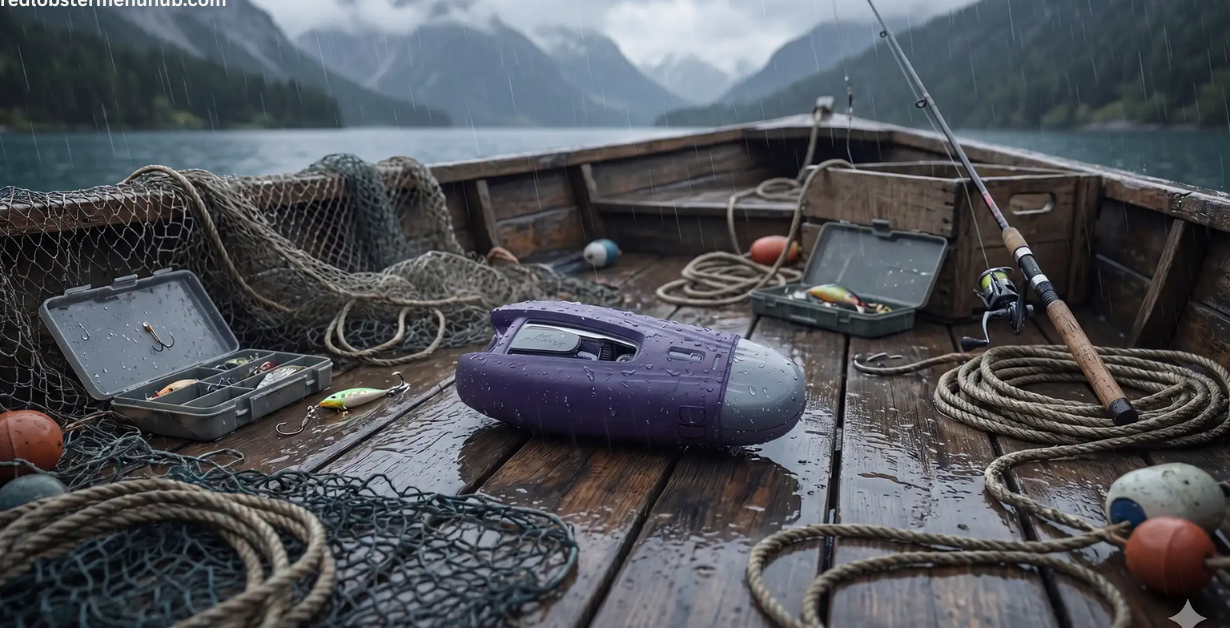
A reliable power bank can be essential on the water. Phones, GPS devices, cameras, satellite messengers, VHF accessories, and other electronics can lose power at the worst possible time. But a standard portable charger may not survive splashes, drops overboard, or saltwater exposure.
The best waterproof power bank for boating should offer more than a large battery capacity. It should be genuinely water-resistant, durable, easy to carry, safe to use around moisture, and powerful enough to charge your essential devices.
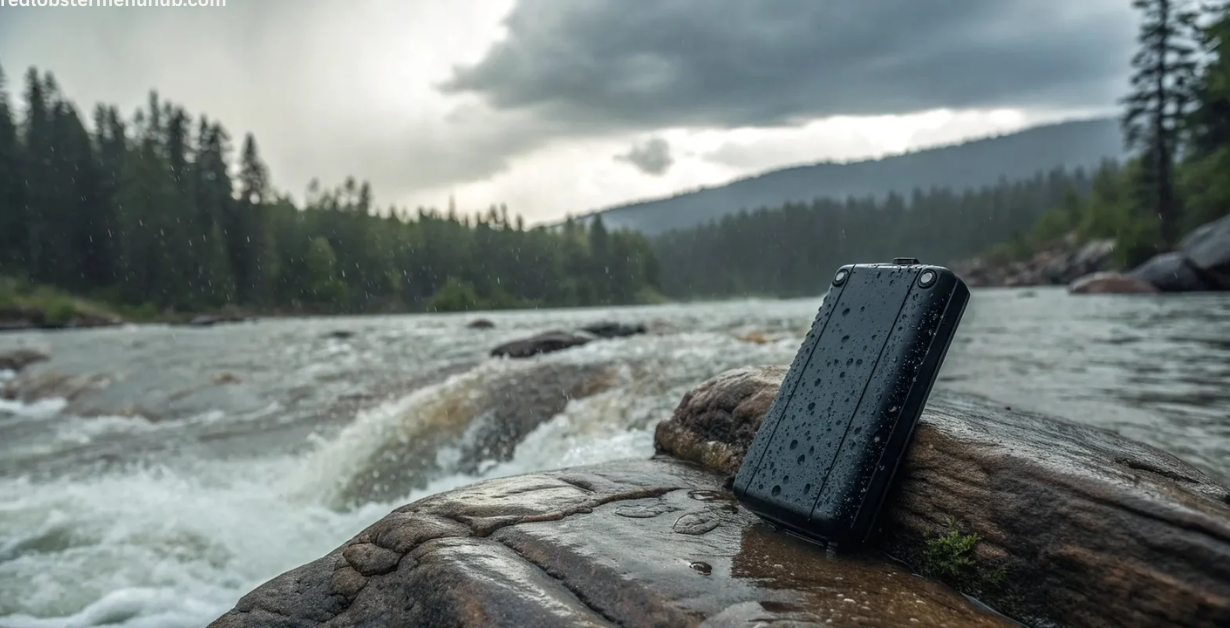
This guide explains the features that matter most when choosing a waterproof power bank for boating, fishing, kayaking, sailing, and other marine activities.
Reliable equipment on board is just as important as a strong internet connection. If you’re also preparing for battery-related emergencies, take a look at our guide, Best Boat Jump Starter: How to Choose the Right One.
What Is a Waterproof Power Bank?
A waterproof power bank is a portable rechargeable battery designed to protect its internal electronics from water exposure. It stores electrical energy and transfers that energy to other devices through USB ports.
Depending on the model, a waterproof power bank may include:
● USB-A charging ports
● USB-C input and output
● Fast-charging support
● A built-in flashlight
● Battery-level indicators
● A protective rubberized housing
● A carabiner or attachment point
● Solar charging capability
● A floating or buoyant design
● Emergency signaling features
Not every product marketed as “waterproof” offers the same level of protection. Always check the unit’s official IP rating and usage instructions before taking it on a boat.
Why Use a Waterproof Power Bank on a Boat?
Water and electronics are an unavoidable combination on the water. Even when your devices remain inside the cabin, moisture can enter through:
● Spray
● Rain
● Wet hands
● Condensation
● Open hatches
● Leaking bags
● Accidental spills
● Drops into the cockpit or bilge
A waterproof power bank adds protection when charging equipment in a wet environment. It can also serve as an important backup when you are away from shore power.
A fully charged power bank may help keep essential equipment operating, including:
● Mobile phones
● GPS units
● Satellite messengers
● Action cameras
● Headlamps
● Wireless speakers
● Tablets
● Portable navigation devices
● Emergency lights
● USB-powered fans
It should not replace the boat’s primary electrical system or emergency equipment, but it can provide valuable backup power.
What Makes the Best Waterproof Power Bank?
The best waterproof power bank for boating should combine the following features:
● A verified water-resistance rating
● Strong impact protection
● Adequate battery capacity
● USB-C charging and output
● Fast-charging support
● Secure port covers
● Corrosion-resistant construction
● A clear battery indicator
● Safe charging protections
● A compact, non-slip design
● A reliable warranty
The ideal combination depends on how long you spend on the water and which devices you need to charge.
Understanding Waterproof Ratings
Waterproof power banks are commonly rated using the Ingress Protection, or IP, system. The rating usually contains two numbers:
● The first number indicates protection against solid particles such as dust.
● The second number indicates protection against water.
IP67
An IP67-rated device is generally protected against dust and temporary immersion in water under specified test conditions.
This can be useful if the power bank is briefly dropped into calm water and retrieved quickly. However, an IP67 rating does not mean the unit is suitable for indefinite submersion or repeated exposure to saltwater.
IP68
An IP68-rated device offers a higher level of protection against immersion than IP67, but the exact depth and duration depend on the manufacturer’s specifications.
Do not assume every IP68 product provides the same protection. Read the product documentation carefully.
IPX ratings
Some products have ratings such as IPX7 or IPX8. The “X” means the product has not been rated for dust protection under that certification.
For boating, both water and dust protection are valuable, particularly on beaches, fishing boats, and open-deck vessels.
Waterproof Does Not Mean Saltwater-Proof
This is an important distinction.
A power bank may resist freshwater immersion but still suffer damage from saltwater. Salt can corrode:
● USB contacts
● Port covers
● Charging connectors
● Buttons
● Seals
● Internal wiring
● Protective coatings
If a power bank is exposed to saltwater, rinse the exterior with clean fresh water if the manufacturer permits it. Dry it thoroughly before opening any port covers or connecting a cable.
Never charge a wet device. Moisture inside a charging port can create corrosion, short circuits, or other electrical hazards.
How Much Battery Capacity Do You Need?
Power bank capacity is usually measured in milliamp-hours, or mAh. Larger capacity generally means more stored energy, but it also usually means more weight and size.
A dependable power supply is essential when you’re using Wi-Fi and other electronics on your boat. To learn how to keep your marine battery properly charged and ready for use, check out Best Boat Battery Charger: How to Choose the Right One for Your Boat
Small capacity: approximately 5,000 to 10,000 mAh
A smaller power bank may be suitable for:
● Day trips
● Emergency phone charging
● Short fishing outings
● Lightweight kayaking
● Personal backup use
It may provide roughly one or more phone charges, depending on the phone’s battery size, power bank efficiency, charging losses, and operating conditions.
Medium capacity: approximately 10,000 to 20,000 mAh
A medium-capacity unit is a practical choice for many boaters. It may support:
● Several phone charges
● A phone and satellite messenger
● A phone and camera
● Multiple short trips
● Overnight or weekend use
This size often offers a good balance between capacity and portability.
Large capacity: 20,000 mAh or more
Larger power banks are useful for:
● Extended trips
● Multiple people
● Tablets
● Cameras
● High-use navigation devices
● Several days away from shore power
The tradeoff is increased weight, bulk, and charging time. Check the device’s transport and storage requirements before carrying a very large battery.
Capacity Ratings Can Be Misleading
The advertised mAh rating does not translate directly into the exact number of charges your device will receive.
Energy is lost through:
● Voltage conversion
● Heat
● Cable resistance
● Charging circuitry
● Battery age
● Low temperatures
● The power bank’s own standby consumption
A better comparison is the watt-hour rating, or Wh, when it is provided. Watt-hours account for voltage and provide a more useful measure of stored energy.
As a general rule, choose more capacity than your minimum estimate if you will be away from shore power or using devices continuously.
USB-C Is an Important Feature
USB-C has become the preferred connection standard for many modern devices. A power bank with USB-C input and output is generally more versatile than one limited to older USB-A connections.
USB-C can support:
● Faster recharging of the power bank
● Faster charging of phones and tablets
● Higher-power output
● A wider range of cables
● Charging for compatible cameras and laptops
Look for a model that supports USB-C Power Delivery, commonly called USB-C PD, if you need to charge larger devices or want faster charging.
Check the actual output rating. Not every USB-C port supports high-wattage charging.
Charging Multiple Devices
If you travel with family or a group, multiple charging ports can be convenient. A power bank may include:
● One USB-C port
● One or more USB-A ports
● Multiple USB-C ports
● Wireless charging
● A built-in charging cable
Before choosing a multi-port power bank, confirm whether it can deliver full output when several devices are connected. Some models reduce charging speed when multiple ports are used simultaneously.
A multi-port unit should also have adequate safety protection to prevent:
● Overcurrent
● Overheating
● Short circuits
● Overcharging
● Excessive discharge
What Is USB-C Power Delivery?
USB-C Power Delivery is a charging standard that allows compatible devices and chargers to negotiate an appropriate voltage and current.
A power bank with USB-C PD may charge compatible devices faster than a basic USB port. Higher-power models can potentially charge tablets, cameras, handheld gaming devices, and some smaller laptops.
Moisture can be a concern inside an enclosed boat cabin, especially when electronic equipment is being used regularly. For practical tips on managing humidity and choosing the right equipment, see our guide, Best Boat Dehumidifier: How to Choose the Right One for Your Boat.
However, the entire charging setup must be compatible:
● The power bank must support the required output.
● The device must support the charging standard.
● The cable must be rated for the power level.
● The port must be configured for output rather than input only.
Do not assume that every USB-C port is a high-speed charging port.
Is a Floating Power Bank Worth It?
A floating power bank can be useful for boating, paddleboarding, kayaking, and fishing. If dropped into calm water, it may remain on the surface and be easier to retrieve.
A floating design may include:
● Buoyant housing
● Bright colors
● A wrist strap
● An attachment loop
● A flashing light
However, floating does not guarantee that the unit will remain visible in waves, current, darkness, or murky water. Secure the power bank with a lanyard or tether whenever practical.
Do not attach a loose tether where it could become entangled with a propeller, fishing line, rigging, or other equipment.
Durability Matters on the Water
A boating power bank should withstand more than rain. Look for a housing that protects against:
● Drops
● Scratches
● Vibration
● UV exposure
● Sand
● Dust
● Salt spray
● Temperature changes
A rubberized exterior can improve grip and impact resistance. Reinforced corners and covered ports can provide additional protection.
Avoid placing the power bank in direct sunlight for extended periods. High temperatures can reduce battery performance and increase safety risks.
Built-In Flashlight: Useful or Unnecessary?
Many rugged power banks include an LED flashlight. This can be useful for:
● Finding equipment at night
● Checking a bilge or compartment
● Reading charts
● Signaling another boat
● Handling lines in low light
● Walking around a dock
Some models include a strobe or emergency signal mode. These features can be helpful, but a built-in flashlight should not be treated as a substitute for proper navigation lights, distress signals, or marine safety equipment.
Solar Charging: Is It Practical for Boating?
Some waterproof power banks include small solar panels. Solar charging can be convenient, but the built-in panel is usually limited by its size.
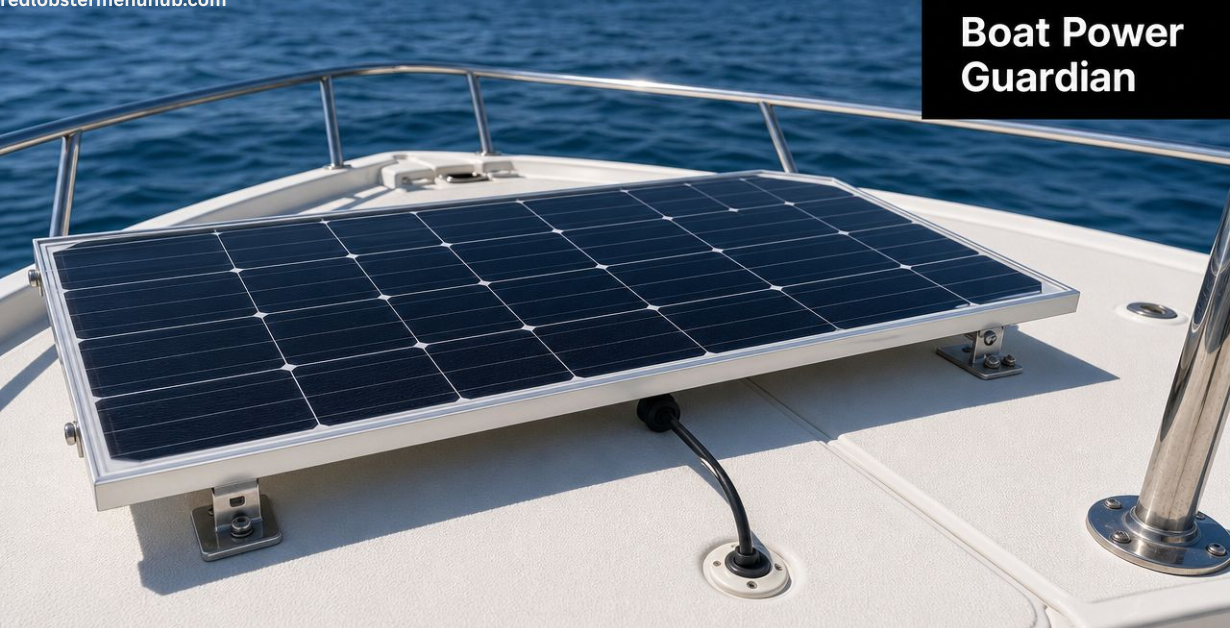
Solar performance is affected by:
● Cloud cover
● Shading
● Panel angle
● Salt or dirt on the surface
● Season
● Latitude
● Temperature
● The power bank’s charging circuitry
A small integrated solar panel may help maintain the battery or add a limited amount of energy over time. It may not recharge a depleted high-capacity power bank quickly.
For serious solar charging, a separate marine solar panel and suitable charge controller are generally more effective.
What Temperature Can a Power Bank Handle?
Lithium-ion batteries are sensitive to extreme temperatures.
Cold conditions can:
● Reduce available capacity
● Slow charging
● Cause the power bank to shut down
● Reduce short-term performance
High temperatures can:
● Accelerate battery aging
● Reduce service life
● Increase swelling or thermal-risk concerns
● Damage internal components
Do not charge a power bank when it is extremely hot, frozen, wet, swollen, or visibly damaged. Let it return to a safe temperature and inspect it before use.
Avoid storing it in a hot cockpit locker, direct sunlight, engine compartment, or enclosed area exposed to high heat.
Safety Features to Look For
A quality waterproof power bank should include protection against common electrical and battery problems.
Important features may include:
● Overcharge protection
● Over-discharge protection
● Short-circuit protection
● Overcurrent protection
● Overvoltage protection
● Temperature monitoring
● Automatic shutoff
● Foreign-object detection for wireless charging
Safety features reduce risk but do not eliminate it. Use the supplied or appropriately rated cable, keep the unit dry while charging, and stop using it if it becomes unusually hot, swollen, cracked, or damaged.
Wireless Charging on a Boat
Some power banks offer wireless charging. This can reduce the number of cables you need to carry and may be convenient for compatible phones.
However, wireless charging may be less practical in a moving boat because:
● The phone can shift out of alignment.
● Charging may be slower.
● The power bank may consume more energy.
● A protective phone case can interfere.
● Water or debris between the devices can affect charging.
● Wireless charging creates additional heat.
For reliable charging aboard a boat, a wired USB-C connection is often the better primary option.
Best Waterproof Power Bank by Use Case
Best for day boating
A compact 10,000 mAh waterproof power bank may provide a good balance of capacity and portability for phones, cameras, and small accessories.
Best for weekend trips
A 10,000 to 20,000 mAh model with USB-C PD and multiple ports may be better for charging several devices over one or two days.
Best for kayaking and paddleboarding
Choose a lightweight, floating, impact-resistant model with a secure attachment point and a bright housing.
Best for offshore boating
Look for a rugged, high-capacity power bank with multiple charging options, clear battery indicators, and strong protection against spray and impacts. Carry it in a waterproof case even if the power bank itself is water-resistant.
Best for emergency backup
A compact model with a built-in flashlight, reliable battery indicator, and enough capacity to recharge your phone or satellite messenger may be the most practical choice.
Best for multiple people
Choose a larger-capacity power bank with multiple ports and enough total output to charge more than one device simultaneously.
Waterproof Power Bank vs. Dry Bag
A waterproof power bank does not eliminate the need for a dry bag or protective case.
A dry bag provides additional protection against:
● Prolonged immersion
● Saltwater
● Sand
● Dirt
● Pressure from other gear
● Accidental drops
For boating, the safest approach is often to place the power bank inside a small waterproof case or dry bag while it is not in use. Remove it from the case before charging if the manufacturer requires ventilation or if heat could build up.
How to Use a Power Bank Safely on a Boat
Follow these practices to protect both the battery and your devices:
1. Inspect the power bank before every trip.
2. Check that the housing and port covers are intact.
3. Keep charging ports closed when not in use.
4. Do not connect cables while the device or ports are wet.
5. Rinse salt residue with fresh water only if permitted by the manufacturer.
6. Dry the unit completely before charging.
7. Keep it away from fuel, vapors, and excessive heat.
8. Do not leave it in direct sunlight for long periods.
9. Stop using it if it swells, cracks, leaks, or becomes unusually hot.
10. Store it partially charged in a cool, dry location when not in use.
11. Use a secure tether where appropriate.
12. Keep a backup charging cable in a dry container.
Common Buying Mistakes
Choosing based only on mAh
Capacity matters, but a large battery is not useful if it lacks the ports, output, durability, or safety features you need.
Assuming every “waterproof” label is certified
Look for an official IP rating and verify the specific immersion conditions.
Ignoring USB-C output
A power bank may have a USB-C port for input only. Check whether it supports output and fast charging.
Buying an oversized unit
Extra capacity adds weight and takes longer to recharge. Choose a capacity that matches your actual use.
Relying on the built-in solar panel
Small solar panels generally provide limited charging power. Treat them as a supplemental feature.
Storing it in a hot locker
High temperatures can damage lithium batteries and shorten their service life.
Charging while wet
Water and electricity are a dangerous combination. Dry the unit and its ports completely before connecting a cable.
How to Maintain a Waterproof Power Bank
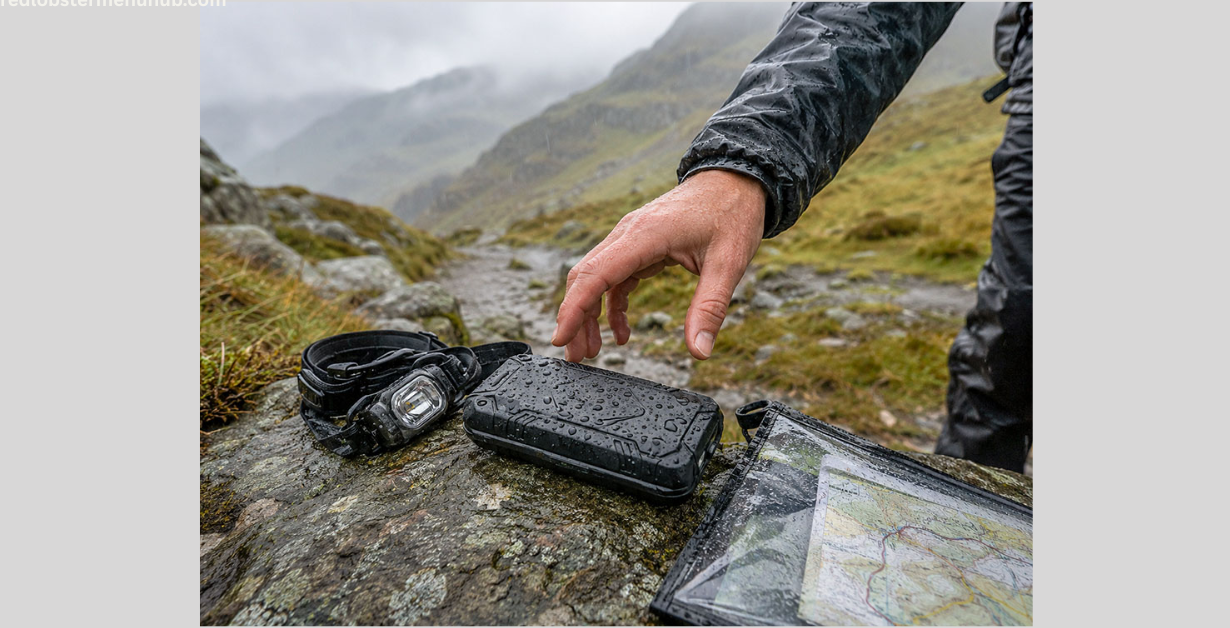
Proper storage and maintenance can help extend its useful life.
● Recharge it every few months during long-term storage.
● Avoid storing it fully empty.
● Keep it in a cool, dry location.
● Clean salt and dirt from the exterior.
● Inspect seals and port covers.
● Use undamaged charging cables.
● Follow the manufacturer’s storage instructions.
● Recycle the unit according to local battery-disposal rules when it reaches the end of its life.
If the power bank has been submerged beyond its rated conditions or shows signs of internal damage, do not attempt to open or repair it yourself.
Frequently Asked Questions
What is the best waterproof power bank for boating?
The best model should have a verified IP rating, durable housing, USB-C output, adequate capacity, multiple safety protections, and a design that suits your boat and trip length.
Can a waterproof power bank go in saltwater?
A water-resistant power bank may survive brief exposure, but saltwater can corrode ports and seals. Retrieve it quickly, rinse it with fresh water if approved, and dry it completely before use.
How many phone charges can a 20,000 mAh power bank provide?
The number varies by phone battery size and charging efficiency. Real-world output is lower than the advertised capacity because of voltage conversion and other energy losses. A 20,000 mAh unit may provide several phone charges, but the exact number depends on the devices and conditions.
Can I charge a power bank while it is wet?
No. Dry the power bank, charging port, and cable completely before connecting it to a charger.
Is a solar power bank good for boating?
A solar power bank can provide supplemental charging, but its small panel may recharge slowly. It is best used as a backup rather than the primary charging system for regular boating.
Should I keep a power bank in a dry bag?
Yes. Even if the unit is water-resistant, a dry bag provides extra protection against prolonged immersion, saltwater, sand, and accidental damage.
Final Thoughts
The best waterproof power bank for boating should offer a dependable combination of water resistance, battery capacity, charging speed, durability, and safety.
For most boaters, a rugged power bank with a verified IP67 or IP68 rating, USB-C Power Delivery, multiple safety protections, and approximately 10,000 to 20,000 mAh of capacity is a practical starting point. Smaller models may be better for day trips, while larger units are useful for extended time away from shore power.
Remember that waterproof does not mean indestructible or permanently saltwater-proof. Protect the power bank from unnecessary exposure, keep its ports dry, store it away from heat, and carry it in a dry bag when possible.
A good power bank will not replace your boat’s main electrical system, but it can provide valuable backup power when you need to keep essential personal electronics operating on the water.
📅 Last updated: