
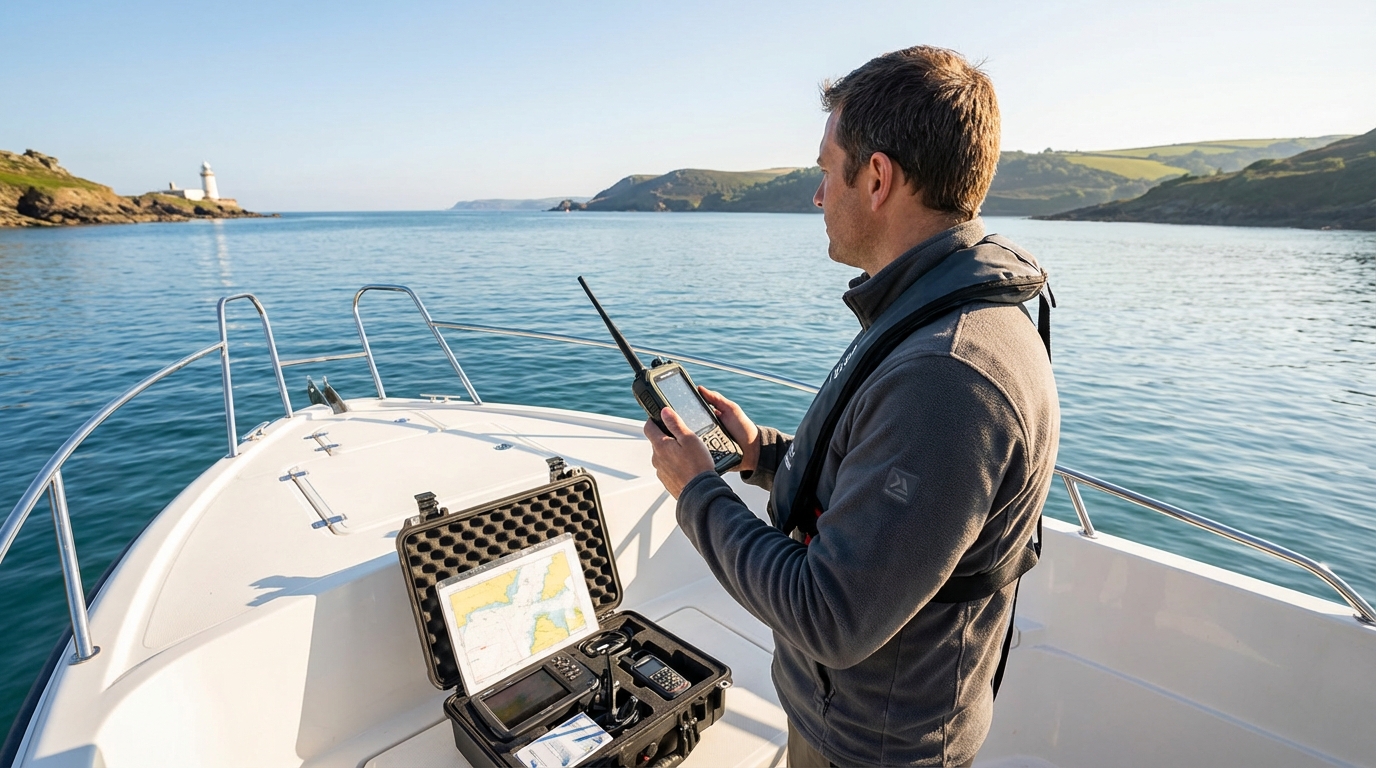
A small marine VHF radio is a compact communication tool designed to provide reliable emergency signaling and boat-to-boat contact while occupying minimal space on your vessel. These devices come in two primary forms: portable handheld units and ultra-compact fixed-mount models that fit into tight consoles. Whether you are navigating a kayak, a center console, or a small sailboat, these radios ensure you can reach help on Channel 16 even when cell service fails.
Key Takeaways
- Small marine VHF radios prioritize space-saving designs while maintaining the legal requirement for emergency Channel 16 access.
- Handheld units offer 5 or 6 watts of power and operate on internal batteries, making them ideal for small craft or backups.
- Compact fixed-mount radios provide 25 watts of power, which significantly increases your transmission range compared to handheld versions.
- Digital Selective Calling (DSC) is a critical safety feature in modern small radios that sends your GPS coordinates to rescue teams automatically.
- Waterproof ratings like IPX7 or IPX8 are essential for small radios used on open decks where spray and rain are common.
- Internal GPS receivers simplify installation by removing the need to wire your radio to an external chartplotter or antenna.
Defining the Small Marine VHF Radio Category
A small marine VHF radio is any communication device that uses the Very High Frequency maritime band and features a reduced physical footprint. Size constraints often dictate whether a boater chooses a handheld device or a “black box” fixed-mount system. Handhelds are typically no larger than a standard walkie-talkie, while compact fixed units might measure less than six inches wide.
Small Marine VHF Radios
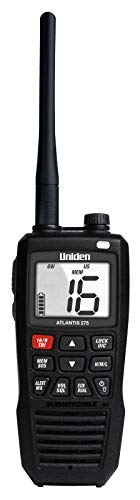
Uniden Atlantis 275 Handheld Two-Way VHF Marine Radio, Floating IPX8 Submersible Waterproof, Large Dual-Color Screen, 6-Watt, All USA/International/Canadian Marine Channels, NOAA Weather Alerts
Uniden Atlantis 275 Handheld Two-Way VHF Marine Radio, Floating IPX8 Submersible Waterproof,…
VIEW LATEST PRICE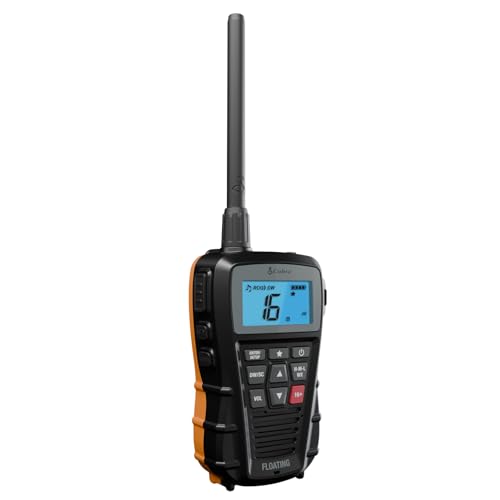
Cobra BlueBound 150 VHF Handheld Marine Radio – Black – 3-Watt, Floating, Long Range, NOAA Weather Alerts, International Functionality, IPX7 Waterproof, USB-C, Submersible, LCD Screen, Belt Clip
Cobra BlueBound 150 VHF Handheld Marine Radio – Black – 3-Watt, Floating,…
VIEW LATEST PRICE
Uniden Atlantis 155 Handheld Two-Way VHF Marine Radio, Floating IPX8 Submersible Waterproof, Dual-Color Screen, All USA/International/Canadian Marine Channels, NOAA Weather Alert, 10 Hour Battery
Uniden Atlantis 155 Handheld Two-Way VHF Marine Radio, Floating IPX8 Submersible Waterproof,…
VIEW LATEST PRICEChoosing a smaller unit does not mean you must sacrifice essential safety features. Most modern compact radios include full Class D DSC capabilities and multi-channel monitoring. These tools allow you to keep a watch on emergency channels while talking to your friends on a different frequency.
| Feature | Handheld Small VHF | Compact Fixed-Mount VHF |
|---|---|---|
| Average Width | 2.4 – 2.8 inches | 4.5 – 6.2 inches |
| Max Power Output | 5W – 6W | 25W |
| Power Source | Li-Ion Battery | 12V DC Boat Battery |
| Antenna Type | Integrated Rubber Duck | External Mast/Rail Mount |
| Best Use Case | Kayaks, Tenders, Backup | Small Center Consoles, RIBS |
Assessing Range and Transmission Power
Small marine VHF radios operate on two primary power levels that directly impact how far your voice can travel across the water. Handheld small radios usually cap out at 6 watts of power, which is sufficient for line-of-sight communication over three to five miles. Fixed-mount compact radios utilize the full 25-watt limit, pushing signals much further when paired with a tall antenna.
Range is heavily dependent on antenna height because VHF signals travel in a straight line. If you are sitting low in a kayak with a handheld, your signal might be blocked by waves or the shoreline. A fixed-mount radio on a small boat with an 8-foot antenna will always outperform a handheld because the signal starts from a higher physical point.
Factors Influencing Small Radio Range:
- Antenna Height: The most critical factor for overcoming the curvature of the earth.
- Atmospheric Conditions: Fog and rain can slightly attenuate signal strength over long distances.
- Battery Voltage: A low battery in a handheld can cause the signal to clip or lose clarity.
- Terrain Interference: High cliffs or buildings will block signals regardless of your radio’s power.
Essential Features for Compact Marine Radios
The most important feature in any small marine VHF radio is Digital Selective Calling (DSC) paired with an internal GPS receiver. When you push the red distress button, the radio sends a digital packet containing your exact latitude and longitude to the Coast Guard. This removes the guesswork from search and rescue operations during high-stress moments.
You should also look for a “floating” design if you choose a handheld model. Small boats are prone to capsizing or taking on water, and a radio that sinks is useless in a survival situation. Many modern handhelds also include a water-activated strobe light to help rescuers find you in the dark.
Mandatory Features for Small Radios:
- IPX8 Waterproofing: Protects the device from continuous submersion in deep water.
- Noise Canceling: Filters out wind and engine noise so your voice remains clear.
- Large Display: High-contrast screens that are readable in direct, mid-day sunlight.
- Dedicated Channel 16 Key: Provides one-touch access to the universal emergency frequency.
- Scan Mode: Allows you to monitor multiple channels simultaneously for weather alerts or harbor traffic.
Comparing Handheld vs Fixed Mount Small Radios
Handheld small marine VHF radios provide the ultimate flexibility for boaters who do not have a permanent dashboard or electrical system. These units are self-contained, meaning they have their own power source and antenna integrated into the body. You can take a handheld from your main boat to a dinghy or keep it in your life vest pocket while kayaking.
Compact fixed-mount radios are better for small motorized boats with a 12-volt battery system. These units are permanently bolted to the helm and connected to a larger external antenna. Understanding the basics of marine radio use will help you decide which configuration fits your specific boating style and safety needs.
Benefits of Handheld Units:
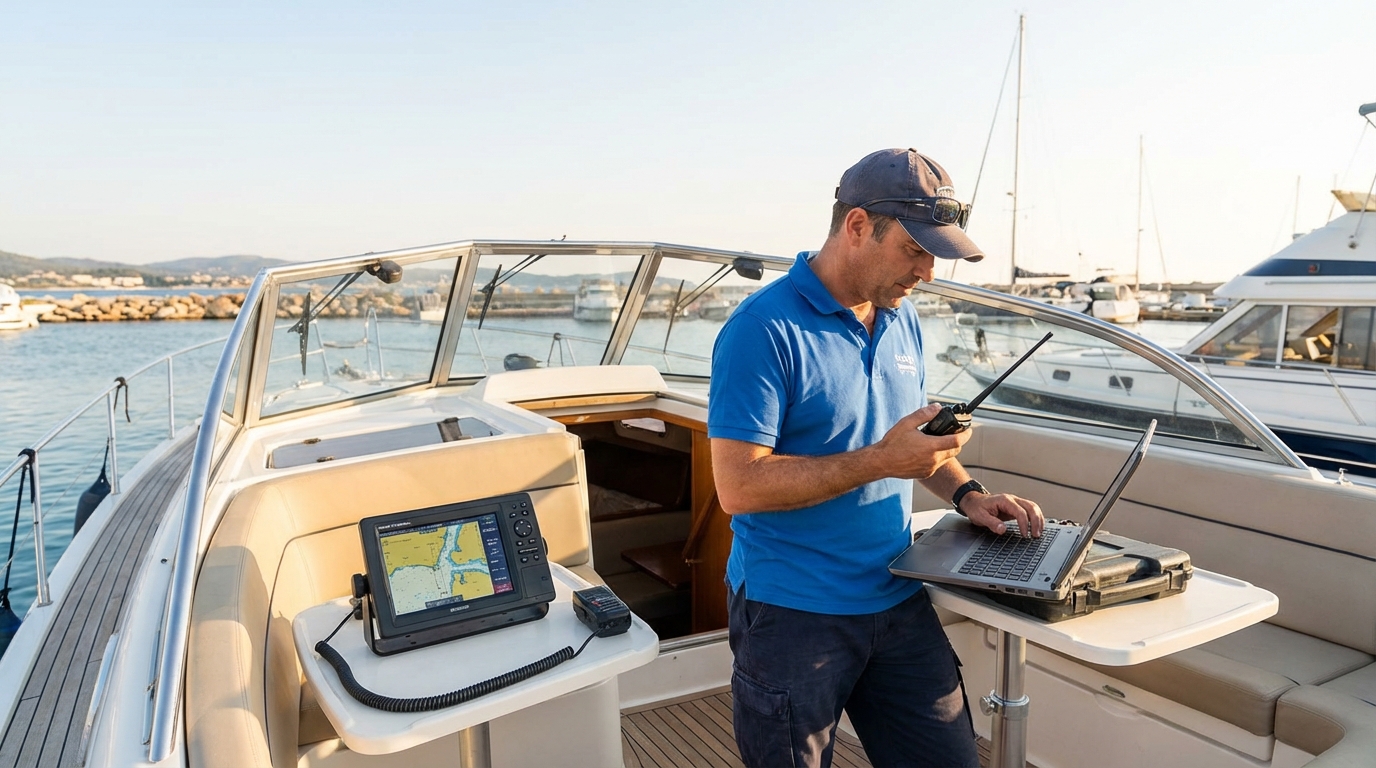
- No wiring or installation required.
- Independent of the boat’s power supply (functions if the boat’s battery dies).
- Portability for use in multiple vessels or emergency life rafts.
Benefits of Compact Fixed Units:
- Four times the transmission power for much longer range.
- Larger speakers provide better volume in noisy environments.
- Constant power supply ensures the radio is always ready to use.
Integrating GPS and DSC Technology
Modern small marine VHF radios almost always include an internal GPS antenna to simplify the setup process for the user. In previous years, you had to wire your radio to a separate GPS unit using complex NMEA 0183 or NMEA 2000 cables. Today, you simply turn the radio on, and it acquires a satellite lock within seconds to support all DSC functions.
DSC acts like a digital identity for your boat, using a nine-digit Maritime Mobile Service Identity (MMSI) number. When you have an MMSI, your radio can “ring” other specific boats like a telephone. This keeps the public airwaves clear of chatter while ensuring you can reach a specific vessel directly. For those on smaller vessels, the best marine vhf radio handheld options provide the right balance of size and power.
Understanding Waterproof Ratings and Durability
Small radios face more exposure to the elements than larger units tucked away in cabin cruisers or yachts. You must verify the Ingress Protection (IP) rating before purchasing a radio that will sit on an open console or be held in your hand. Most high-quality marine electronics carry an IPX7 or IPX8 rating to ensure they can survive heavy spray and dunks.
An IPX7 rating means the radio can survive being submerged in one meter of water for thirty minutes. An IPX8 rating goes further, offering protection against continuous submersion at greater depths specified by the manufacturer. Since small boats often sit closer to the water’s surface, these ratings are non-negotiable for long-term reliability.
Common IP Ratings for Marine Radios:
- IPX4: Splash-proof; can handle light rain but not submersion.
- IPX6: Protects against powerful water jets (heavy waves or pressure washing).
- IPX7: Submersible at 1 meter for 30 minutes.
- IPX8: Submersible at 1.5 meters or more for extended periods.
Installing a Small Fixed-Mount VHF Radio
Installing a compact fixed-mount radio requires careful planning to ensure the antenna has a clear “view” of the horizon. You need to mount the radio unit in a location where the screen is visible from the steering position and the microphone is within reach. Because these units are small, they are often mounted on top of the dash using a gimbal bracket or flush-mounted into the fiberglass.
You will need to run two wires for power (positive and negative) directly to your boat’s fuse block or battery. It is essential to use marine-grade tinned copper wire to prevent corrosion in the salty air. Once the power is connected, you must attach the PL-259 connector from your antenna cable to the back of the radio.
Steps for a Clean Installation:
- Select a Location: Avoid areas near compasses or high-heat sources like engines.
- Mount the Bracket: Secure the gimbal bracket using stainless steel hardware and marine sealant.
- Run Power Cables: Use a 5-amp or 10-amp fuse as specified in your radio’s manual.
- Connect the Antenna: Ensure the connector is tight and protected with heat-shrink tubing if exposed.
- Program MMSI: You cannot use DSC features until you enter your unique MMSI number into the settings.
Operating Procedures for Small Marine Radios
Proper operation of a small marine VHF radio involves following strict protocols to ensure the airwaves remain clear for emergencies. Most experts recommend reviewing how to use a vhf radio before your first trip of the season. You should always start by listening to the channel before you press the “Push-to-Talk” (PTT) button to avoid interrupting other boaters.
Channel 16 is the international hailing and distress frequency, and it should never be used for casual conversation. If you need to talk to a friend, you hail them on Channel 16 and immediately ask them to move to a working channel like 68, 69, 71, or 72. Keeping your transmissions brief and professional is the hallmark of an experienced mariner.
Common Radio Channels and Their Uses:
- Channel 16: Emergencies, distress, and initial hailing only.
- Channel 13: Bridge-to-bridge communication for navigating near large ships.
- Channel 22A: Communications with the U.S. Coast Guard.
- Channels 68/69/71/72: General recreational boat-to-boat talk.
- WX Channels: Receive-only weather broadcasts from NOAA.
Battery Life and Power Management for Handhelds
Battery technology in 2026 has significantly improved the runtime of small handheld marine VHF radios. Most modern units use high-capacity Lithium-Ion (Li-Ion) or Lithium-Polymer (Li-Po) batteries that can last for 12 to 20 hours on a single charge. However, frequent transmitting at the high 6-watt setting will drain the battery much faster than just listening.
If you are going on a multi-day trip, look for a radio that includes a 12V DC charging cradle or a USB-C charging port. Some small radios also come with an alkaline battery tray that allows you to use standard AA batteries in an emergency. This provides a critical backup if you are unable to reach a power outlet for several days. Check our marine vhf radio reviews to see how the latest compact models performed in real-world testing.
| Battery Type | Runtime (Standby) | Runtime (High Power Transmit) | Pros |
|---|---|---|---|
| Lithium-Ion | 15 – 20 Hours | 4 – 6 Hours | Lightweight, no memory effect |
| Li-Po | 12 – 16 Hours | 3 – 5 Hours | Very thin, high energy density |
| Alkaline (AA) | 10 – 12 Hours | 1 – 2 Hours | Easy to find replacements |
Choosing the Right Antenna for Small Boats
The antenna is the most important part of your radio system when it comes to determining your total communication range. For small boats, you typically have to choose between a short 3-foot stainless steel whip or a 4-to-8-foot fiberglass pole. Short antennas are more durable and won’t hit low bridges, but they offer less “gain” than longer models.
Gain is measured in decibels (dB), and for most small boats, a 3dB or 6dB antenna is the standard choice. A 3dB antenna has a wide radiation pattern, which is better for small boats that toss and turn in rough water. A 6dB antenna focuses the signal more toward the horizon, providing more range on flat water but losing signal if the boat heels or rolls significantly.
Antenna Selection Criteria:
- Vessel Type: Sailboats need masthead antennas; powerboats need rail or console mounts.
- Mounting Surface: Ensure you have a flat, reinforced area to handle the leverage of a tall antenna.
- Cable Length: Keep the RG-58 or RG-8X cable as short as possible to prevent signal loss.
- Folding Mounts: Useful for boats that are trailered or stored in garages.
Advanced Small Radio Features in 2026
By March 2026, many small marine VHF radios have integrated features that were once reserved for high-end chartplotters. This includes built-in AIS (Automatic Identification System) receivers that show the position of nearby commercial ships directly on your radio’s screen. For a small boat owner, this is a massive safety upgrade that helps avoid collisions in busy shipping lanes.
Some compact radios now also feature Bluetooth connectivity, allowing you to pair the radio with your smartphone. You can use an app on your phone to update the radio’s software, manage your contact list, or even use your phone as a remote microphone. This is particularly helpful if your radio is mounted in a hard-to-reach spot on a crowded console.
Modern Technical Upgrades:
- AIS Target Overlay: View ship names, distance, and heading on the radio display.
- Rewind-Say-Again: Automatically records the last 30-60 seconds of incoming audio so you never miss a message.
- NMEA 2000 Support: Allows the small radio to share GPS data with every other screen on the boat.
- Dot-Matrix Displays: Clearer text and small icons that make the menu system easier to navigate.
Maintenance and Care for Marine Electronics
Maintaining your small marine VHF radio ensures that it will function correctly when you actually need it in an emergency. Saltwater is extremely corrosive, so you must rinse your radio with fresh water after every trip. If you have a handheld model, pay close attention to the charging contacts on the back, as salt buildup here will prevent the battery from charging.
You should perform a “Radio Check” periodically to verify your transmitter is working, but never do this on Channel 16. Use a designated automated radio check channel if available in your area, or ask a nearby boater for a signal report on Channel 68. Regular testing of the DSC distress button is not allowed, but most radios have a “Test Call” function that lets you verify the system with another DSC-equipped boat.
Maintenance Checklist:
- Freshwater Rinse: Wipe down the unit with a damp cloth after saltwater exposure.
- Inspect Connections: Check the antenna cable and power wires for signs of green corrosion.
- Battery Health: Charge your handheld at least once a month during the off-season to maintain cell life.
- Seal Inspection: Ensure the rubber gaskets for the battery compartment and accessory ports are intact.
- Firmware Updates: Check the manufacturer’s website for software patches that improve GPS or DSC performance.
Comparing Small Marine VHF Radio Brands
While many brands produce marine electronics, only a few specialize in the “small” or “compact” category with high-reliability standards. You should look for manufacturers that offer at least a 3-year waterproof warranty. This protection is vital because small radios are often the first things to get soaked when a storm rolls in or a wave breaks over the bow.
A higher price point usually buys you a faster GPS processor and a more intuitive user interface. Cheaper small radios often have “clunky” menus that are difficult to navigate with wet fingers or while wearing gloves. Investing in a mid-range or premium small radio is generally worth the cost for the added peace of mind. Our vhf marine radio buying guide provides more detailed breakdowns of what to look for across different price tiers.
Legal Requirements and Licensing
In the United States, recreational boaters are generally not required to have a station license to operate a VHF radio on domestic waters. However, you are still required to follow the rules set by the FCC regarding proper channel usage and emergency protocols. If you plan to travel to international ports, such as the Bahamas or Canada, you must obtain a restricted radiotelephone operator permit.
The most important legal step you must take is registering for an MMSI number. This number is unique to your vessel and is the “phone number” for your DSC system. Without an MMSI, your small marine VHF radio cannot perform its life-saving digital functions. You can obtain an MMSI for free or a small fee through organizations like BoatUS or the FCC.
Regulatory Quick Facts:
- Domestic Use: No license required for most recreational boats in U.S. waters.
- International Use: License required for boat and operator when visiting foreign ports.
- MMSI Registration: Mandatory for DSC functionality; must be updated if you sell the boat.
- Radio Checks: Prohibited on Channel 16 by law to keep the frequency clear.
FAQ
Can I use a small handheld VHF radio as my primary radio?
Yes, you can use a handheld as your primary radio on small boats like kayaks or personal watercraft. However, keep in mind that its range is limited to about 5 miles due to its lower power and shorter antenna. For boats venturing further offshore, a fixed-mount 25-watt radio is highly recommended as the primary communication tool.
Does a small marine VHF radio need a license?
In most cases, recreational boaters in the U.S. do not need a license for domestic use. You only need a license if you are a commercial vessel, a boat over 65 feet, or if you are sailing to international destinations. Even without a license, you must still register for an MMSI number to use the DSC features on your radio.
What is the difference between IPX7 and IPX8?
IPX7 means the radio is tested to survive being underwater at a depth of 1 meter for 30 minutes. IPX8 is a more stringent rating where the manufacturer specifies a deeper depth and longer duration, often up to 1.5 or 2 meters indefinitely. For a small boat where the radio might sit in a wet cupholder or get dropped overboard, IPX8 is the superior choice.
Why does my small radio have poor range?
Range issues are almost always caused by antenna height or obstacles between the transmitter and receiver. If you are using a handheld, try standing up or moving to a higher point on the boat to improve the signal. For fixed-mount radios, check the antenna cable for kinks or corrosion, as these issues can significantly reduce your transmission power.
Can I charge a handheld marine radio via USB?
Many small marine VHF radios released in 2026 now feature USB-C charging ports. This allows you to charge the radio using the same cables and power banks you use for your smartphone. This is a significant advantage for small boaters who may not have a traditional 12V cigarette lighter outlet on their vessel.
Is Digital Selective Calling (DSC) hard to set up?
Setting up DSC is simple once you have your nine-digit MMSI number. You enter the number into the radio’s settings menu, and the internal GPS handles the rest. Once set up, the DSC system is “always on” and ready to send an automated distress signal at the touch of a button.
Selecting the Right Communication Strategy
Choosing a small marine VHF radio is a decision that balances physical space with the need for safety. For most boaters on small craft, the best strategy is a “layered” approach: use a compact fixed-mount radio for your primary high-power communications and keep a floating handheld in your life vest as a backup. This ensures that even if your boat loses power or you end up in the water, you still have a way to call for help.
At VHF Radio (Marine Guide), we have seen how the evolution of internal GPS and DSC has transformed small boat safety over the last decade. In 2026, there is no reason to settle for a radio that lacks these features. By selecting a unit with high-quality waterproofing and a clear display, you are investing in a tool that provides peace of mind every time you leave the dock.
📅 Last updated: