
Your Complete Guide to Understanding Radio Frequencies
Choosing between VHF and UHF radios can feel overwhelming, especially when both promise reliable communication. But here’s the truth: the right frequency can make or break your radio communication, whether you’re coordinating a marine rescue, managing a construction site, or staying connected during outdoor adventures.
VHF and UHF Radios
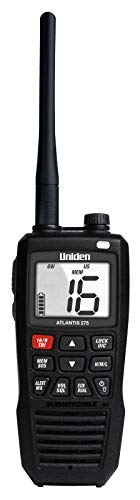
Uniden Atlantis 275 Handheld Two-Way VHF Marine Radio, Floating IPX8 Submersible Waterproof, Large Dual-Color Screen, 6-Watt, All USA/International/Canadian Marine Channels, NOAA Weather Alerts
Uniden Atlantis 275 Handheld Two-Way VHF Marine Radio, Floating IPX8 Submersible Waterproof,…
VIEW LATEST PRICE![Standard Horizon HX210 6W Floating Handheld Marine VHF Transceiver [HX210]](https://m.media-amazon.com/images/I/31rWoLjz3rL._SL500_.jpg)
Standard Horizon HX210 6W Floating Handheld Marine VHF Transceiver [HX210]
Standard Horizon HX210 6W Floating Handheld Marine VHF Transceiver [HX210]
VIEW LATEST PRICE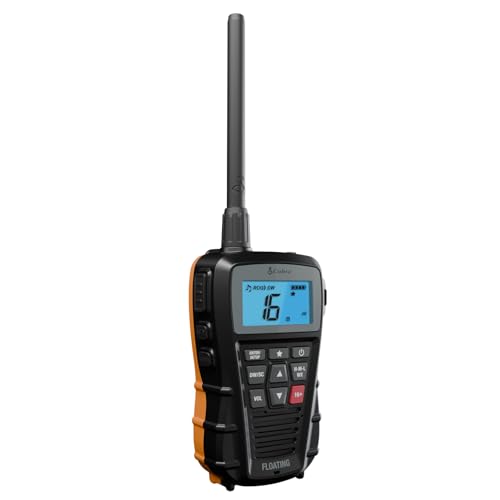
Cobra BlueBound 150 VHF Handheld Marine Radio – Black – 3-Watt, Floating, Long Range, NOAA Weather Alerts, International Functionality, IPX7 Waterproof, USB-C, Submersible, LCD Screen, Belt Clip
Cobra BlueBound 150 VHF Handheld Marine Radio – Black – 3-Watt, Floating,…
VIEW LATEST PRICEThis comprehensive guide breaks down everything you need to know about VHF radio comparison, frequency explained in simple terms, and the critical UHF vs VHF differences that impact your daily operations.
Understanding Radio Frequencies: The Basics
Before diving into the VHF vs UHF differences, let’s establish what these frequencies actually mean.
VHF (Very High Frequency) operates between 30 MHz and 300 MHz. Marine radios, aviation communications, and FM radio broadcasts all use VHF frequencies. These longer wavelengths travel farther in open spaces but struggle to penetrate solid objects.
UHF (Ultra High Frequency) ranges from 300 MHz to 3000 MHz. Your cell phone, GPS, WiFi, and most walkie-talkies operate in this range. The shorter wavelengths excel at penetrating walls and navigating through buildings.

Visual comparison of VHF and UHF wavelengths and their characteristics
The Critical UHF vs VHF Differences
| Feature | VHF (30-300 MHz) | UHF (300-3000 MHz) |
|---|---|---|
| Wavelength | Longer (1-10 meters) | Shorter (0.1-1 meter) |
| Range in Open Areas | Excellent (up to 60+ miles) | Good (up to 30-40 miles) |
| Building Penetration | Poor | Excellent |
| Obstacle Navigation | Reflects/bounces off obstacles | Penetrates obstacles |
| Antenna Size | Longer antennas required | Compact antennas possible |
| Battery Life | Better efficiency | Slightly less efficient |
| Best Environment | Outdoors, marine, rural | Urban, indoor, industrial |
VHF Radio: When and Why to Choose It
Key Benefits of VHF Frequencies
🌊 Superior Range
VHF waves travel farther in unobstructed environments, making them ideal for marine and aviation use.
🔋 Energy Efficient
Lower frequencies require less power to transmit, extending battery life significantly.
🎯 Less Interference
Fewer competing signals in the VHF band mean clearer communication in open areas.
💰 Cost Effective
Generally less expensive equipment with simpler antenna requirements.
Perfect Use Cases for VHF
- Marine Communication: Coast Guard channels, ship-to-ship, and ship-to-shore communications all rely on VHF for maximum range over water
- Aviation: Air traffic control and pilot communications use VHF exclusively for reliability
- Outdoor Recreation: Hiking, hunting, and camping in open terrain benefit from VHF’s extended range
- Rural Operations: Farming, ranching, and rural emergency services where obstacles are minimal
- Weather Radio: NOAA weather broadcasts operate on VHF frequencies for wide coverage
✅ VHF Advantages
- Longest range in open environments
- Better battery life
- Penetrates foliage better
- Less crowded frequency spectrum
- Lower equipment costs
❌ VHF Limitations
- Poor building penetration
- Requires longer antennas
- Struggles in urban canyons
- Limited channels available
- Ineffective in multi-story buildings
UHF Radio: The Urban Warrior’s Choice
Key Benefits of UHF Frequencies
🏢 Building Penetration
UHF excels at penetrating concrete, steel, and walls, perfect for multi-floor buildings.
📡 Compact Design
Shorter wavelengths mean smaller, more portable antennas and equipment.
🔢 More Channels
Wider bandwidth allows for more available channels, reducing congestion.
🎪 Obstacle Navigation
UHF waves navigate around and through obstacles better than VHF.
Perfect Use Cases for UHF
- Construction Sites: Multi-story buildings and steel structures require UHF’s penetration capabilities
- Warehouses: Metal shelving and concrete walls are no match for UHF signals
- Hospitals & Hotels: Multiple floors and interior walls demand UHF’s building-penetrating power
- Retail Stores: Dense inventory and interior spaces benefit from UHF’s obstacle navigation
- Manufacturing: Industrial equipment and metal structures work best with UHF frequencies
- Security Teams: Urban patrol and building security rely on UHF for consistent indoor coverage
✅ UHF Advantages
- Excellent building penetration
- Compact, portable equipment
- More available channels
- Better in crowded urban areas
- Navigates obstacles effectively
❌ UHF Limitations
- Shorter range in open areas
- Higher power consumption
- More expensive equipment
- Less effective through heavy foliage
- More susceptible to interference

Quick reference guide for choosing between VHF and UHF based on your environment
Making the Right Choice: Decision Framework
The best radio frequency depends entirely on your operating environment. Here’s a straightforward decision framework:
Choose VHF When:
- Your primary communication happens outdoors with clear line-of-sight
- You need maximum range (marine, aviation, rural operations)
- Battery life is critical for extended operations
- You’re working in open terrain with minimal obstacles
- Budget constraints favor more affordable equipment
Choose UHF When:
- You’re operating inside buildings or around dense obstacles
- Your work environment includes metal structures or concrete walls
- You need compact, portable equipment
- Multiple floors or complex building layouts are involved
- Urban environments with tall buildings create “urban canyons”
Frequency Explained: The Science Made Simple
Understanding why VHF and UHF behave differently comes down to wavelength physics. Think of radio waves like ripples in water:
VHF’s longer waves (like large ocean swells) travel far but bounce off obstacles rather than penetrating them. They need clear paths to reach their destination. This makes VHF excellent for line-of-sight communication over long distances.
UHF’s shorter waves (like small ripples) don’t travel as far naturally, but they’re better at squeezing through gaps and penetrating barriers. They navigate around corners and through buildings more effectively.
Neither frequency is inherently “better”—they’re optimized for different scenarios, which is why both continue to thrive in their respective niches.
Real-World Applications and Success Stories
Marine Operations (VHF)
The U.S. Coast Guard exclusively uses VHF for marine communications. Why? Over open water, VHF Channel 16 can reach vessels up to 60 miles away—critical for emergency response and coordination. The longer wavelength means search and rescue teams can maintain contact even when ships disappear below the horizon.
Hospital Communications (UHF)
Modern hospitals rely on UHF systems to ensure doctors and nurses stay connected across multiple floors filled with medical equipment. UHF waves penetrate the concrete and steel construction while avoiding interference with sensitive medical devices. VHF would simply dead-end at the first concrete wall.
Construction Sites (UHF)
Large construction projects face a unique challenge: steel beams, concrete walls, and multiple building levels. UHF radios allow foremen on the ground floor to communicate with workers on the 20th floor, even through steel framing and concrete cores that would block VHF completely.
Still Not Sure Which Frequency You Need?
Consider your primary operating environment. If you spend 80% of your time outdoors in open areas, VHF wins. If 80% of your communication happens indoors or in urban environments, UHF is your answer. For mixed use? Dual-band radios give you the best of both worlds.
Common Myths About VHF and UHF
Myth #1: “UHF is always better because it’s newer technology.”
Reality: Both frequencies have existed for decades. UHF isn’t “better”—it’s simply optimized for different environments. VHF remains superior for open-area communications.
Myth #2: “VHF can’t work in cities.”
Reality: VHF works fine in cities for rooftop-to-rooftop or vehicle-to-vehicle communication. It struggles with building penetration, not urban environments themselves.
Myth #3: “Higher frequency always means better range.”
Reality: The opposite is true. Lower VHF frequencies generally provide longer range in unobstructed environments. UHF’s advantage is penetration, not distance.
Myth #4: “You need a license for all VHF/UHF radios.”
Reality: Many consumer radios operate on license-free frequencies (FRS, GMRS with basic license, MURS). Marine VHF and commercial frequencies do require licensing.
Technical Considerations Beyond Frequency
While VHF vs UHF represents the fundamental choice, several other factors impact real-world performance:
Power Output
Wattage matters significantly. A 5-watt VHF radio will dramatically outperform a 0.5-watt UHF handheld in open areas. Conversely, in buildings, even low-power UHF often beats high-power VHF.
Antenna Quality
Your antenna can make or break performance. Cheap rubber duck antennas limit both VHF and UHF effectiveness. Upgrading to a quality antenna can double your effective range regardless of frequency.
Interference and Noise
Urban environments have more UHF interference (WiFi, Bluetooth, cellular). Rural areas may have atmospheric noise affecting VHF. Consider your local electromagnetic environment when selecting equipment.
The Bottom Line: VHF Radio Comparison Summary
After examining the complete VHF vs UHF differences, here’s what you need to remember:
VHF excels when: You need maximum range in open environments, work primarily outdoors, want extended battery life, and operate in marine or aviation contexts.
UHF excels when: Building penetration is essential, you work in urban or industrial settings, compact equipment matters, and obstacles fill your operating environment.
The frequency you choose fundamentally shapes your communication capabilities. Understanding these differences ensures you select equipment that actually works for your specific needs—not just what’s marketed as “newest” or “best.”
For many professional operations, the answer isn’t either/or—it’s both. Dual-band radios or separate VHF/UHF systems provide complete coverage across all environments.
📅 Last updated: