
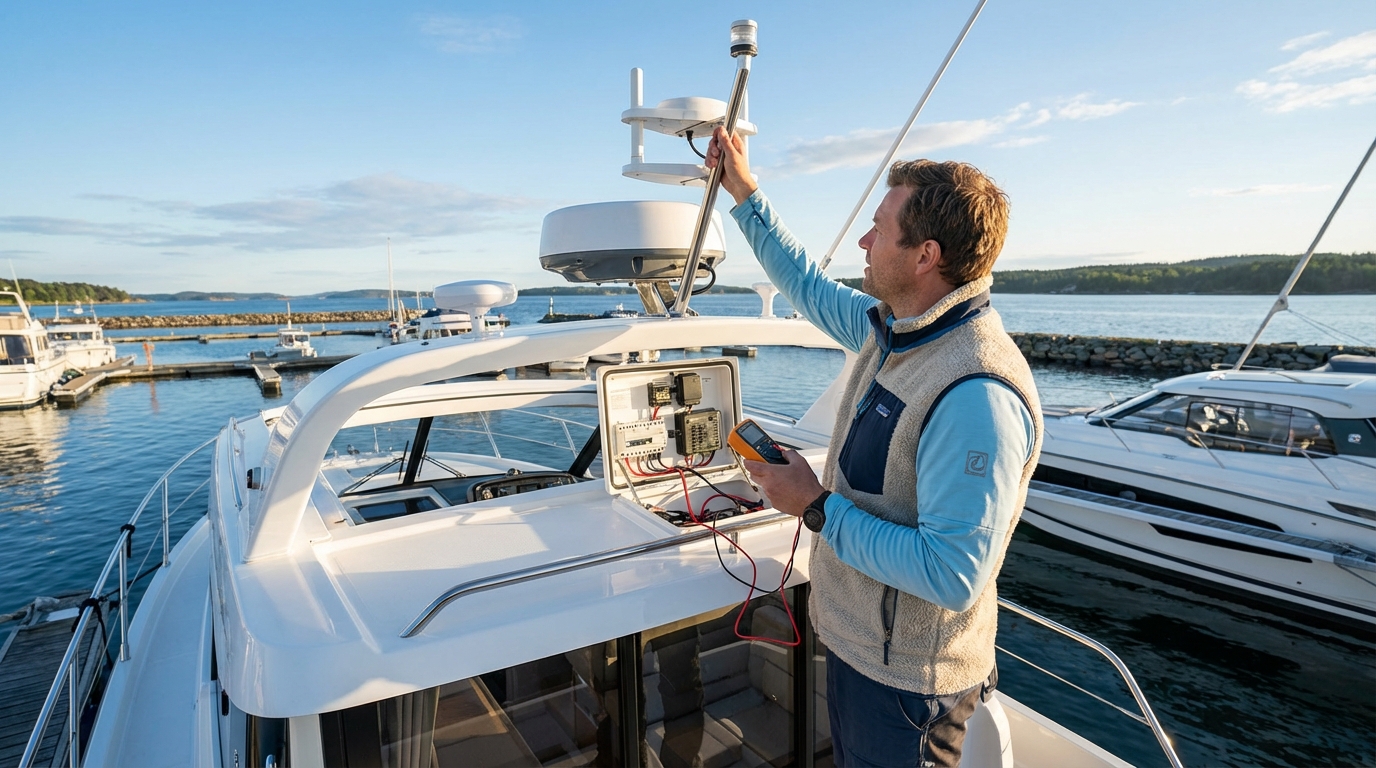
To use a handheld VHF marine radio effectively, you must turn the device on, adjust the squelch until background static disappears, monitor Channel 16 for distress calls, and use the Push-to-Talk (PTT) button to communicate using clear, standard marine protocols. A handheld VHF is a line-of-sight communication tool limited to 5 or 6 watts of power, making it essential for short-range hailing, localized safety coordination, and emergency signaling when your primary fixed-mount radio fails.
Master the Basic Controls and Interface
Operating a handheld VHF radio requires an understanding of four primary controls: the power/volume knob, the squelch adjustment, the channel selector, and the Push-to-Talk (PTT) button. Most modern handheld units feature a simplified interface designed for use with gloves or wet hands, but the logic remains consistent across all brands.
Handheld VHF Marine Radios

Retevis RM40 Marine Radio with GPS,DSC Distress Call,Mob Alarm,IP67 Waterproof Floating Handheld Radio,NOAA Weather Alert,1500mAh Battery,International Channels,for Boats Sailing Coast Guard (1 Pack)
Retevis RM40 Marine Radio with GPS,DSC Distress Call,Mob Alarm,IP67 Waterproof Floating Handheld…
VIEW LATEST PRICE
Uniden MHS338BT Floating, Handheld Marine VHF Radio, 6-Watts, GPS and Bluetooth, Submersible IPX8, Emergency Strobe & Flashlight, NOAA Weather Alerts, FM Radio, Chargeing Cradle & Li-ion Battery.
Uniden MHS338BT Floating, Handheld Marine VHF Radio, 6-Watts, GPS and Bluetooth, Submersible…
VIEW LATEST PRICE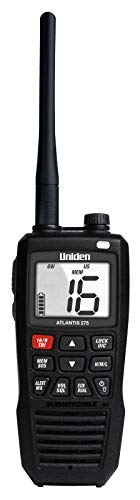
Uniden Atlantis 275 Handheld Two-Way VHF Marine Radio, Floating IPX8 Submersible Waterproof, Large Dual-Color Screen, 6-Watt, All USA/International/Canadian Marine Channels, NOAA Weather Alerts
Uniden Atlantis 275 Handheld Two-Way VHF Marine Radio, Floating IPX8 Submersible Waterproof,…
VIEW LATEST PRICEWhen you first turn the radio on, the volume should be set high enough to hear over engine noise or wind. The squelch control is perhaps the most misunderstood setting. It acts as a gate for incoming signals; if the squelch is too low, you will hear a constant hiss of atmospheric static. If it is too high, the radio may block out weak, distant transmissions that you need to hear. To set it correctly, turn the squelch down until you hear static, then slowly turn it up until the static just disappears.
The PTT button, located on the side of the unit, must be held down firmly while speaking and released immediately to listen. Because VHF is “simplex” (only one person can talk at a time on a single frequency), you cannot hear the other person if your finger is on the button. Understanding how to use a VHF radio on a boat starts with this fundamental physical coordination.
Essential Channel Selection for Boaters
You must use specific VHF channels for their legally designated purposes to ensure clear communication and emergency response. In the United States and international waters, the VHF spectrum is divided into channels 01 through 88, though many are reserved for commercial, government, or specialized use.
| Channel | Primary Purpose | Usage Rules |
|---|---|---|
| 16 | International Distress, Safety, and Hailing | Mandatory monitoring; keep conversations under 1 minute. |
| 09 | Secondary Hailing (Non-Commercial) | Use this for initial contact to keep Channel 16 clear. |
| 13 | Bridge-to-Bridge Navigation | Used by commercial ships and pilots for passing arrangements. |
| 22A | Coast Guard Liaisons | After contacting the USCG on 16, they will move you here. |
| 68, 69, 71, 72 | Working Channels (Non-Commercial) | General talk between recreational boaters. |
| WX1, WX2, WX3 | NOAA Weather Radio | Receive-only channels for continuous weather updates. |
Channel 16 is the most critical frequency. Every vessel equipped with a VHF radio is legally required to monitor Channel 16 whenever the radio is turned on and not communicating on another frequency. If you need to talk to a friend on another boat, hail them on Channel 16 or 9, and as soon as they respond, tell them to “switch and answer on Channel 68” (or another open working channel). This keeps the hailing channels open for others.
Proper Voice Procedures and Marine Etiquette
Professional marine communication relies on standard “prowords” to ensure clarity over noisy or weak connections. You should always speak in a normal, clear tone—shouting into the microphone only causes distortion and makes your message harder to understand.
Before you press the PTT button, listen for at least five seconds to ensure you aren’t “stepping on” another transmission. When you are ready to speak, follow this standard hailing format:
- The Name of the Station Called: Say it three times (e.g., “Sea Ray Blue Moon, Blue Moon, Blue Moon“).
- Your Station Name: “This is the sailing vessel Wanderlust.”
- The Invitation to Respond: “Over.”
Once contact is established, move to a working channel immediately. Use “Over” when you expect a response and “Out” when the conversation is finished and you do not expect a response. Never say “Over and Out,” as these terms contradict each other. For a deeper look at these protocols, the BoatUS Foundation study guide provides excellent detail on radio discipline.
Emergency Signaling: Mayday, Pan-Pan, and Securite
There are three specific types of emergency calls you must know, each used for a different level of urgency. Using these words correctly ensures the Coast Guard and nearby vessels understand the gravity of your situation immediately.
Mayday is for situations involving immediate danger to life or property, such as sinking, fire, or a medical emergency where death is imminent. You should repeat the word “Mayday” three times at the start of the transmission. Provide your position (GPS coordinates or landmarks), the nature of the distress, the number of people on board, and a description of your vessel.
Pan-Pan (pronounced pahn-pahn) is for urgent situations that are not yet life-threatening. Examples include a fouled propeller near a rocky lee shore or a serious but stable medical issue. It signals that you have an urgent message regarding the safety of a person or a vessel.
Securite (pronounced say-cure-it-tay) is used for navigation safety messages. This includes reports of submerged debris, malfunctioning buoys, or a large ship entering a narrow channel. If you see a hazard, you are doing the boating community a favor by broadcasting a Securite message on Channel 16 and then switching to a working channel like 22A to provide details.
Digital Selective Calling (DSC) on Handheld Units
Digital Selective Calling (DSC) is a semi-automated distress system that sends a digital “burst” to the Coast Guard and all nearby DSC-equipped vessels at the touch of a single button. While once exclusive to fixed-mount radios, many modern handhelds now include internal GPS and DSC functionality.
To use DSC, your radio must be registered with a Maritime Mobile Service Identity (MMSI) number. This nine-digit number acts like a phone number for your boat. When you press the red “Distress” button (usually protected by a spring-loaded cover), the radio transmits your MMSI and your exact GPS coordinates. This is the most effective way to get help because it removes the possibility of human error in describing your location.
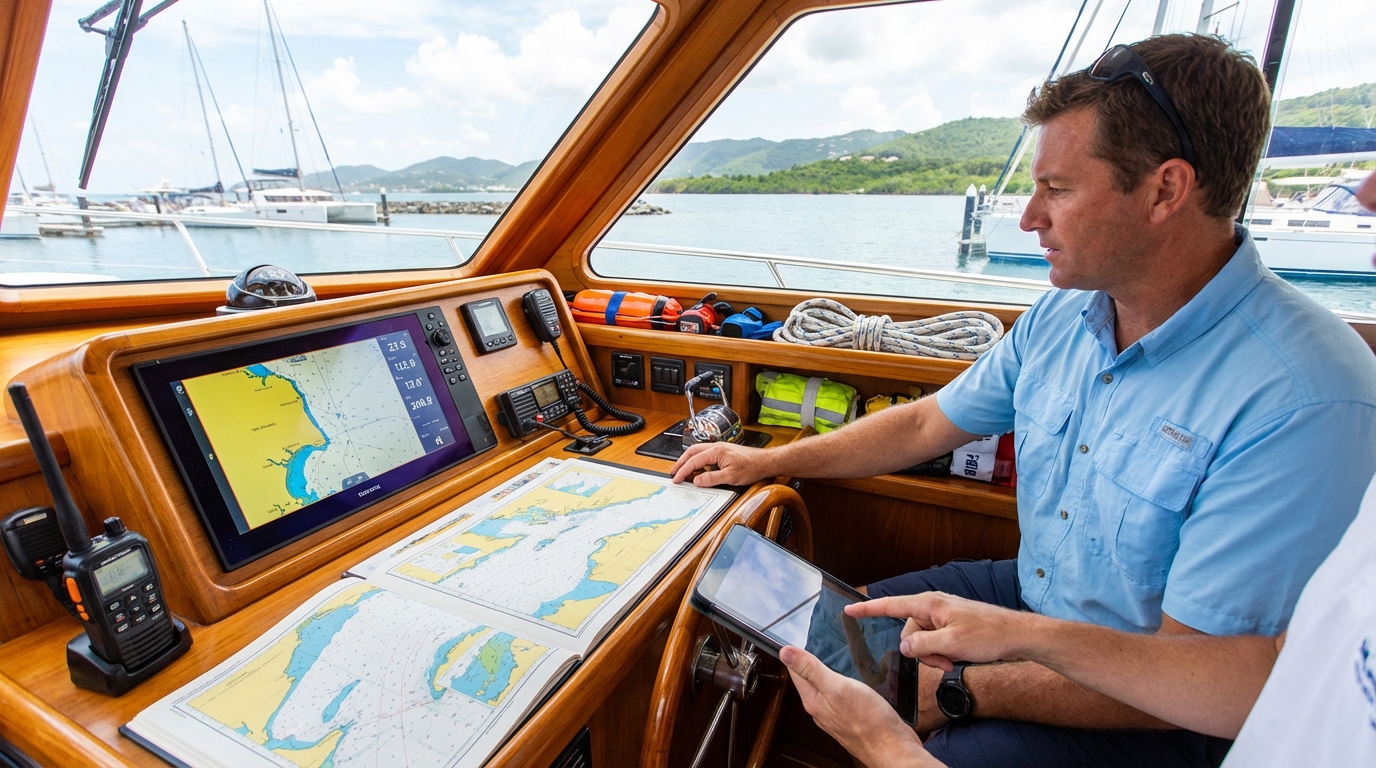
If you are looking for a unit with these features, you can browse the best handheld VHF marine radio with GPS to find a device that offers both voice and digital safety features. Once you have a DSC-capable radio, you must learn how to use DSC VHF radio specifically, as the menu systems for sending individual or group calls vary by manufacturer.
Maximizing the Range of a 6-Watt Handheld
A handheld VHF radio typically has a maximum output of 6 watts, compared to the 25 watts of a fixed-mount radio. This means your range is significantly shorter, often limited to 3 to 8 miles depending on conditions. VHF signals travel in straight lines; they do not curve with the earth or pass through large landmasses.
To maximize your range:
- Hold the radio vertically. The antenna should point straight up for the best signal polarization.
- Get as high as possible. Because VHF is “line-of-sight,” standing on the flybridge or even just standing up in your cockpit can add miles to your signal range.
- Check your battery. Handheld radios often automatically drop their power output from 6 watts to 1 watt when the battery is low to preserve life.
- Clear the area. Avoid talking from inside a cabin or under a hardtop if possible, as fiberglass and metal can attenuate the signal.
A guide to properly using a VHF radio often emphasizes that “height is might” in marine electronics. If you are in a low-profile dinghy or kayak, your range to another boat might be as little as 2 miles.
Licensing and Legal Requirements for Handheld Use
In the United States, the FCC does not require a license for recreational boaters operating domestically. However, the rules change if you travel to international waters (including Canada, Mexico, or the Bahamas) or if you are a commercial operator.
Even if you don’t need a license, you are still subject to FCC regulations regarding “radio silence” and the prohibition of profanity. Using a VHF radio on land is generally illegal because these frequencies are reserved for maritime use. The only exception is for licensed shore stations or specific permits.
If you plan to use your handheld radio internationally, you will need a Restricted Radiotelephone Operator Permit. Additionally, your vessel will need a Station License. For most weekend boaters staying in US coastal or inland waters, simply having the radio on board is perfectly legal, provided it is used for its intended maritime purposes.
Maintaining Your Handheld VHF Battery and Hardware
The battery is the weakest link in any handheld VHF system. Most units use Lithium-Ion (Li-Ion) batteries, which provide excellent power density but require specific care to ensure they are ready for an emergency.
Always charge your radio after every trip, even if you only used it briefly. Cold weather can significantly reduce battery life, so if you are boating in winter conditions, keep the radio in a pocket close to your body to maintain its temperature. Many professional mariners carry a “battery tray” accessory, which allows them to use standard AA alkaline batteries as a backup if the rechargeable pack dies.
Maintenance checklist for handheld units:
- Rinse with fresh water: Even if your radio is waterproof (IPX7 or IPX8), salt crystals can build up in the speaker mesh or under the buttons.
- Inspect the antenna: Ensure the antenna is tightly screwed on and has no visible cracks in the rubber coating.
- Check the gaskets: If your radio has a removable battery, inspect the O-ring or gasket for debris that could compromise the waterproof seal.
- Test the PTT: Periodically perform a “radio check” on a non-emergency channel (like 68 or 72) to ensure your transmit and receive functions are working.
Routine Communication: How to Request a Radio Check
You should never request a radio check on Channel 16. It is a violation of FCC rules and clutters the emergency frequency. Instead, use a working channel or an automated radio check service if one is available in your area.
To perform a manual radio check:
- Switch to an open working channel (68, 69, 71, or 72).
- Say: “Radio check, radio check, radio check. This is the Wanderlust on channel 72. How do you read me? Over.”
- Wait for a response. A nearby boater will usually reply with something like, “Wanderlust, I hear you loud and clear,” or “I read you 5-by-5” (meaning perfect volume and clarity).
- Acknowledge the response: “Copy that. Thank you. This is Wanderlust standing by on 16. Out.”
This process ensures your radio is transmitting at full power and your microphone is working before you head out into open water.
Understanding Waterproof Ratings and Buoyancy
Handheld VHF radios are often exposed to the harshest elements on a boat. When selecting or using a unit, you must understand its waterproof rating. Most quality marine handhelds are rated IPX7, which means they can withstand immersion in 1 meter of water for 30 seconds. Higher-end units are rated IPX8, allowing for deeper or longer immersion.
Buoyancy is another critical feature. Since a handheld is easily dropped overboard, many modern units are designed to float. Some even feature a “water-activated strobe” that starts flashing the moment the radio hits the water, making it easy to retrieve at night. If your radio does not float, it is essential to use a lanyard or a floating wrist strap.
If you drop a non-floating radio into salt water, its chances of survival are slim unless it is specifically rated for immersion. Even then, you must rinse the charging contacts immediately with fresh water and dry them thoroughly to prevent electrolysis and corrosion.
Using a Handheld as a Backup to a Fixed Mount
While a handheld is convenient, it should generally be considered a secondary communication tool on larger vessels. A fixed-mount radio connected to an antenna mounted high on a mast can transmit at 25 watts and reach distances of 20 to 50 miles.
However, the handheld is your primary lifeline in several scenarios:
- Power Failure: If your boat’s batteries fail or the electrical system is damaged by fire or flooding, your fixed-mount radio will die. The handheld operates on its own independent battery.
- Abandon Ship: If you must leave the vessel for a life raft, you cannot take the fixed-mount radio with you.
- Tender/Dinghy Operations: When you leave the big boat to go ashore or explore, the handheld keeps you in contact with the mother ship.
- Man Overboard: If a crew member falls overboard with a handheld clipped to their life jacket, they can talk the boat back to their position.
For those looking to equip their vessel with the best primary or secondary units, reviewing the best marine VHF radio handheld options is a good starting point to compare battery life and transmit power.
Common Mistakes to Avoid When Using a Handheld VHF
Experience on the water reveals several common errors that can compromise safety or lead to fines from the FCC. Awareness of these “don’ts” is just as important as knowing the “dos.”
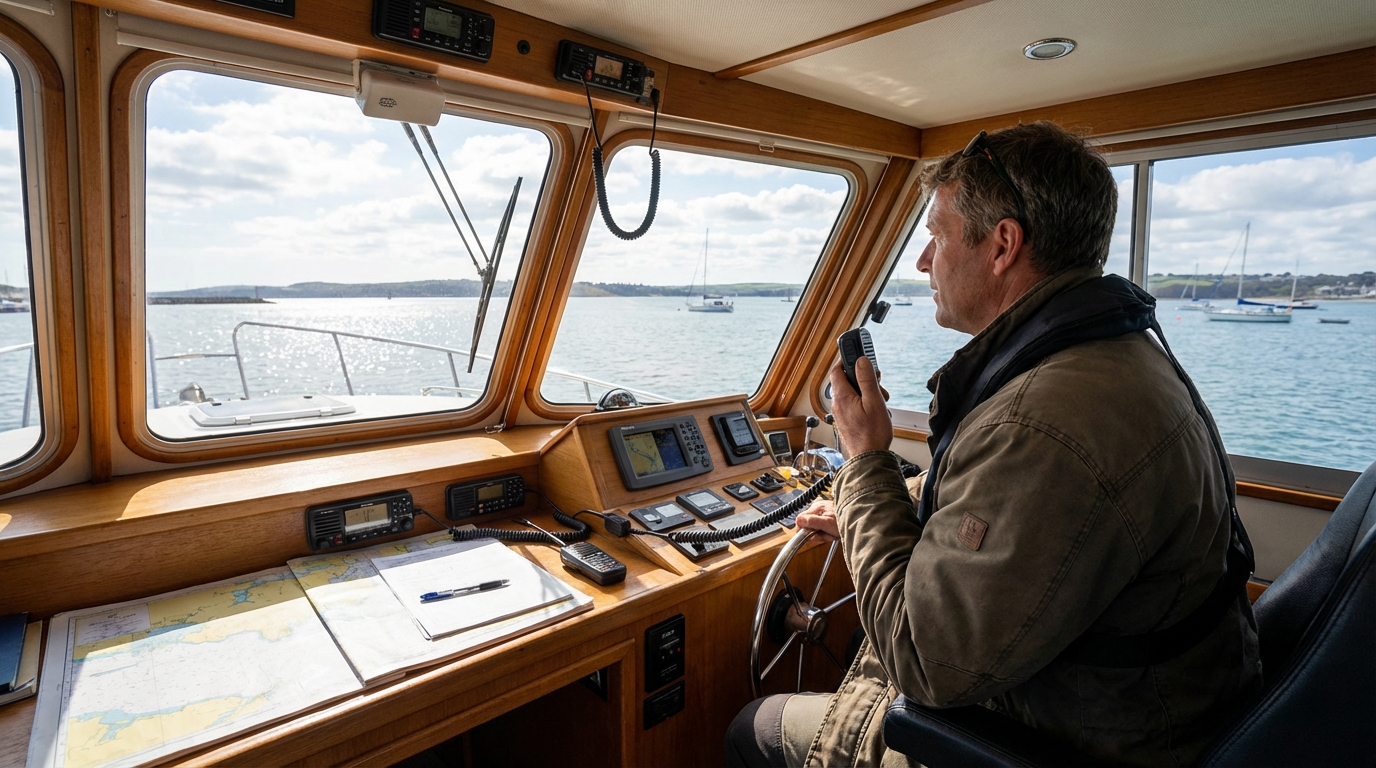
- Speaking too close to the mic: Keep the radio 2 to 3 inches from your mouth. Speaking directly into it creates a “pop” and wind noise that obscures your words.
- Using Channel 16 for casual chat: This is the most common offense. Channel 16 is for hailing and distress only. Once you find your friend, move.
- Neglecting the “Dual-Watch” feature: Most handhelds have a “Dual-Watch” or “Triple-Watch” mode. This allows you to listen to a working channel (like 68) while the radio periodically checks Channel 16 for you. Failing to use this often results in boaters missing important Coast Guard broadcasts.
- Leaving the radio in the charger indefinitely: Modern Li-Ion batteries can degrade if left on a “dumb” charger for weeks. Use a smart charger or unplug it once the light turns green.
- Using a handheld inside a steel or aluminum hull: Metal acts as a Faraday cage, blocking your signal. Always step out onto the deck or near a large window to transmit.
Advanced Features: Bluetooth and Noise Cancellation
As we move deeper into 2026, many handheld VHF radios have integrated modern technology to solve old problems. High-end units now include Bluetooth connectivity, allowing you to pair the radio with a headset. This is particularly useful for sailors on loud powerboats or in heavy wind where the built-in speaker might be insufficient.
Another modern advancement is active noise cancellation. These radios use a secondary microphone to listen to ambient engine or wind noise and electronically subtract it from your outgoing transmission. This results in incredibly clear audio even in gale-force conditions. Some units, like the one discussed in this MHS335BT 6W Class D handheld marine VHF radio review, demonstrate how these features are becoming standard for serious offshore boaters.
Troubleshooting Your Handheld VHF Radio
If your radio isn’t working correctly, follow these diagnostic steps before assuming the unit is broken:
- Can’t hear anything? Check the squelch. If it’s turned all the way up, the radio is blocking everything. Also, check if you accidentally turned the volume to zero or plugged in a headset.
- Can’t transmit? Check the battery level. Many radios block transmission when the battery is critically low. Ensure you aren’t on a “Receive Only” channel like a weather channel.
- People say you’re “breaking up”? You are likely at the edge of your range. Move to a higher position or ensure your hand isn’t covering the antenna.
- Display is frozen? Most handhelds have a “hard reset” key combination (usually holding the power and a channel button simultaneously). Consult your manual for the specific sequence.
- Charger isn’t working? Clean the gold-plated contacts on the back of the radio with a pencil eraser. Salt film often builds up here and prevents the charging pins from making a connection.
Summary of Handheld VHF Best Practices
Using a handheld VHF marine radio effectively is about balancing technical knowledge with situational awareness. While the hardware is simple, the environment in which it operates is demanding. You must treat the radio as a professional tool rather than a toy.
- Monitor Channel 16 religiously; it is the heartbeat of marine safety.
- Keep transmissions brief and use standard prowords like “Over” and “Out.”
- Understand your range—know that you are likely limited to what you can see on the horizon.
- Maintain your equipment by keeping it charged and rinsed of salt.
- Use DSC and GPS features if your radio has them, as they provide a quantum leap in safety over voice-only communication.
By following these protocols, you ensure that when you need to reach out for help—or when someone else needs to reach you—the lines of communication remain open, clear, and reliable. Professionalism on the radio not only keeps you safe but also earns the respect of the professional mariners and Coast Guard personnel who share the water with you.
📅 Last updated: