
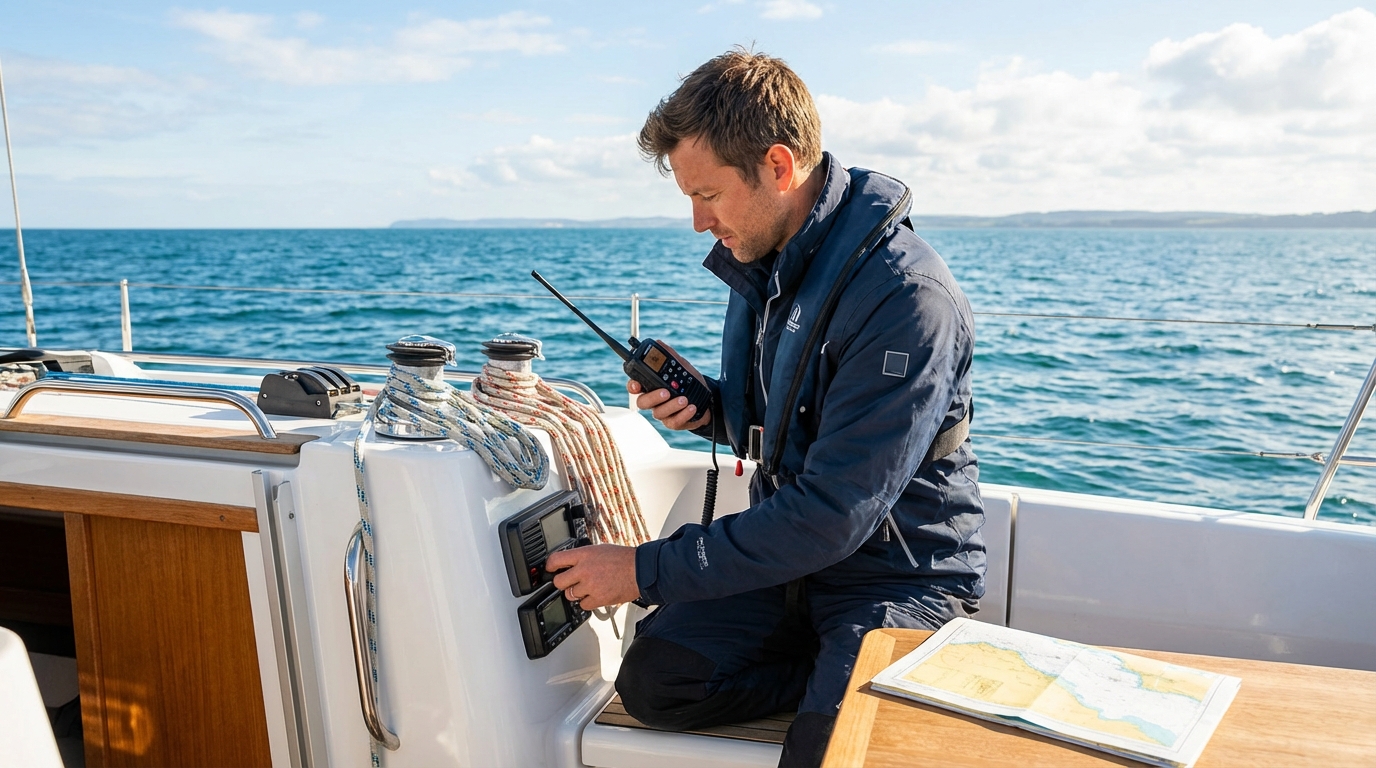
Marine VHF radio operates on a specific slice of the radio spectrum between 156.000 MHz and 174.000 MHz. While most boaters simply turn a dial to “Channel 16,” understanding the actual frequencies and the logic behind the channel list is what separates a novice from a competent mariner. When you understand how these frequencies are organized, you communicate clearer, troubleshoot interference faster, and stay safer on the water.
This guide breaks down the VHF marine band plan, explains the specific frequencies for critical channels, and clarifies the often-confusing difference between Simplex and Duplex modes.
Marine VHF Radio Equipment
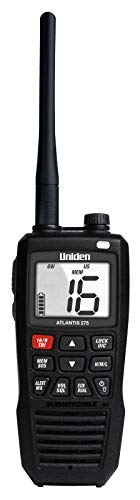
Uniden Atlantis 275 Handheld Two-Way VHF Marine Radio, Floating IPX8 Submersible Waterproof, Large Dual-Color Screen, 6-Watt, All USA/International/Canadian Marine Channels, NOAA Weather Alerts
Uniden Atlantis 275 Handheld Two-Way VHF Marine Radio, Floating IPX8 Submersible Waterproof,…
VIEW LATEST PRICE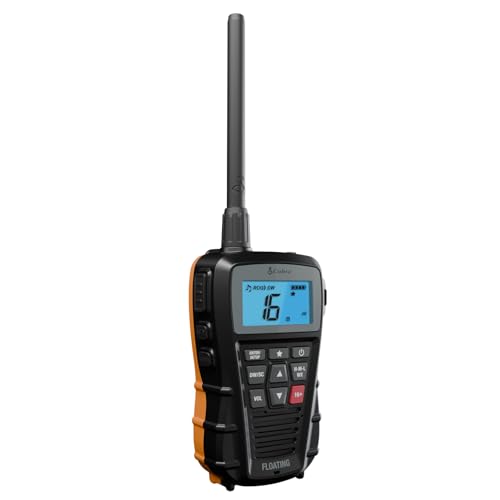
Cobra BlueBound 150 VHF Handheld Marine Radio – Black – 3-Watt, Floating, Long Range, NOAA Weather Alerts, International Functionality, IPX7 Waterproof, USB-C, Submersible, LCD Screen, Belt Clip
Cobra BlueBound 150 VHF Handheld Marine Radio – Black – 3-Watt, Floating,…
VIEW LATEST PRICE
Uniden Atlantis 155 Handheld Two-Way VHF Marine Radio, Floating IPX8 Submersible Waterproof, Dual-Color Screen, All USA/International/Canadian Marine Channels, NOAA Weather Alert, 10 Hour Battery
Uniden Atlantis 155 Handheld Two-Way VHF Marine Radio, Floating IPX8 Submersible Waterproof,…
VIEW LATEST PRICEKey Takeaways
- Frequency Range: Marine VHF operates between 156 MHz and 174 MHz, with channels spaced 25 kHz apart.
- Channel 16: The universal distress and hailing frequency is exactly 156.800 MHz.
- Regional Modes: Radios have USA (U), International (I), and Canadian (C) modes; selecting the wrong one changes the frequency pairing for certain channels.
- Simplex vs. Duplex: Simplex channels use one frequency for transmit/receive; Duplex channels use two separate frequencies (one for ship, one for shore).
- Power Output: Most channels allow 25 watts, but specific channels (like 13 and 67) default to 1 watt to prevent long-distance interference.
- DSC Data: Channel 70 (156.525 MHz) is reserved exclusively for digital data bursts and must not be used for voice.
- Weather: NOAA weather channels sit above the standard marine band, typically between 162.400 and 162.550 MHz.
Understanding the Marine Band Spectrum
The Very High Frequency (VHF) maritime mobile band is a standardized system used worldwide. Unlike CB radio or Ham radio where you might tune a dial to a specific number like “146.520,” marine radios use channel numbers to represent specific frequency pairs. This simplifies operation for boaters who need to communicate quickly without memorizing six-digit numbers.
The band is divided into channels spaced 25 kHz apart. This spacing ensures that a transmission on Channel 16 doesn’t bleed over into Channel 17 or 15. However, the organization of these channels isn’t sequential in terms of frequency. Channel 1 and Channel 2 are next to each other numerically, but their frequencies might be organized differently depending on the regional band plan.
To get a better grasp of the physics involved, understanding marine radio frequencies helps you realize why VHF is strictly “line-of-sight.” The signal travels in a straight line. It does not bounce off the ionosphere like HF (High Frequency) signals. This means your range is dictated by the height of your antenna and the curvature of the earth, regardless of the specific frequency you are using within the band.
The Critical Safety Frequencies
If you only memorize a few specific frequencies, make them these. These are the life-safety channels designated by international treaty and Coast Guard regulations.
Channel 16: Distress and Hailing (156.800 MHz)
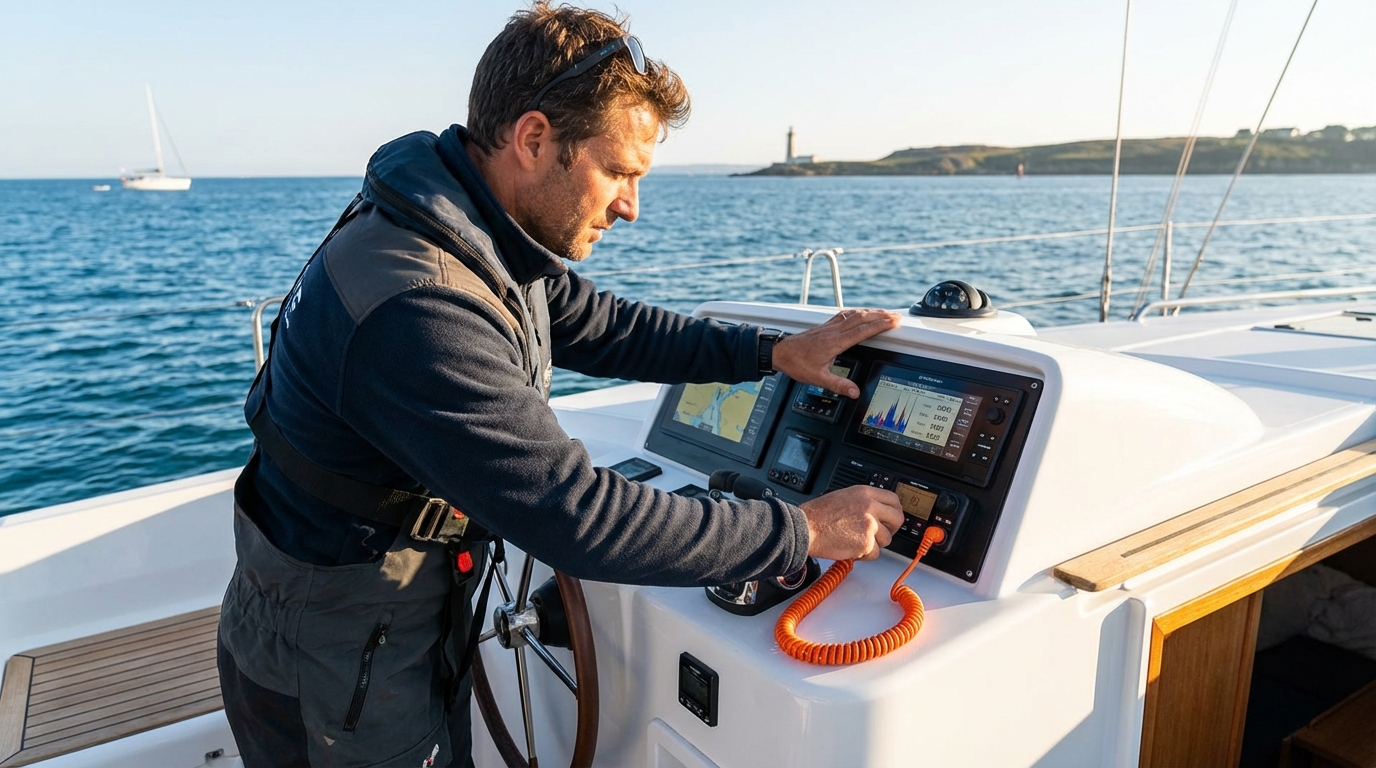
This is the heart of the marine band. It operates on 156.800 MHz for both transmitting and receiving (Simplex). Every marine radio is designed to prioritize this frequency. When you press the red “16/9” button on your fixed mount VHF marine radio, the tuner jumps immediately to 156.800 MHz. You must monitor this frequency whenever your radio is on and you are not actively communicating on another channel.
Channel 13: Bridge-to-Bridge (156.650 MHz)
Used for navigation safety. Large commercial vessels, bridges, and locks monitor this. The frequency is 156.650 MHz. Crucially, radios are programmed to transmit at Low Power (1 Watt) on this frequency by default to limit congestion. If you need to reach a ship on the horizon on 13, you usually have to manually override the power setting to High (25 Watts), though this is rarely necessary for passing arrangements.
Channel 06: Inter-Ship Safety (156.300 MHz)
Used for Search and Rescue (SAR) operations and safety signals between vessels. If you hail a ship on 16 for a safety matter, you will often switch to 156.300 MHz to clear the main hailing channel.
US, International, and Canadian Frequency Modes
One of the most common sources of confusion for boaters is the “U/I/C” or “USA/INT/CAN” setting on their radio. Changing this setting does not just change the channel labels; it physically alters the frequencies your radio uses for specific channels.
- International Mode: Adheres to the standard ITU (International Telecommunication Union) band plan. Many channels are Duplex (transmit on A, receive on B).
- USA Mode: In the United States, the FCC repurposed many of the international Duplex channels for Simplex use.
- Canadian Mode: Similar to the US but with specific differences for weather and commercial fishing operations.
For example, consider Channel 22.
- In International Mode, Channel 22 is Duplex. You transmit on 157.100 MHz and receive on 161.700 MHz.
- In USA Mode, Channel 22A (often just displayed as 22) is Simplex. You transmit and receive on 157.100 MHz.
If you are in US waters but your radio is set to “International,” you might be able to hear the Coast Guard (who transmits on 157.100), but when you reply, your radio transmits on 161.700. The Coast Guard isn’t listening to 161.700 for voice traffic. They won’t hear you. Always ensure your region setting matches your physical location.
For a deep dive on how these band plans differ globally, you can reference the Marine VHF Band Plans which detail the specific offsets for each region.
Recreational Ship-to-Ship Frequencies
Once you have established contact on Channel 16, you must switch to a working channel. For recreational boaters, there is a specific list of frequencies designated for “non-commercial” communication. Using the wrong channel can interfere with commercial traffic or port operations.
The primary recreational working channels (Simplex) are:
- Channel 68: 156.425 MHz
- Channel 69: 156.475 MHz
- Channel 71: 156.575 MHz
- Channel 72: 156.625 MHz
- Channel 78A: 156.925 MHz
Channel 68 and 69 are the most common favorites for boaters coordinating fishing spots or meetups. Channel 72 is also widely used, but be aware it is allowed for ship-to-air communication in some contexts, so you may hear Coast Guard helicopters coordinating with surface vessels here.
Port Operations and Commercial Channels
Commercial vessels (tugs, cargo ships, ferries) and Vessel Traffic Services (VTS) use a different set of frequencies to manage traffic flow in busy harbors. While recreational boaters should generally stay off these channels for chatting, listening to them is vital for situational awareness.
- Channel 05A (156.250 MHz): Often used by VTS (Vessel Traffic Service) in places like Seattle or Houston to manage ship movements.
- Channel 12 (156.600 MHz): Designated for “Port Operations.” You will often hear pilots coordinating with tugs here.
- Channel 14 (156.700 MHz): Another primary VTS channel. In many major ports, you are required to monitor this channel if your vessel is over a certain length (usually 20 meters), though smaller boats benefit from listening too.
- Channel 01A (156.050 MHz): Used for port operations and commercial traffic management on the West Coast and other specific areas.
If you are navigating a busy shipping lane, monitoring the local VTS frequency allows you to hear where the big ships are heading before you see them.
Digital Selective Calling (DSC) Channel 70
Channel 70 is unique. It operates on 156.525 MHz. You will notice that if you try to turn the knob to Channel 70 on a modern radio, it often skips right past it. If you can tune to it, you cannot transmit voice.
Channel 70 is dedicated exclusively to Digital Selective Calling (DSC). This is a data-only modem tone. When you press the distress button, your radio sends a data burst on 156.525 MHz containing your MMSI number and GPS coordinates. Other radios monitor this frequency in the background. When they detect a distress signal or a direct call to their MMSI, they switch the audio circuit to the requested voice channel.
Because this frequency is for data, transmitting voice on it is strictly forbidden and technically difficult on modern equipment.
Weather Band (WX) Frequencies
The NOAA weather channels are technically outside the standard “marine band” of 156-162 MHz, sitting slightly higher in the spectrum. These are receive-only frequencies for boaters. You cannot transmit on them.
Most marine radios label these as WX1 through WX10.
- WX 1: 162.550 MHz
- WX 2: 162.400 MHz
- WX 3: 162.475 MHz
- WX 4: 162.425 MHz
- WX 5: 162.450 MHz
- WX 6: 162.500 MHz
- WX 7: 162.525 MHz
When you use the “Scan” function on a handheld VHF marine radio, the radio checks these frequencies for the 1050 Hz alert tone used by NOAA to signal severe weather warnings.
Simplex vs. Duplex: The Technical Details
Understanding the difference between Simplex and Duplex explains why you sometimes can’t hear both sides of a conversation.
Simplex (Single Frequency):
Most ship-to-ship channels (68, 69, 16) are Simplex.
- Transmit: 156.425 MHz
- Receive: 156.425 MHz
- Since both parties use the same frequency, only one person can talk at a time. If two people talk, the signals collide (heterodyne) and result in a squeal.
Duplex (Split Frequency): Marine Operator channels (24, 25, 26, 84, etc.) are Duplex.
- Ship Transmits: Frequency A
- Shore Station Transmits: Frequency B
- The ship radio listens on B and talks on A. The shore station does the reverse.
This design was originally for placing telephone calls via a Marine Operator. The benefit is that the high-power shore station can hear the ship without being drowned out by other local ships. The downside for you: If you tune to Channel 24 to listen to two boats talking, you will only hear the Shore Station side of the conversation. You cannot hear the other boat because your radio is listening to Frequency B, but the other boat is transmitting on Frequency A.
The “A” and “B” Channel Suffixes
In the US, you will frequently see channels listed with an “A” suffix, such as 22A, 05A, or 63A.
The “A” indicates that the channel has been converted from its international Duplex standard to a US Simplex standard.
- Channel 22 (Intl): Ship sends 157.100, Ship hears 161.700.
- Channel 22A (USA): Ship sends 157.100, Ship hears 157.100.
The “B” suffix generally refers to the receive-only side of a duplex channel, often used for AIS (Automatic Identification System) or special coast guard broadcasts. For example, AIS 1 and AIS 2 utilize frequencies 161.975 MHz and 162.025 MHz, which correspond to the upper (B) side of channels 87 and 88.
Restricted and Forbidden Channels
Just because your radio can tune to a frequency doesn’t mean you can use it. The FCC and international laws are strict about frequency assignment.
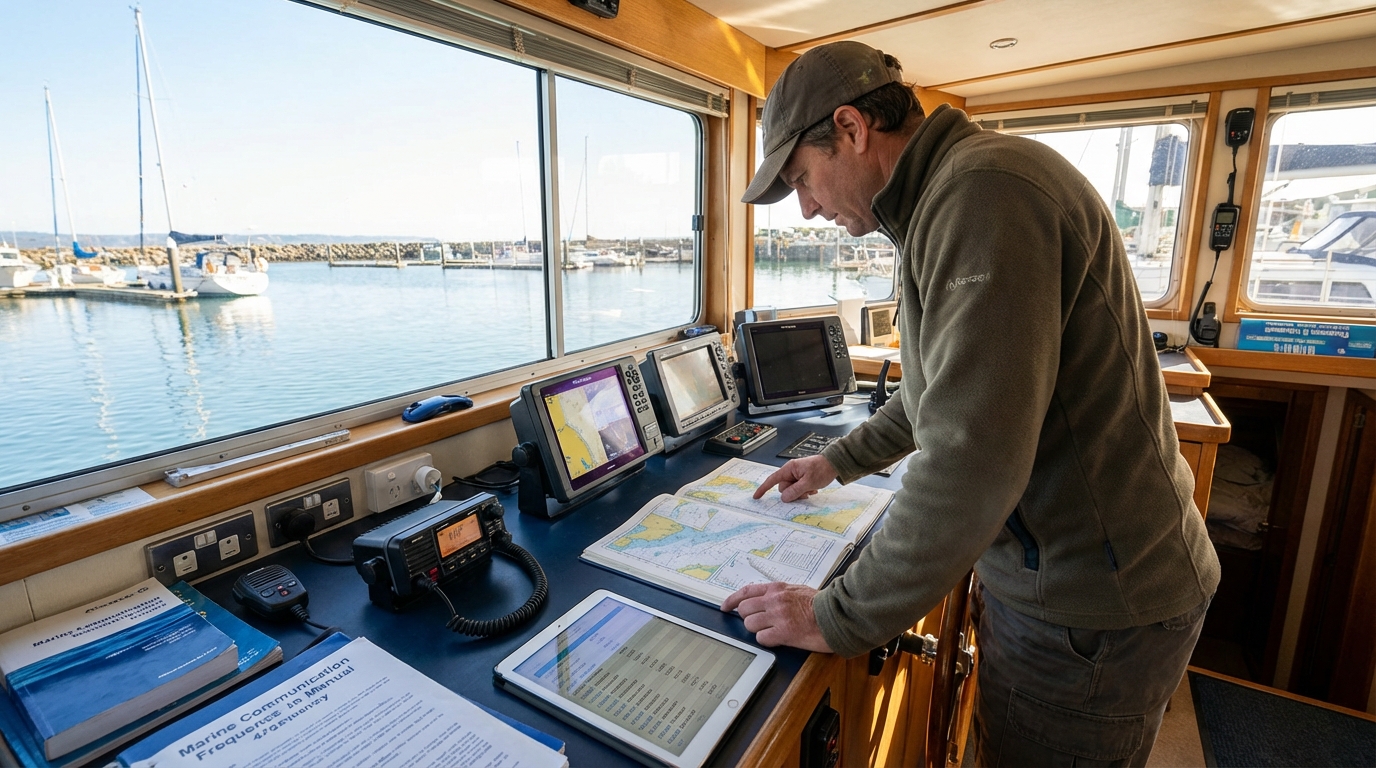
- Channels 02, 03, 04: Generally reserved for the Coast Guard or government agencies in the US.
- Channel 70: Data only. No voice.
- Channel 15 and 17: These guard bands surround Channel 16. In the US, Channel 15 is receive-only (environmental), and Channel 17 is limited to state and local government maritime control. You cannot use these for chatting.
- Channel 87B and 88B: Reserved for AIS data transmission.
Using a restricted channel for chatter isn’t just annoying; it can block legitimate safety or law enforcement operations. For a full breakdown of prohibited behaviors and channel restrictions, review the Marine Communications guidelines provided by the BoatUS Foundation.
Public Correspondence Frequencies
Before cell phones, “Public Correspondence” channels were used to link a marine radio to the land-based telephone network. You would call a “Marine Operator” on channels like 24, 25, 26, 27, 28, 84, 85, 86, or 87.
While these services are largely defunct in the era of satellite phones and cellular coverage, the frequencies remain in the band plan. In some areas, these channels have been repurposed for automated radio checks (like Sea Tow’s automated system) or VTS operations. However, purely for recreational ship-to-ship chat, these are technically off-limits as they are still designated for commercial correspondence in the frequency tables.
Programming and Scanning Frequencies
Modern radios allow you to scan multiple frequencies at once. This is usually done through “Memory Scan.” You manually tag the channels you want to monitor (e.g., 16, 68, 22A, and 13) and the radio cycles through them.
Dual Watch and Tri-Watch:
These features allow you to monitor a working channel while keeping an ear on safety channels.
- Dual Watch: Monitors your selected channel (e.g., 68) and Channel 16. It switches between them rapidly.
- Tri-Watch: Monitors your selected channel, Channel 16, and Channel 9 (or a second priority channel).
When setting up your scan list, avoid adding too many busy channels. If you add VTS Channel 14, Commercial Channel 12, and the local fishing fleet on 68, your radio will constantly stop scanning to play audio, and you might miss a distress call on 16. Keep your scan list tight and relevant to your location.
For those looking for advanced scanning capabilities, many handheld VHF marine radios with GPS allow you to create “Bank” scans, where you can have one scan group for fishing and another for harbor navigation.
Troubleshooting Frequency Interference
Sometimes you are on the right frequency, but the signal is garbage. Since VHF is 156-174 MHz, it is susceptible to specific types of interference.
- LED Interference: Cheap LED light bars or navigation lights often emit radio frequency noise exactly in the 156 MHz range. If your squelch breaks every time you turn on your lights, you have RF interference.
- Antenna Proximity: If you have an AIS transponder and a VHF radio, their antennas must be separated. Since AIS transmits on 161.975 MHz and your radio receives on 156-162 MHz, the AIS burst can overload your radio receiver if the antennas are too close.
- Squelch Settings: The squelch knob sets the threshold for background static. If set too low, you hear constant white noise. If set too high, you will miss weak signals from distant boats. Adjust it until the static just stops.
FAQ
Can I use marine VHF frequencies on land?
No. It is illegal to use a marine VHF radio on land without a specific Coast Station License (which is difficult to get for individuals). Marine frequencies are allocated specifically for vessels on the water. Using them on land can interfere with Coast Guard operations and port safety.
Do I need a license to operate on these frequencies?
If you are a recreational boater operating in US domestic waters, you generally do not need a license. You operate under “License by Rule.” However, if you travel to international waters (like the Bahamas or Canada) or communicate with foreign stations, you are required to have a Restricted Radiotelephone Operator Permit.
Why can’t I hear my friend on Channel 22?
You are likely in the wrong “Mode.” If your friend is on “USA” mode (Simplex) and you are on “INT” (International) mode (Duplex), you are listening on a frequency different from the one they are transmitting on. Ensure both radios are set to “USA” mode when in US waters.
What is the range of these frequencies?
VHF is line-of-sight. The frequency itself (156 MHz) doesn’t travel over the horizon.
- Handheld (5 Watts): 3-5 miles.
- Fixed Mount (25 Watts): 10-25 miles, depending heavily on antenna height.
- Antenna Height: This is the single biggest factor. An antenna 30 feet in the air will transmit much farther than one 5 feet in the air, regardless of power.
Stay on Frequency, Stay Safe
Knowing the VHF marine radio buying guide is just the first step; knowing how to use the spectrum is the second. The marine band is a shared resource. It relies on discipline. By sticking to the correct frequencies—using 13 for bridges, 16 for hailing, and 68 for fishing chat—you ensure that when a real emergency happens, the channel is clear for the message that matters most.
Keep your radio on the right mode, check your squelch, and always monitor 156.800 MHz.
📅 Last updated: