
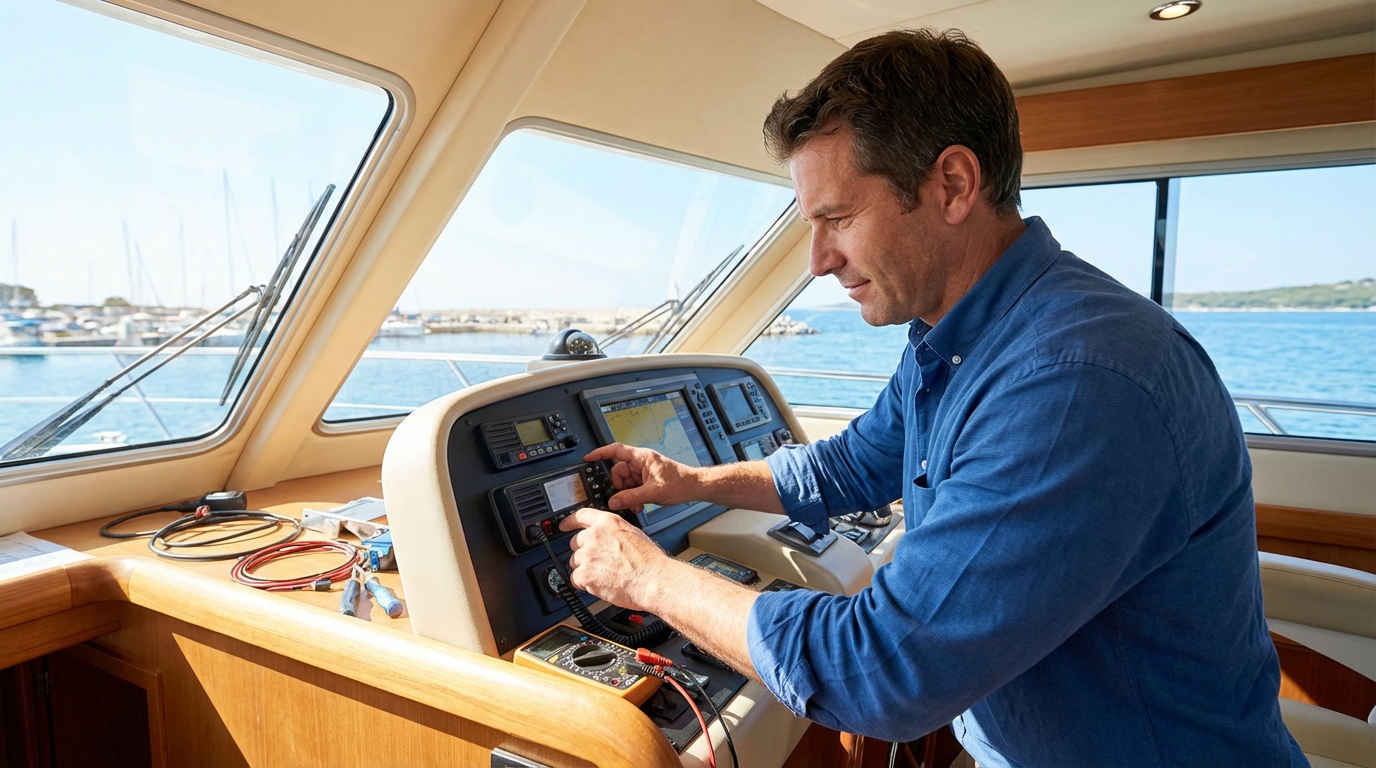
When operating a VHF marine radio, you are managing the primary safety link between your vessel, other boaters, and the United States Coast Guard. It is not merely a communication device; it is a regulated safety instrument that requires specific knowledge of channels, legal protocols, and emergency procedures to function effectively. A radio is only as useful as the operator behind it, and improper use can block genuine distress calls or result in hefty fines from the FCC.
Many boaters treat a VHF radio like a CB radio or a telephone, but the open-frequency nature of marine communications makes discipline essential. Every transmission you make is heard by everyone within range. Whether you are hailing a marina for a slip assignment, coordinating a passing maneuver with a commercial tanker, or broadcasting a distress signal, your transmission must be clear, concise, and on the correct frequency.
VHF Marine Radio Equipment
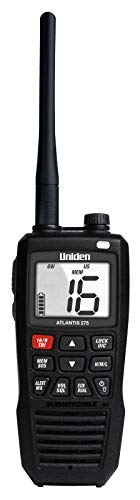
Uniden Atlantis 275 Handheld Two-Way VHF Marine Radio, Floating IPX8 Submersible Waterproof, Large Dual-Color Screen, 6-Watt, All USA/International/Canadian Marine Channels, NOAA Weather Alerts
Uniden Atlantis 275 Handheld Two-Way VHF Marine Radio, Floating IPX8 Submersible Waterproof,…
VIEW LATEST PRICE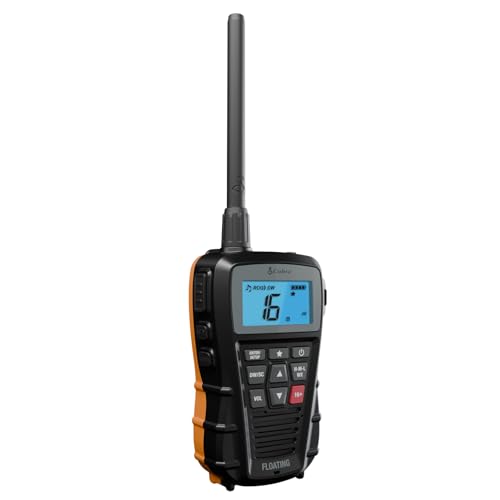
Cobra BlueBound 150 VHF Handheld Marine Radio – Black – 3-Watt, Floating, Long Range, NOAA Weather Alerts, International Functionality, IPX7 Waterproof, USB-C, Submersible, LCD Screen, Belt Clip
Cobra BlueBound 150 VHF Handheld Marine Radio – Black – 3-Watt, Floating,…
VIEW LATEST PRICE
Uniden Atlantis 155 Handheld Two-Way VHF Marine Radio, Floating IPX8 Submersible Waterproof, Dual-Color Screen, All USA/International/Canadian Marine Channels, NOAA Weather Alert, 10 Hour Battery
Uniden Atlantis 155 Handheld Two-Way VHF Marine Radio, Floating IPX8 Submersible Waterproof,…
VIEW LATEST PRICEThis guide provides a complete operational breakdown. We will cover the mechanics of the device, the legal framework of radio transmission, and the exact scripts required for emergency situations.
Key Takeaways
- Monitor Channel 16: You must maintain a listening watch on Channel 16 (156.800 MHz) whenever your radio is turned on and not being used for communication.
- Use Low Power in Harbors: Switch your radio to the 1-watt (Low Power) setting when communicating within a marina or harbor to prevent signal interference with distant stations.
- Distinguish Your Distress Calls: Understand the critical difference between “Mayday” (grave and imminent danger), “Pan-Pan” (urgent but not life-threatening), and “Sécurité” (navigational hazards).
- Register Your MMSI: Your Digital Selective Calling (DSC) distress button will not transmit your vessel’s identity or information unless you have programmed a valid Maritime Mobile Service Identity (MMSI) number.
- Keep It Brief: Federal regulations require radio transmissions to be brief; limit conversations to operational necessity and switch to working channels immediately after hailing.
- Perform Radio Checks Correctly: Do not use Channel 16 for radio checks; use an automated Sea Tow service or hail a friend on an open working channel.
Understanding Legal Requirements and Licensing
Recreational boaters operating domestically in the United States generally do not require a station license or a restricted radiotelephone operator permit for voluntary VHF radio installation. The Federal Communications Commission (FCC) “de-licensed” voluntary ships operating domestically to encourage more boaters to carry safety radios. If you are operating a vessel under 65 feet in length on US domestic waters, you simply buy the radio, install it, and use it according to the rules.
However, this exemption disappears the moment you cross an international border. If you navigate into Canadian, Mexican, or Bahamian waters, or if you communicate with foreign stations, you are required to have a Restricted Radiotelephone Operator Permit (for the person) and a Ship Radio Station License (for the boat). These are obtained directly through the FCC Universal Licensing System. Failure to produce these documents when boarded by foreign authorities can result in fines or impoundment of equipment.
Commercial vessels, including “six-pack” charter boats carrying paying passengers, are subject to different rules. They are required to carry a VHF radio for safety purposes and must hold a valid station license. The operator of a commercial vessel must also hold a commercial operator’s license. Regardless of your license status, you are bound by international treaties regarding radio silence and interference. You are legally obligated to cease transmission if you hear a “Silence Mayday” command from the Coast Guard or a vessel in distress.
Setting Up Your Radio Controls
Adjust the squelch control until static stops, then nudge it back just slightly to ensure you receive weak signals without constant noise. This is the most common error new users make. If the squelch is too high (turned too far to the right), your radio will ignore incoming signals that aren’t incredibly strong. You might miss a distant call from a friend or a distress signal from a boat five miles away. Conversely, if the squelch is too low (open), the constant static will fatigue your ears, causing you to turn the volume down or the radio off—defeating the purpose of having it.
Volume control is straightforward, but power output requires active management. Fixed-mount VHF radios have two power settings: 25 watts (High) and 1 watt (Low). Handheld units typically max out at 6 watts but also have a 1-watt mode. You should default to High power when offshore or trying to reach a station over 10 miles away. However, when you are in a harbor, marina, or conversing with a boat just a few hundred yards away, you must switch to Low power.
Using 25 watts to talk to a boat 50 yards away is electronic pollution. Your signal will blast over other conversations miles away, potentially stepping on more urgent communications. Most modern radios have a dedicated “H/L” or “1W/25W” button on the microphone or faceplate for quick toggling.
Selecting the Correct Channel for Communication
You must maintain a listening watch on Channel 16 whenever the radio is on and not being used for communication. Channel 16 is the international hailing and distress frequency. It is not for chatting. The Coast Guard monitors this channel 24/7. When you want to talk to another boat, you hail them on 16 to establish contact, then immediately switch to a “working channel.”
Understanding which working channel to use is vital to avoid interfering with commercial traffic or port operations.
| Channel | Designated Use | Who Uses It? |
|---|---|---|
| 16 | Distress, Safety, and Hailing | Everyone (Mandatory Watch) |
| 09 | Alternate Hailing / Recreational Calling | Recreational Boaters |
| 13 | Bridge-to-Bridge Navigation | Commercial Ships, Drawbridges |
| 22A | Coast Guard Liaison | USCG and Boaters (upon request) |
| 68, 69, 71, 72 | Non-Commercial Working Channels | Recreational Boaters (Chatting) |
| 06 | Inter-ship Safety | Search & Rescue Ops |
Never use channels 5, 87, or 88 in US waters for chatting, as these are often allocated for VTS (Vessel Traffic Service) or AIS applications. Channel 70 is exclusively for Digital Selective Calling (DSC) data bursts; you cannot transmit voice on Channel 70.
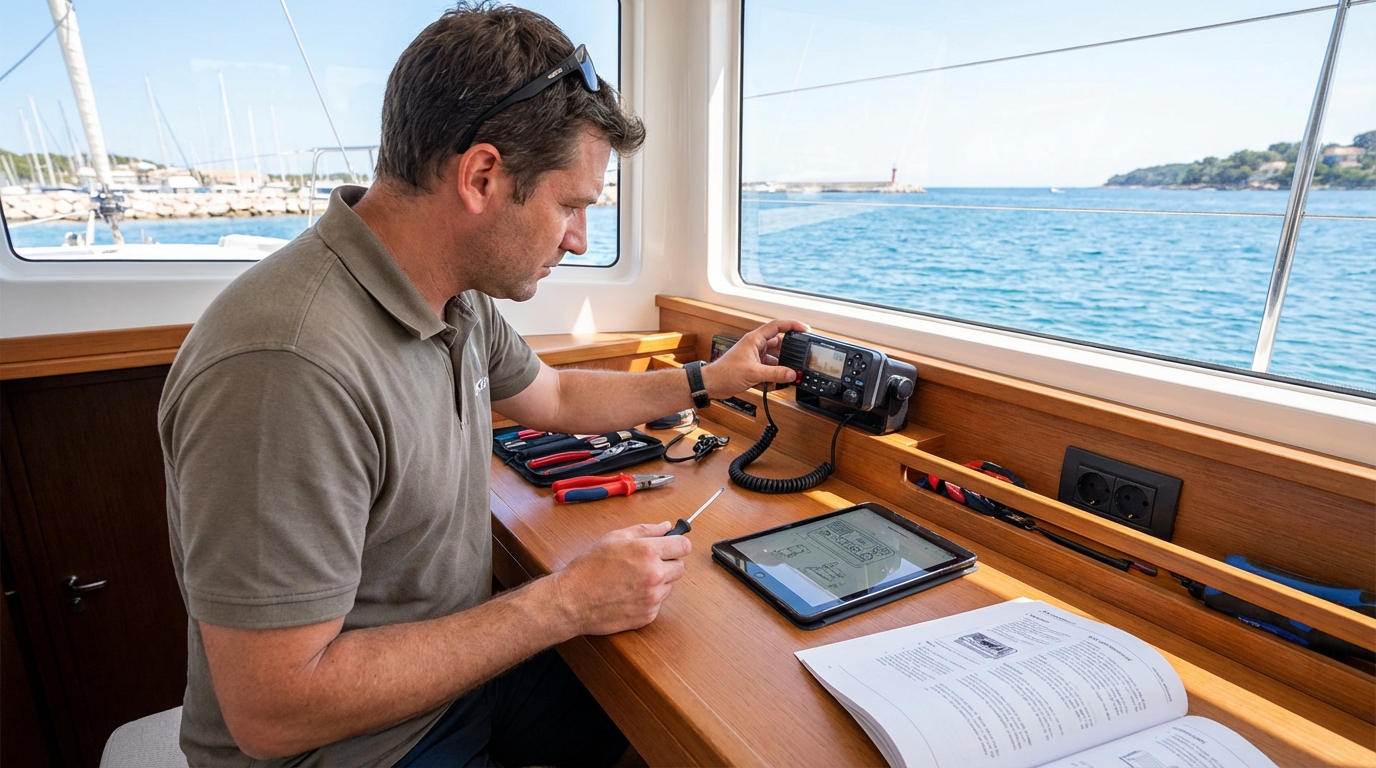
If you are looking for a reliable setup to manage these channels, check our guide on the best fixed mount VHF marine radio. A good radio will allow you to scan Channel 16 and a working channel simultaneously (Dual Watch).
Initiating a Routine Call to Another Vessel
Hail the other vessel on Channel 16 or 9, then immediately switch to a working channel to continue the conversation. The standard procedure follows a specific script to ensure clarity. You state the name of the vessel you are calling three times, followed by “this is,” and your vessel name.
Example Routine Call:
- You (on Ch 16): “Blue Horizon, Blue Horizon, Blue Horizon. This is Sea Wolf. Over.”
- Blue Horizon: “Sea Wolf, this is Blue Horizon. Over.”
- You: “Blue Horizon, switch to Channel 6-8.”
- Blue Horizon: “Switching 6-8.”
Once both parties tune to Channel 68, you can have your conversation. If you do not establish contact after three attempts, wait at least two minutes before trying again. Continuous calling clogs the frequency.
Always check that your working channel is clear before talking. Listen for a few seconds after switching. If you hear other people talking, go back to the hailing channel and propose a different working channel (e.g., 72 or 69). Never say “Over and Out.” “Over” means you are done speaking and expect a reply. “Out” means you are done speaking and are ending the transmission. Saying both is contradictory.
Mastering Radio Etiquette and Protocol
Keep conversations brief, professional, and free of profanity, as VHF channels are public and monitored by authorities. The FCC forbids the use of obscene, indecent, or profane language. Practically speaking, long conversations on working channels annoy other boaters. If you have complex plans to discuss, use a cell phone. VHF is for operational logistics: “What time are we meeting at the sandbar?” or “I am passing you on your port side.”
Use the phonetic alphabet when spelling out vessel names or coordinates. This eliminates confusion between letters like ‘B’, ‘D’, ‘P’, and ‘T’ which sound identical over static.
- A: Alpha
- B: Bravo
- C: Charlie
- D: Delta
- E: Echo
- F: Foxtrot
- (And so on…)
When providing GPS coordinates during an emergency or rendezvous, read the numbers individually. “Latitude Two-Five Degrees, One-Zero Decimal Four Minutes North.” Do not say “Twenty-five degrees.” Clarity is safer than speed.
For a deeper dive into protocols, the BoatUS Foundation provides excellent resources on marine radio procedures.
Utilizing Digital Selective Calling (DSC) Features
DSC allows you to send an automated distress signal with your GPS coordinates at the push of a button. This is the most significant advancement in marine safety in the last two decades. However, for DSC to work, two things must happen: your radio must be connected to a GPS source (either internal or external), and you must program your Maritime Mobile Service Identity (MMSI) number into the unit.
Without an MMSI, the red distress button does nothing but send a generic alarm. It does not tell the Coast Guard who you are or where you are (if GPS isn’t linked). When properly set up, holding the red button for 3 seconds sends a digital burst on Channel 70. This burst triggers an alarm on every DSC-equipped radio within range, switching them automatically to Channel 16 to receive your voice call.
DSC is not just for emergencies. You can use “Position Polling” to request the location of a buddy boat. If you both have MMSI numbers, you can “ring” their radio directly like a telephone without hailing on Channel 16. The VHF marine radio buying guide details which models have the most intuitive DSC interfaces.
Distinguishing Between Mayday, Pan-Pan, and Sécurité
Use “Mayday” only for immediate threats to life or vessel, “Pan-Pan” for urgent non-life-threatening situations, and “Sécurité” for navigational hazards. Misusing these signals can divert resources from actual emergencies.
- MAYDAY: Use this when the boat is sinking, on fire, or someone is critically injured and needs immediate evacuation. This overrides all other traffic.
- PAN-PAN (pronounced Pahn-Pahn): Use this when you have a serious problem that doesn’t yet threaten life. Examples include a broken rudder in a shipping lane, running out of fuel while drifting toward shore, or a slow leak that your pumps are managing. It alerts the Coast Guard and nearby vessels to pay attention to you.
- SÉCURITÉ (pronounced Say-Cur-I-Tay): This is a safety signal. You use it to announce a hazard to navigation, such as a large floating log, a submerged container, or if you are a large commercial vessel about to execute a blind turn in a narrow channel.
Executing a Proper Mayday Distress Call
Press the DSC distress button first, then voice your Mayday call on Channel 16 with your vessel name, position, and nature of distress. The DSC alert clears the airwaves and grabs attention; the voice call provides the details rescuers need.
The Mayday Script:
- Tune to Channel 16.
- Say: “MAYDAY, MAYDAY, MAYDAY.”
- Say: “This is [Vessel Name], [Vessel Name], [Vessel Name].”
- Say: “MAYDAY [Vessel Name].”
- Position: “My position is [Latitude/Longitude] OR [Distance and Bearing from a known landmark].”
- Nature of Distress: “We are sinking,” “We are on fire,” etc.
- Description: “30-foot white center console.”
- Souls on Board: “Four adults, two children.”
- Action: “We are abandoning into a life raft.”
- End: “Over.”
Wait for a response. If none comes, repeat the message. Speak slowly and clearly. Panic causes rapid speech that is unintelligible over the radio.
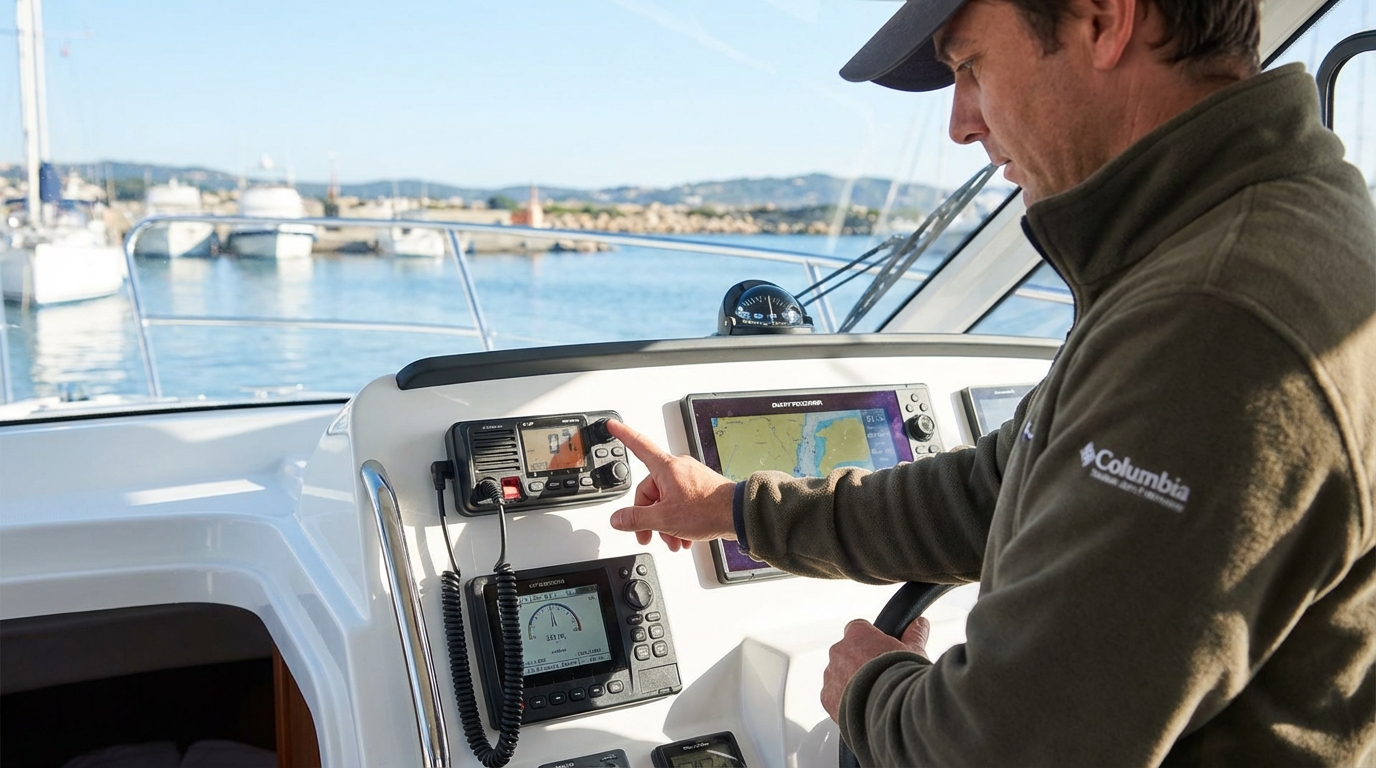
For more on emergency procedures, consult the US Coast Guard’s radio information for boaters.
Accessing NOAA Weather Alerts
Switch to the WX band to receive continuous weather broadcasts and severe weather alerts specific to your region. VHF radios have a dedicated “WX” button that accesses NOAA Weather Radio frequencies (WX1 through WX10). These channels are not for two-way communication; they are broadcast-only streams providing marine forecasts, wave heights, and wind speeds.
Most modern radios feature a “Weather Alert” mode. When activated, the radio remains silent or monitors Channel 16, but will interrupt audio with a loud siren if NOAA issues a severe weather warning (like a Special Marine Warning for a thunderstorm). This is crucial for boaters who might not notice a fast-moving squall line approaching.
Operating Handheld vs. Fixed Mount Radios
Handheld radios offer portability but have limited range and battery life compared to the higher power output of fixed-mount units. A fixed-mount radio transmits at 25 watts and uses an antenna mounted high on the vessel (often 8 feet tall on top of a T-top or bridge). This height is the biggest factor in range. A fixed radio can typically reach 15-20 miles or more.
Handhelds are limited to 5 or 6 watts. Because the antenna is short and held at deck level, the range is often limited to 3-5 miles. Handhelds are excellent backup devices or for use on dinghies and jet skis. They are also vital for “ditch bags”—if you have to abandon ship, the fixed radio goes down with the boat.
If you rely on a portable unit, ensure it has built-in GPS capabilities for DSC functionality. Read our reviews on the best handheld VHF marine radio with GPS to understand the current technology.
Troubleshooting Reception and Transmission Issues
Poor reception usually stems from antenna connection corrosion, low battery voltage, or improper squelch settings. If you can hear people but they say your transmission is “breaking up” or “static-filled,” check your voltage first. Transmitting at 25 watts requires a strong 12V current. If your battery is weak or the connections are corroded, the voltage drop during transmission will garble your signal.
If you cannot hear anyone, check the squelch knob. If it is turned all the way up, you are blocking everything. Next, inspect the PL-259 connector (where the antenna cable screws into the back of the radio). Salt air corrodes the copper wire inside this connector. If you see green oxidation, cut the connector off and install a new one.
Antenna placement also matters. If you have folded your antenna down for trailering and forgot to raise it, your range will be practically zero.
Maintaining Your VHF Equipment for Reliability
Rinse handheld units with fresh water after saltwater exposure and inspect antenna connections on fixed units monthly. Even “waterproof” handhelds (IPX7 or IPX8 rated) are susceptible to salt crystal buildup. Salt crystals can jam the Push-to-Talk (PTT) button or corrode the charging contacts. A quick rinse and dry after every trip extends the life of the unit.
For fixed units, the weak link is almost always the coaxial cable. Inspect the cable run for sharp bends or chafing. Ensure the antenna itself is not cracked. UV radiation makes fiberglass antennas brittle over time; if you see fiberglass splinters, it’s time to replace the antenna to maintain optimal range.
Check out our marine VHF radio reviews for insights on which brands offer the best durability against the marine environment.
FAQ
Can I use my cell phone instead of a VHF radio?
No, a cell phone is not a substitute for a VHF radio. Cell phones connect to one person at a time, while a VHF radio broadcasts to everyone nearby, including potential rescuers who are closest to you. Cell phones also have limited range offshore and are not monitored by the Coast Guard for triangulation in the same way a DSC distress signal is.
Is it illegal to swear on a marine radio?
Yes, it is a violation of FCC rules to use obscene, indecent, or profane language on radio frequencies. The Coast Guard and FCC monitor these channels. While enforcement varies, severe violations can result in fines. More importantly, profanity and aggression on the radio are unprofessional and can escalate tensions on the water.
How far can I transmit with my VHF radio?
VHF transmission is “line of sight.” Your range depends on the height of your antenna and the height of the receiving antenna. A typical fixed-mount radio with an antenna 10 feet above the water can communicate roughly 15-20 miles to another similar vessel. A handheld radio held at deck level may only reach 3-5 miles.
What is a radio check, and how do I do it?
A radio check confirms your radio is transmitting and receiving. Do not use Channel 16 for radio checks. Instead, use an automated service like Sea Tow’s automated radio check channels (often Ch 24, 26, 27, or 28 depending on location) which play back your voice. Alternatively, hail a friend on Channel 9 and switch to a working channel to ask, “How do you read me?”
Safety Through Communication
Operating a VHF marine radio is a skill that moves beyond simply pressing a button. It requires situational awareness, an understanding of channel allocation, and the discipline to follow protocol. When you are on the water, you are your own first responder. The ability to clearly communicate a problem, or to hear a warning from another vessel, is often the difference between a minor inconvenience and a maritime disaster.
Ensure your MMSI is registered, your antenna is high, and your knowledge of the “Mayday” script is solid. By treating your radio as a professional safety tool rather than a casual accessory, you ensure that when you speak, the right people are listening.
📅 Last updated: