
You plan for trips where cell service cannot reach you, and a personal locator beacon is one of the few devices that can summon professional search and rescue. Choosing the right PLB reduces the time it takes responders to find you and gives you reliable emergency signaling and peace of mind.
This guide helps you pick the right unit for the activities you do and the conditions you face.
Top Picks
|
Category |
Product |
Price |
Score |
|---|---|---|---|
|
🏆 Best Compact |
$399.95 |
92/100 |
|
|
🎯 Best for Boaters |
$409.95 |
94/100 |
|
|
⭐ Best With Display |
$469.95 |
91/100 |
|
|
🔁 Best Return Link |
$464.95 |
88/100 |
|
|
🚀 Best Premium |
$529.95 |
97/100 |
|
|
💼 Best Offshore |
$744.95 |
99/100 |
|
|
💰 Best Budget |
$269.00 |
86/100 |
Which Personal Locator Beacon Should You Buy?
Quick answer: Choose the ACR ResQLink 400 for a straightforward marine PLB that is rugged, waterproof and easy to attach to a PFD. Choose the ACR ResQLink 425 when an onboard display and flotation matter. The Ocean Signal PLB1 is the compact choice, while the McMurdo FastFind 220 is the lowest-priced option in this comparison. For a permanently mounted vessel beacon rather than a wearable PLB, consider the ACR GlobalFix V6 EPIRB.
How to Choose the Right PLB
Start with the emergency scenario you are preparing for. A boater, kayaker or offshore angler should prioritize waterproofing, secure PFD attachment and controls that can be operated with wet or cold hands. A hiker or overland traveler may care more about size, weight and the ability to keep the beacon on the body rather than buried in a pack.
Next, decide how much confirmation you want. Basic models transmit the distress alert and GPS position but provide limited feedback. Models with a screen can show activation and transmission status, while Return Link Service can acknowledge that the distress message was received. These features cost more, but they can reduce uncertainty during a high-stress emergency.
PLB, Satellite Messenger or EPIRB?
A PLB is a compact emergency beacon registered to a person and intended to summon professional rescue. It generally does not require a monthly subscription and is not designed for routine two-way messaging. A satellite messenger may support check-ins and two-way communication but usually requires a service plan. An EPIRB is a vessel-oriented emergency beacon intended for marine use and is normally registered to the boat. The GlobalFix V6 in this guide is an EPIRB, so compare it with the wearable PLBs only if you need a permanent vessel-level safety device.
Features That Matter Most
- 406 MHz distress transmission: The core rescue-alert function used by the products in this guide.
- GNSS positioning: GPS, Galileo or GLONASS support helps transmit a precise location.
- Buoyancy and waterproofing: Especially important for boaters, paddlers and anyone likely to activate the beacon in the water.
- Battery service life and operating duration: Check both the replacement date and the rated transmission time after activation.
- Mounting and access: A beacon should remain attached to your body or vessel and be reachable without searching through a bag.
- Status display or Return Link Service: Useful when you want clearer feedback that the unit is operating and the alert has been received.
Common Buying Mistakes
- Buying an EPIRB when you actually need a wearable PLB—or the reverse.
- Assuming every compact beacon floats without a pouch or being held upright.
- Focusing on the purchase price while overlooking battery replacement or factory service requirements.
- Stowing the beacon where it cannot be reached after a capsize, fall or injury.
- Failing to register the beacon or update the registration after changing ownership or contact information.
Personal Locator Beacon Comparison
Use this table for a quick side-by-side review. Prices and marketplace ratings can change, so confirm current details before purchasing.
| Product Name | Image | Rating | Price | Battery Life | Weight | Special Highlights |
|---|---|---|---|---|---|---|
| Ocean Signal rescueME PLB1 – Compact Satellite SOS Personal Locator Beacon |
 |
4.6/5 (105 reviews) | $399.95 | 7 years | 4.09 ounces |
|
| ACR ResQLink 400 PLB – Satellite SOS GPS Personal Locator Beacon |
 |
4.7/5 (169 reviews) | $409.95 | N/A (not specified) | 5.28 ounces |
|
| ACR ResQLink View PLB425 – Buoyant GPS Personal Locator Beacon |
 |
4.6/5 (394 reviews) | $469.95 | 28 hours | 5.28 ounces |
|
| ACR ResQLink 410 RLS PLB – Satellite SOS GPS Personal Locator Beacon |
 |
4.5/5 (30 reviews) | $464.95 | 24 hours | N/A (not specified) |
|
| ACR ResQLink View RLS PLB, Satellite SOS GPS Personal Locator Beacon |
 |
4.8/5 (78 reviews) | $529.95 | 24 hours | 5.28 ounces |
|
| ACR GlobalFix V6 EPIRB CAT2 – Satellite SOS, GPS & RLS Marine Safety Beacon |
 |
4.9/5 (48 reviews) | $744.95 | 10 years | 1.8 pounds |
|
| McMurdo FastFind 220 Personal Locator Beacon – US Programming |
 |
4.5/5 (28 reviews) | $269.00 | 1 day | N/A (not specified) |
|
How We Evaluated These Emergency Beacons
You need a beacon that will work when it matters most, so reliability and satellite performance are the first priorities. Battery life, antenna design and buoyancy affect how long your signal can be transmitted and how easy the device is to use in water and on land.
Ease of activation and feedback to the user are critical since stress and limited mobility can make simple controls lifesaving. You should also weigh features such as return link service, an onboard display and mounting options against size and cost so the unit matches how and where you recreate.
🏆 Best Compact
Ocean Signal PLB1
You want a lightweight, dependable beacon that you can tuck into a pocket or clip to a vest, and the Ocean Signal PLB1 fits that need. It focuses on doing one job well: send a clear SOS with GPS coordinates via satellite so responders can find you.
The 7-year battery and straightforward activation make it a good choice when you want low maintenance and reliable performance. It’s especially handy for day hikes, dirt-bike outings and as a backup on coastal trips where you prefer something small and unobtrusive. Keep in mind it’s not designed to be used as a floating beacon for prolonged time in the water, so plan how you’ll secure or hold it if you end up in the surf.
Situational Benefits
|
Situation |
How It Helps |
|---|---|
|
Backcountry Hiking |
You can slip it into a pocket or pack; when you can’t reach help by phone, a single activation sends your location to search and rescue. |
|
Coastal Boating |
It provides a satellite SOS and GPS position for rescuers, useful as a compact backup when you want a lightweight option on board. |
|
Remote Day Trips |
For short adventures away from cell coverage you get reassurance with minimal weight and no subscription fees. |
Safety Features
406 MHz satellite SOS transmission with GPS position, manual antenna deployment, built-in test mode and a 7-year battery. Includes a flotation pouch but is not intended for extended use as a floating beacon.
Indoor/Outdoor Usability
Designed for outdoor emergencies on land and near shore. The small size makes it practical to carry on hikes, rides and as a backup on boats, but you should plan for how to secure or hold the unit if you end up in the water since it is not optimized for long-term flotation.
Key Benefits
- Very compact and lightweight for everyday carry
- Long 7-year battery minimizes upkeep
- Simple activation and easy registration for NOAA
Who Should Buy This?
The PLB1 is best for hikers, paddlers, riders and coastal boaters who value minimal size and weight. It is also a strong backup beacon for people who already carry other marine communications equipment but want a subscription-free satellite distress option on their person.
Performance and Real-World Use
Its main advantage is portability: a compact beacon is more likely to remain clipped to a vest or carried in a pocket. The manual antenna and flotation-pouch limitation mean users should practice deployment and understand how the unit must be positioned before an emergency.
Pros
- Small and lightweight
- Seven-year battery service life stated in the source material
- No subscription fee
- Simple emergency-focused design
Cons
- No onboard status display
- Requires deliberate antenna deployment
- Flotation pouch does not make it equivalent to a fully buoyant marine beacon
Value
It is not the lowest-priced model here, but the compact size can justify the premium for users who prioritize carrying convenience over advanced feedback features.
Current Price: $399.95
Rating: 4.6/5 (total: 105+)
🎯 Best for Boaters
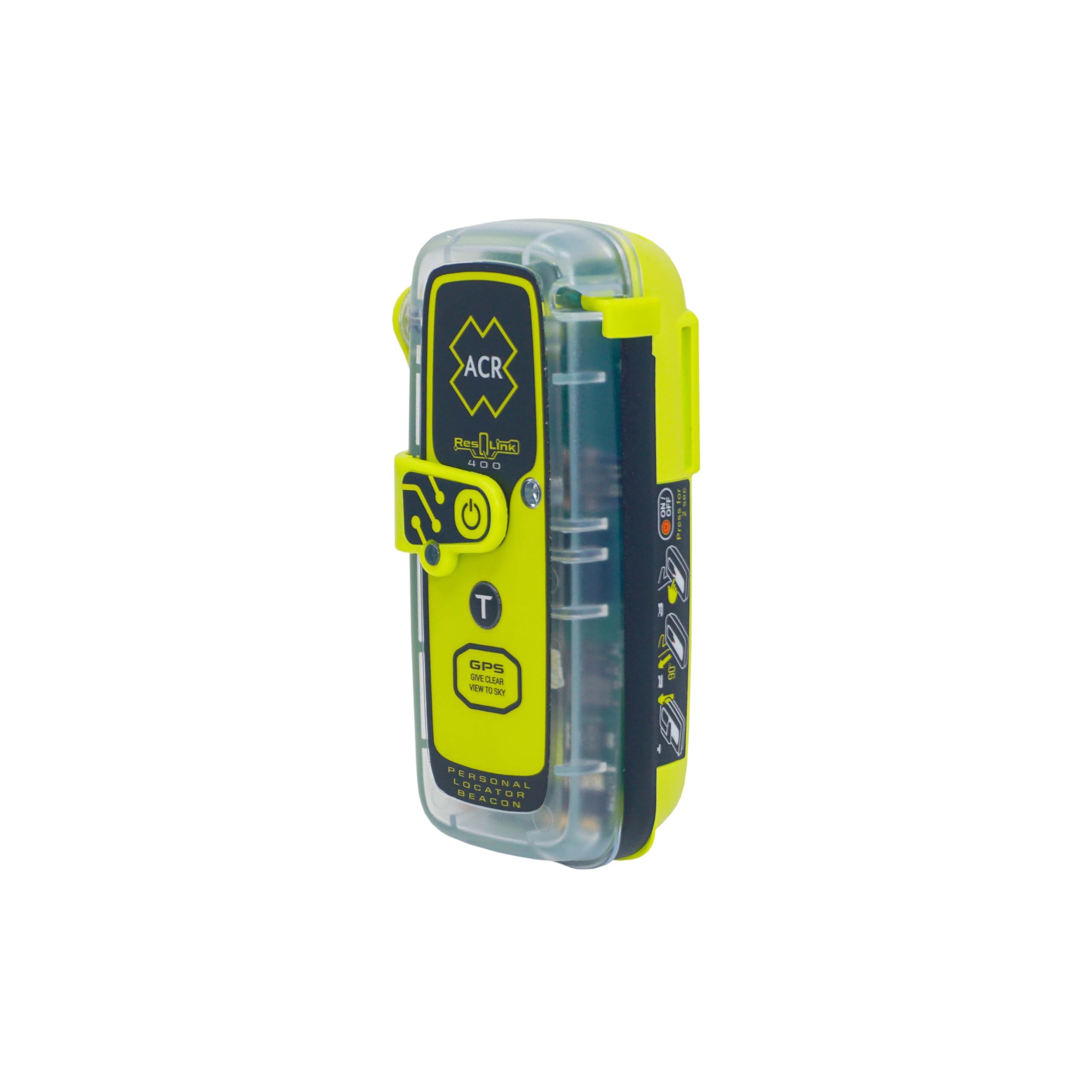
ACR ResQLink 400
You want a reliable beacon that won’t get in the way when you’re working the deck or heading offshore, and the ResQLink 400 is built with that in mind. It’s compact but rugged, waterproof, and purpose-made to attach to life vests or belts so it’s always within reach.
Activation is simple and the unit transmits GPS location to satellites including Galileo, giving rescuers precise coordinates. It’s a solid choice if you spend time offshore, fish far from shore, or want a low-maintenance backup that won’t need recharging.
Situational Benefits
|
Situation |
How It Helps |
|---|---|
|
Offshore Fishing |
Keeps a compact, mounted SOS option on your vest so you can summon help quickly if something goes wrong far from shore. |
|
Kayaking and Paddle Sports |
Waterproof design and PFD attachment mean the beacon stays secure and ready even if you end up in the water. |
|
Remote Coastal Trips |
Provides satellite GPS location when cell coverage is unreliable so responders can find your position. |
Safety Features
406 MHz satellite SOS transmission with GPS and Galileo positioning, waterproof enclosure, included belt clip and PFD attachment, simple push-button activation and self-test capability, five-year warranty and durable construction.
Usability
Optimized for outdoor, marine and coastal use; small and lightweight enough for life vests and packs. Not intended as an indoor device and works best with a clear view of the sky for satellite signals.
Key Benefits
- Waterproof and rugged for marine environments
- Compact size that mounts to PFDs or belts
- Supports GPS and Galileo for accurate positioning
- No subscription required and simple activation
Who Should Buy This?
This is the most broadly suitable PLB in the lineup for recreational boaters, anglers, kayakers and coastal travelers who want a rugged beacon without paying for a display or Return Link Service.
Performance and Real-World Use
The ResQLink 400 balances marine durability with straightforward activation. Its PFD and belt attachment options are particularly important because a PLB is most useful when it stays with the person rather than remaining on a drifting or sinking vessel.
Pros
- Waterproof, rugged marine design
- GPS and Galileo positioning
- Useful PFD and belt mounting options
- No ongoing subscription
Cons
- No screen
- No Return Link acknowledgement
- Satellite performance still depends on proper deployment and sky visibility
Value
For many boaters, this model offers the best balance of price, proven emergency functionality and marine-oriented carrying options.
Current Price: $409.95
Rating: 4.7/5 (total: 169+)
⭐ Best With Display
ACR ResQLink 425
You get extra reassurance with the ResQLink View PLB425 because it shows you the unit is transmitting. The small display gives instant confirmation that your SOS and GPS coordinates are out, which removes guesswork when you’re stressed or dealing with rough conditions.
It floats, is water resistant and includes clips and straps so you can keep it on a life vest or belt. It’s a practical pick for anyone who wants clear feedback that help is on the way, whether you’re heading offshore or tackling remote coastal trails.
Situational Benefits
|
Situation |
How It Helps |
|---|---|
|
Solo Offshore Trips |
The display confirms your distress signal was sent, and flotation plus waterproofing keep it usable if you end up in the water. |
|
Coastal Kayaking |
Easy PFD attachment and buoyancy mean the beacon stays with you and can be deployed quickly if you capsize. |
|
Remote Coastal Hiking |
When cell service is out, the PLB sends GPS coordinates via satellite so rescuers can locate you even from difficult terrain. |
Safety Features
406 MHz satellite SOS transmission with GPS positioning, buoyant and waterproof enclosure, OLED display for status feedback, strobe, included belt clip and PFD attachment, self-test capability and a 5-year limited warranty.
Usability
Designed for outdoor and marine use; best used with a clear view of the sky. Mount to a PFD, belt or pack for quick access; not intended for indoor emergencies.
Key Benefits
- On-device display gives activation and signal confirmation
- Buoyant, waterproof design made for marine use
- Accurate GPS position transmission to search and rescue
- Includes mounting options for PFDs and belts
Who Should Buy This?
Choose the ResQLink 425 when you want the reassurance of a built-in display and a buoyant design, particularly for solo boating, offshore fishing, kayaking or remote coastal travel.
Performance and Real-World Use
The display adds practical value during an emergency because it can communicate activation and status information. This does not replace correct antenna positioning or a clear view of the sky, but it can reduce uncertainty when conditions are chaotic.
Pros
- On-device OLED status display
- Buoyant and waterproof
- Strobe and multiple attachment options
- Strong fit for marine users
Cons
- Higher price than basic PLBs
- Heavier and less compact than the smallest model
- No two-way messaging
Value
The price premium is easiest to justify for users who consider visual status feedback a meaningful safety benefit rather than a convenience.
Current Price: $469.95
Rating: 4.6/5 (total: 394+)
🔁 Best Return Link
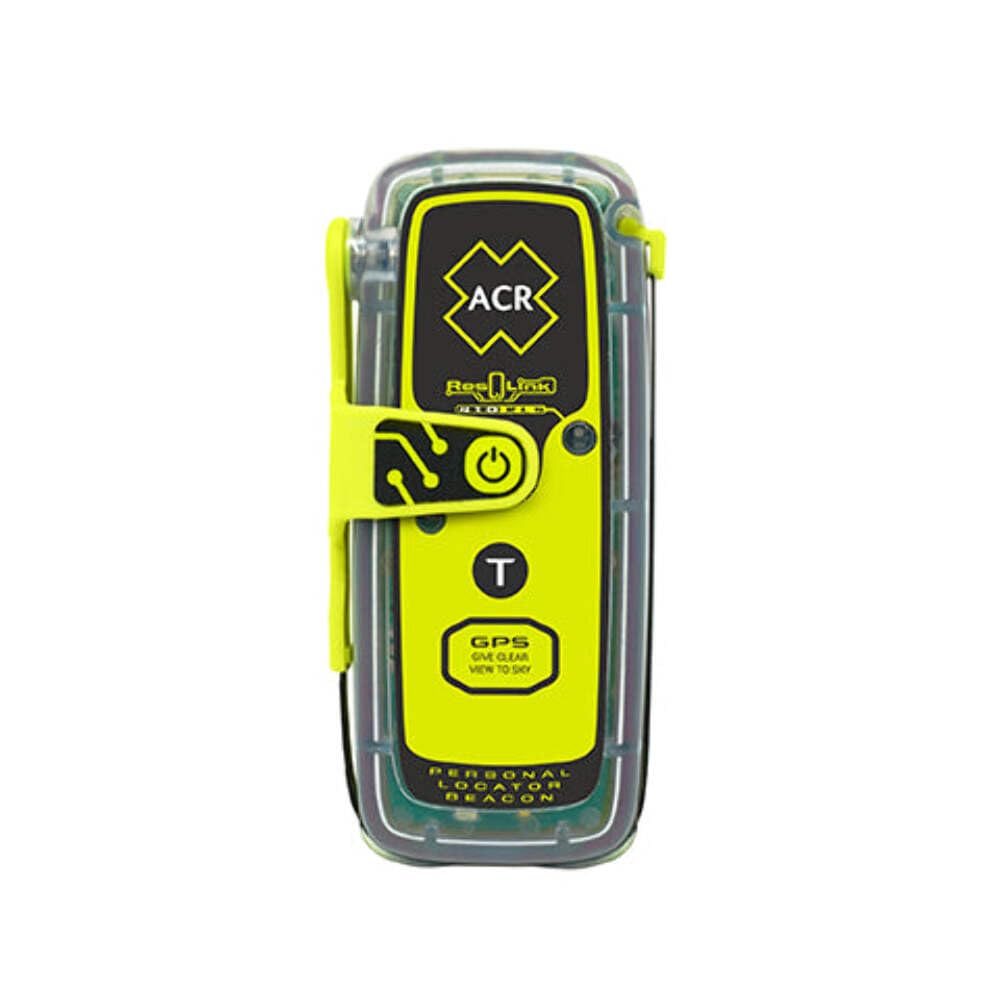
ACR ResQLink 410
You want a small, dependable device that not only sends your location but also gives feedback when rescuers acknowledge the signal, and that’s exactly where the ResQLink 410 stands out. It’s easy to carry in a pocket or clip to a life vest, the activation is straightforward and the return link feature provides an extra layer of certainty that your distress call was received.
The unit is geared toward outdoor and marine users who value a simple, reliable backup they can trust on solo hikes, day trips or when heading offshore.
Situational Benefits
|
Situation |
How It Helps |
|---|---|
|
Solo Hiking |
Small enough to carry at all times and sends your GPS position to rescuers if you become injured or lost. |
|
Boating |
Mounts to a PFD or belt so you can trigger an SOS during a sudden emergency and get confirmation your signal was received. |
|
Winter Sports |
Works in remote, snowy terrain where cell service is unreliable, giving teams precise coordinates to guide a rescue. |
Safety Features
406 MHz satellite SOS with GPS, Return Link Service that provides acknowledgement, rugged enclosure with belt clip and PFD attachment, push-button activation and a self-test mode. Designed for dependable emergency signaling in varied outdoor conditions.
Usability
Built for outdoor use across hiking, boating and winter activities; best used with a clear view of the sky. Mount to apparel or packs for quick access, not intended for indoor emergencies.
Key Benefits
- Return Link Service confirms distress reception
- Compact, pocketable and easy to mount
- Simple push-button activation and self-test
- Suitable for a wide range of outdoor sports
Who Should Buy This?
The ResQLink 410 is aimed at users who want a compact PLB plus Return Link Service acknowledgement, but who do not need the full visual interface of a display-equipped model.
Performance and Real-World Use
Return Link Service can provide confirmation that the distress message was received. That acknowledgement can be psychologically important during a prolonged wait, although it is not a two-way conversation and does not provide routine messaging.
Pros
- Return Link acknowledgement
- Compact and versatile
- Suitable for marine and land activities
- Simple emergency activation
Cons
- No full onboard display
- Costs more than basic PLBs
- Feedback is limited compared with a two-way satellite communicator
Value
This model makes sense when acknowledgement is worth paying for but a display is not essential.
Current Price: $464.95
Rating: 4.5/5 (total: 30+)
🚀 Best Premium
ACR ResQLink 435
You want a top-tier beacon that gives clear feedback and maximum confidence when you’re far from help, and the ResQLink View RLS delivers that. The display tells you the unit is transmitting, the return link confirms rescuers received your distress message, and built-in flotation plus a strobe make it easier to be located in rough conditions.
It’s a bit pricier, but if you spend serious time offshore or want extra assurance on remote trips, this model pairs advanced confirmation features with a rugged, user-friendly package.
Situational Benefits
|
Situation |
How It Helps |
|---|---|
|
Offshore Sailing |
Floating capability, strobe and VHF homing make locating you easier for nearby vessels and search teams when conditions are challenging. |
|
Solo Fishing Trips |
Display and return link remove uncertainty by confirming your distress signal was received, which is reassuring when you’re alone on the water. |
|
Extended Remote Travel |
Durable waterproof construction and worldwide satellite transmission ensure you can call for help from remote coastlines and wilderness areas. |
Safety Features
406 MHz satellite SOS with GPS and Return Link Service for acknowledgement, buoyant waterproof housing, visual strobe, emergency VHF homing frequency, self-test capability and a 5-year warranty.
Usability
Built specifically for outdoor and marine environments; best used with a clear view of the sky. Mount on a PFD, belt or dash for quick access and reliable deployment in wet conditions.
Key Benefits
- On-device display for transmission confirmation
- Return Link Service gives acknowledgement from rescuers
- Buoyant, waterproof design with strobe and VHF homing
- Includes mounting options for PFDs, belts and dashboards
Who Should Buy This?
This premium PLB is best for frequent offshore boaters, solo anglers and remote travelers who want both an onboard display and Return Link Service in one rugged marine beacon.
Performance and Real-World Use
The combination of visual status information, acknowledgement, buoyancy, strobe and VHF homing provides more feedback and local-search assistance than the basic models. These features are most valuable when rescue may take time and conditions make visual location difficult.
Pros
- Display plus Return Link Service
- Buoyant waterproof housing
- Strobe and VHF homing
- Strong feature set for offshore use
Cons
- Highest-priced wearable PLB in the comparison
- More features than occasional near-shore users may need
- Still limited to emergency signaling rather than routine messaging
Value
The premium is justified primarily for people who spend substantial time far from immediate assistance and want the most complete feedback package among the wearable options.
Current Price: $529.95
Rating: 4.8/5 (total: 78+)
💼 Best Offshore
ACR GlobalFix V6
You want a beacon that you can trust when you’re well offshore and a small personal PLB just won’t cut it. The GlobalFix V6 is built for serious marine use and is meant to stay mounted on your vessel so it’s ready if the worst happens. It combines multiple satellite systems for fast position fixes, a long 10-year battery so you won’t be swapping cells often, and mounting hardware for panel or dashboard installation.
If you run offshore passages, carry passengers or simply want the most dependable alarm on board, this model is designed to be a permanent, low-maintenance safety investment.
Situational Benefits
|
Situation |
How It Helps |
|---|---|
|
Offshore Passage Making |
Installed on the dash so it activates automatically or can be triggered quickly, giving search and rescue your precise location far from shore. |
|
Commercial or Passenger Boats |
Meets higher safety expectations with durable construction and long battery life so the vessel is ready for extended operations without frequent maintenance. |
|
Extended Voyages |
Multi-system satellite support improves signal reliability in remote regions, increasing the chance of a rapid fix when you need help. |
Safety Features
406 MHz emergency signalling with GPS, GLONASS and Galileo support, waterproof housing, emergency brackets for Cat I/II installations, Near Field Communication for easy commissioning, digital status display and a 10-year battery life.
Usability
Built specifically for marine environments and permanent mounting on vessels. Not intended for indoor use; best installed on the dash or panel with a clear view of the sky for reliable satellite transmission.
Key Benefits
- Designed for permanent installation on boats with panel and dashboard mounts
- 10-year battery life reduces maintenance and long-term cost of ownership
- Supports GPS, GLONASS and Galileo for robust global positioning
- Marine-grade waterproofing and professional mounting hardware
Who Should Buy This?
The GlobalFix V6 is for offshore vessel owners who need a permanently mounted EPIRB. It is not a direct substitute for a wearable PLB: the EPIRB is tied to the vessel, while a personal beacon should remain attached to an individual.
Performance and Real-World Use
Its value is strongest on offshore cruising boats, commercial or passenger vessels and boats making extended passages. Multi-constellation positioning, long battery service life and marine mounting hardware make it a vessel-level safety investment rather than a pocket emergency tool.
Pros
- Purpose-built vessel EPIRB
- GPS, GLONASS and Galileo support
- Ten-year battery service life stated in the source material
- Professional marine mounting options
Cons
- Much larger and heavier than a PLB
- Highest purchase price
- Does not replace the benefit of each person carrying an accessible beacon
Value
For a serious offshore vessel, the higher cost may be reasonable because the device is designed as permanent emergency equipment with a long service interval.
Current Price: $744.95
Rating: 4.9/5 (total: 48+)
💰 Best Budget
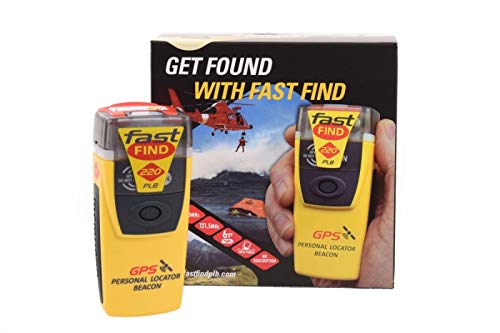
McMurdo FastFind 220
You want an affordable, no-fuss beacon that won’t add much weight to your pack, and the FastFind 220 fits that role. It’s small enough to carry every day on trails or toss into a boat kit, and the controls are straightforward so you can operate it under stress. The unit gives a clear distress signal and a visible strobe to help search teams spot you, making it a practical choice for solo adventurers, weekend hikers and anyone who wants reliable emergency coverage without spending a lot.
Situational Benefits
|
Situation |
How It Helps |
|---|---|
|
Day Hiking |
Fits in a pocket or pack and can be activated quickly to send your location when cell service isn’t available. |
|
Solo Remote Routes |
Provides a dedicated distress signal and strobe so rescuers can find you even if you’re off the beaten path. |
|
Lightweight Boating |
Tucks into your PFD or kit as an inexpensive backup to other onboard safety gear. |
Safety Features
406 MHz emergency transmission, visible strobe light, simple manual activation and an included pouch. Designed for quick deployment and basic rescue signalling in remote conditions.
Usability
Built for outdoor use where satellite visibility is available. Compact design makes it suitable for backpacks, PFDs and glove compartments; not intended for indoor emergencies.
Key Benefits
- Low-cost option for basic satellite emergency signalling
- Small and lightweight for everyday carry
- Easy to register and operate under stress
- Includes a pouch for secure storage
Who Should Buy This?
The FastFind 220 suits budget-conscious hikers, boaters and remote travelers who want basic 406 MHz emergency signaling without paying for a display, Return Link Service or premium marine features.
Performance and Real-World Use
Its strongest attributes are simplicity, portability and price. It is best treated as an accessible emergency beacon rather than a feature-rich navigation or communication device.
Pros
- Lowest listed price in the comparison
- Compact and lightweight
- Visible strobe
- Simple manual activation
Cons
- No status display
- No Return Link acknowledgement
- Fewer marine-specific convenience features than premium ACR models
Value
It offers the clearest value proposition for buyers whose priority is obtaining basic subscription-free rescue signaling at the lowest listed price.
Current Price: $269.00
Rating: 4.5/5 (total: 28+)
Personal Locator Beacon Buying Guide
1. Match the Beacon to the Activity
For boating and paddling, prioritize waterproofing, buoyancy or a flotation accessory, secure PFD attachment and an antenna that can be deployed while wearing wet-weather gear. For hiking, hunting or off-road travel, size and weight become more important because the beacon must remain on your body throughout the trip.
2. Understand Battery Terminology
Two battery specifications are easy to confuse. The battery service life tells you how many years the sealed battery can remain in service before replacement or factory servicing. The operating duration tells you how long the beacon is rated to transmit after activation. Confirm both figures in the current manufacturer documentation rather than relying only on a marketplace listing.
3. Decide Whether You Need a Display
A display can show activation, transmission or positioning information, depending on the model. It does not make the rescue signal stronger, but it can help the user understand what the device is doing. Buyers who travel alone or operate in severe conditions may place greater value on this feedback.
4. Decide Whether Return Link Service Is Worth the Premium
Return Link Service can acknowledge that the distress alert was received through the rescue satellite system. It is not the same as texting with rescuers, but the acknowledgement can provide meaningful reassurance. The ResQLink 410 and ResQLink 435 are the Return Link options identified in this comparison.
5. Check Buoyancy Carefully
“Waterproof,” “buoyant” and “supplied with a flotation pouch” do not mean the same thing. Some beacons float on their own, while others require a pouch or must be held in the correct operating position. Confirm the exact deployment instructions before relying on a beacon for kayaking, sailing or offshore use.
6. Keep the Beacon Accessible
A beacon stored below deck or at the bottom of a backpack may be unreachable after a capsize, fall or serious injury. Marine users should generally secure the PLB to a PFD or clothing. Hikers should keep it in an external pocket, shoulder-strap pouch or another location that can be reached with one hand.
7. Register and Maintain It
Registration connects the beacon identifier with emergency contacts and trip-related information that may help search and rescue authorities. Update the registration whenever your contact details, vessel or ownership changes. Follow the manufacturer’s self-test schedule, inspect the housing and antenna, and replace or service the battery before the marked expiration date.
8. Do Not Treat a PLB as a Substitute for All Other Safety Gear
A PLB is a last-resort rescue device. Boaters should still carry required safety equipment, a properly fitted PFD, navigation lights and appropriate communications such as a marine VHF radio. Remote travelers should also leave a trip plan and carry suitable clothing, water, first-aid supplies and navigation tools.
Frequently Asked Questions
How Does a PLB Work And When Should You Use It?
A PLB transmits an emergency signal on 406 MHz to search and rescue satellites along with your GPS coordinates so responders can locate you, and you should use one when you are out of cell range and need professional rescue. Activate it only in true emergencies, lay the antenna up toward the sky and try to keep it clear of obstructions so the signal gets out. Remember that devices with displays or Return Link Service add confirmation that your distress was received, which can reduce uncertainty during a rescue.
Do PLBs Need Subscriptions Or Regular Maintenance?
Most PLBs do not require a subscription, so you won’t pay monthly fees, but you do need to register your device with the appropriate authority and check it periodically. Watch the manufacturer battery expiry (many PLBs use multi-year batteries such as 7 or 10 years) and run the recommended self-tests so you know it works, and replace or service the unit before its expiry date.
What Features Should You Prioritize When Buying A PLB?
Focus on reliable satellite performance, battery life and how you’ll carry or mount the unit, since a beacon only helps if you can deploy it and it can reach satellites. Consider buoyancy and waterproofing for marine use, an on-device display or Return Link Service for confirmation, and the unit’s size and attachments so you actually bring it on trips. Expect to pay anywhere from about $269.00 for basic models up to around $744.95 for professional EPIRBs; match the price to how far offshore or remote you plan to go.
Does a PLB Let You Talk to Rescuers?
No. The PLBs in this comparison are designed primarily to transmit a distress alert and position. A display or Return Link acknowledgement can provide status feedback, but it does not create a normal two-way conversation. Buyers who need routine check-ins or text messaging should separately evaluate subscription-based satellite communicators.
Should Every Person on a Boat Carry a PLB?
A vessel-mounted EPIRB protects the boat as a whole, while a PLB stays with the individual. On offshore or solo trips, carrying a PLB on the PFD can provide an additional layer of protection if a person becomes separated from the vessel. The appropriate equipment depends on the boat, operating area and applicable safety requirements.
Can You Use a PLB More Than Once?
A beacon may require inspection, servicing or battery replacement after an emergency activation. Follow the manufacturer’s instructions before returning it to service. Routine self-tests should be performed only as directed so battery capacity is not unnecessarily reduced.
Where Should a PLB Be Stored?
Store it where it can be reached immediately. On the water, that usually means attached to a PFD, belt or outer clothing rather than placed in a cabin or dry box. On land, keep it on your person or in an accessible external pack location.
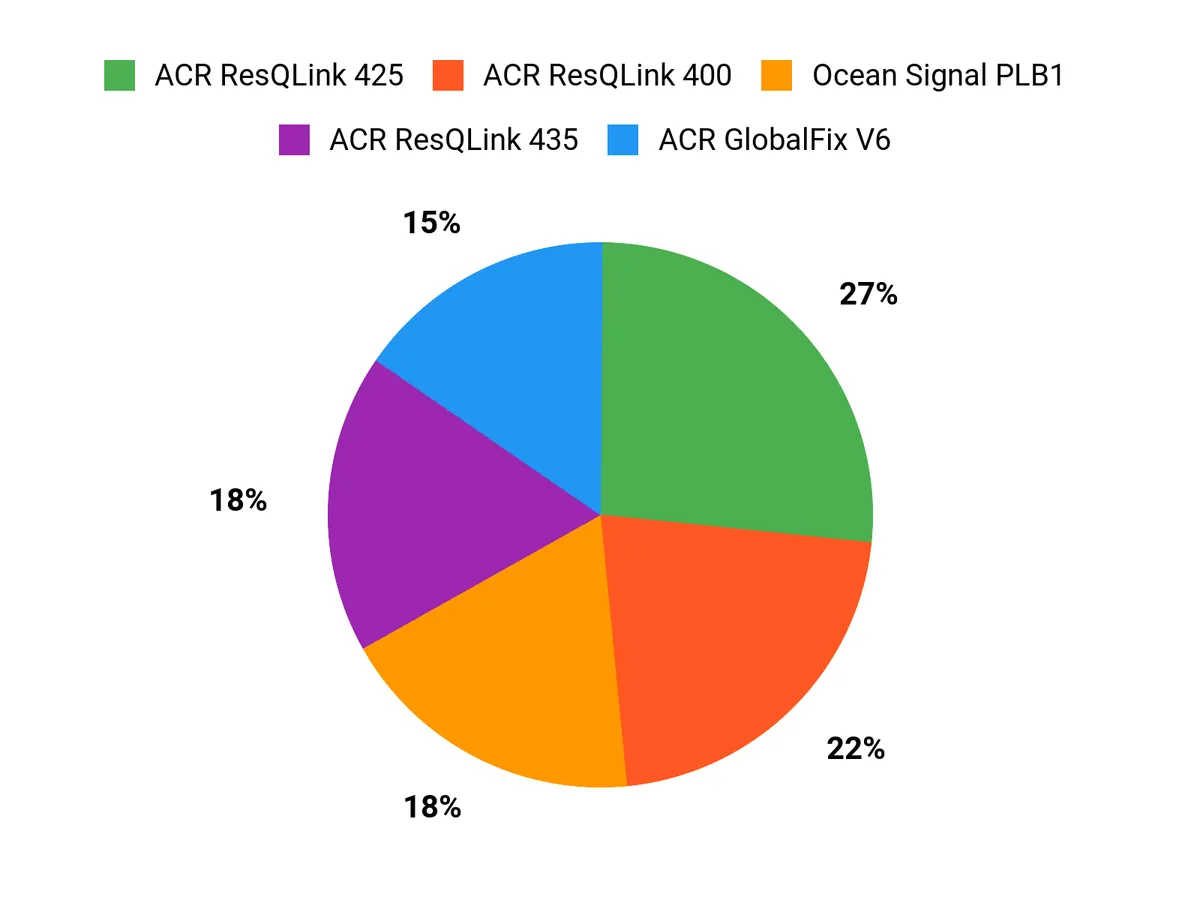
What Buyers Prefer
You usually pick based on where you go and how much feedback you want: choose the Ocean Signal PLB1 if portability and long battery life matter most, the ACR ResQLink 400 if you need a rugged, waterproof unit that mounts to a PFD, and the ACR ResQLink 425 if onboard status confirmation and flotation are priorities. Across these options you’ll prioritize reliable satellite fixes, simple activation, battery longevity and mounting or buoyancy features that match your typical trips.
Final Recommendations
- Best overall for most boaters: ACR ResQLink 400
- Best compact option: Ocean Signal PLB1
- Best with a display: ACR ResQLink 425
- Best premium wearable PLB: ACR ResQLink 435
- Best budget choice: McMurdo FastFind 220
- Best vessel-mounted offshore beacon: ACR GlobalFix V6 EPIRB
The best beacon is not simply the model with the most features. It is the one suited to your activity, carried where you can reach it and maintained according to the manufacturer’s instructions. For most recreational boaters, the ResQLink 400 offers the strongest balance of cost and marine suitability. Buyers who want visible feedback should move to the ResQLink 425, while offshore vessel owners should evaluate the GlobalFix V6 as a separate EPIRB category.
Wrapping Up
A personal locator beacon is a specialized safety tool that can dramatically shorten rescue time when you are out of cell range. Match the unit to your primary activity by prioritizing satellite performance and battery life for offshore travel and favor compact, lightweight models for backcountry use. Remember to register your device, perform periodic tests and check battery expiry so the PLB is ready if you ever need it.
📅 Last updated: