
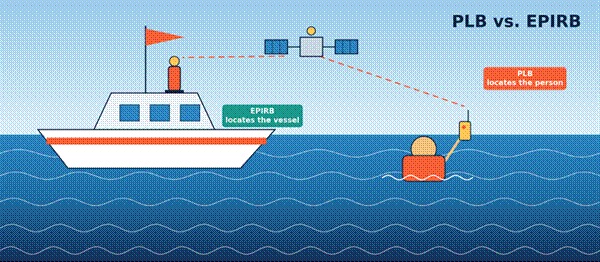
Figure 1. An EPIRB locates the vessel; a PLB locates the person.
When you are boating far from shore, reliable emergency communication can make a critical difference. Cell service may disappear, weather can change quickly, and a serious incident may leave you unable to reach help through ordinary channels.
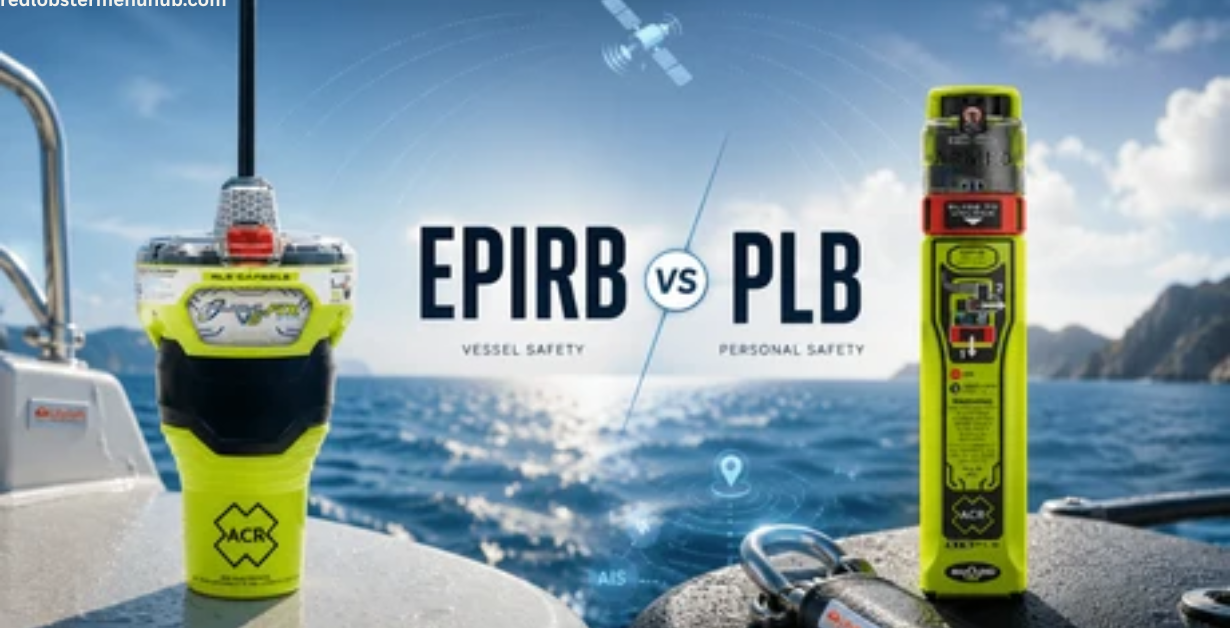
Two important emergency devices are a personal locator beacon (PLB) and an emergency position-indicating radio beacon (EPIRB). Both can transmit a distress signal through the international satellite search-and-rescue system, but they are designed for different situations.
A PLB is intended to protect an individual. An EPIRB is designed primarily to help locate a vessel.
So, which is better: a PLB or an EPIRB?
The answer depends on whether you need a beacon for yourself, your boat, or both.
Emergency communication devices are important, but keeping your phone and small electronics charged can also be useful during long trips on the water. For portable backup power options, check out our guide Best Waterproof Power Bank for Boating: What to Look For.
What Is a PLB?
A personal locator beacon, or PLB, is a compact emergency transmitter designed to be carried by an individual. It is commonly used by hikers, climbers, hunters, pilots, offshore anglers, sailors, and other people traveling beyond reliable cellular coverage.
When activated, a PLB generally:
• Transmits a distress signal on the 406 MHz emergency frequency
• Sends a unique identification code
• Uses the COSPAS-SARSAT search-and-rescue satellite system
• Provides location information, often through an integrated GPS or GNSS receiver
• Transmits a local homing signal to help rescuers locate the user
• May include a strobe light for nighttime or low-visibility searches
A PLB is intended for a person in serious or life-threatening danger. It is not normally designed to track a vessel, send routine messages, or replace a marine radio.
What Is an EPIRB?
An emergency position-indicating radio beacon, or EPIRB, is an emergency beacon designed primarily to help locate a vessel in distress.
An EPIRB is typically installed or stored aboard a boat. If the vessel is sinking, disabled, or otherwise in serious danger, a crew member can activate the beacon and place it where it has a clear view of the sky.
An EPIRB generally:
• Transmits a distress signal on the 406 MHz emergency frequency
• Sends the beacon’s registered identification information
• Uses the COSPAS-SARSAT satellite system
• Provides location information, often through GPS or GNSS
• Sends a 121.5 MHz homing signal for rescuers in the area
• Includes a flashing light on many models
• Is designed to float or remain operational in marine conditions, depending on the model
Some EPIRBs are manually activated, while others are designed for automatic float-free activation when a vessel sinks. Requirements and approved installation methods vary by vessel type, location, and local regulations.
PLB vs. EPIRB: The Main Difference
The simplest distinction is:
A PLB is designed to locate a person. An EPIRB is designed to locate a vessel.
Although both devices can send a distress alert through the same international satellite search-and-rescue system, they differ in size, activation method, battery expectations, buoyancy, mounting, and registration.
| Feature | PLB | EPIRB |
| Primary purpose | Locate an individual | Locate a vessel |
| Typical placement | Carried on a person | Mounted or stored on a boat |
| Buoyancy | Varies by model; not always intended to float | Commonly designed for marine flotation |
| Automatic activation | Generally manual | Some models support float-free activation |
| Battery duration | Typically designed for personal emergency use | Typically designed for extended marine emergency operation |
| Registration | Registered to the individual or beacon | Registered to the vessel or beacon |
| Best use | Person overboard, remote individual emergency | Vessel distress, sinking, abandonment |
| Size | Compact and portable | Larger marine-specific housing |
| Subscription | Usually not required for distress alerting | Usually not required for distress alerting |
Exact features vary by manufacturer and model, so always check the specifications and applicable regulations before relying on a beacon.
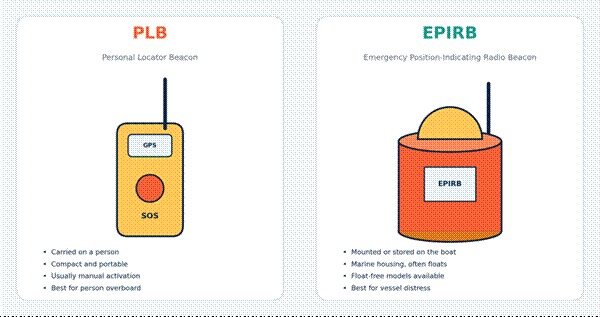
Figure 2. A PLB is compact and carried on a person; an EPIRB is a larger marine unit kept on the boat.
How Do PLBs and EPIRBs Work?
Both devices use satellite-based search-and-rescue technology.
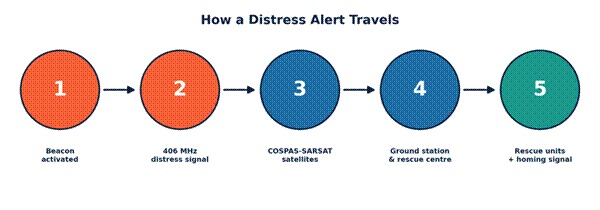
Figure 3. How a distress alert travels from the beacon to rescuers.
1. The beacon is activated
The user activates the PLB or EPIRB manually during a serious emergency. Some EPIRBs may also activate automatically when released from a sinking vessel, if they are approved and installed for float-free operation.
2. The beacon transmits a distress signal
The beacon sends a coded signal on the 406 MHz emergency frequency. This signal identifies the device and may include location information.
The beacon’s registration details can help authorities determine who owns it, what vessel or person it is associated with, and whom to contact for additional information.
3. Satellites detect the transmission
COSPAS-SARSAT satellites detect and relay the signal to ground stations. The alert is then routed to the appropriate rescue coordination authority.
4. Rescue authorities coordinate assistance
The responsible rescue coordination center evaluates the alert and coordinates a response using available resources. Depending on the location and emergency, assistance may involve:
• Coast Guard units
• Rescue aircraft
• Commercial vessels
• Maritime rescue teams
• Local emergency services
• Search-and-rescue boats
5. The homing signal helps rescuers locate the beacon
Many PLBs and EPIRBs transmit a local homing signal after activation. Rescuers can use specialized equipment to locate the beacon when they reach the general area.
When Is a PLB the Better Choice?
A PLB is often the better choice when the main concern is protecting an individual who could become separated from the boat or need help away from the vessel.
A PLB may be useful for:
• Person-overboard emergencies
• Offshore fishing
• Sea kayaking
• Sailing
• Remote island trips
• Tender or dinghy operations
• Shore excursions
• Solo boating
• Coastal hiking from a boat
• Expeditions far from cellular coverage
A PLB can be attached to a life jacket, carried in a pocket, or stored where it can be reached quickly. It should not be buried inside a bag or locked in a compartment that may be inaccessible during an emergency.
Example
A crew member falls overboard during rough weather. The boat loses sight of the person, and the individual is separated from the vessel. A PLB carried on the person can transmit the individual’s location, even if the boat is moving away or unable to remain nearby.
A PLB is especially valuable in this situation because it stays with the person rather than remaining on the boat.
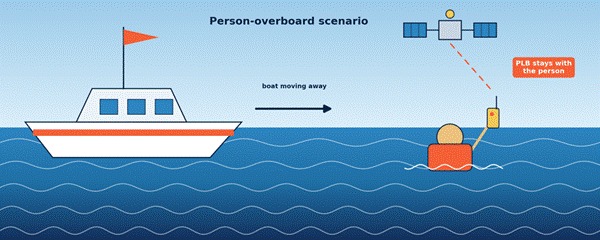
Figure 4. A PLB stays with the person, even when the boat moves away.
When Is an EPIRB the Better Choice?
An EPIRB is generally the better choice when the vessel itself is in danger.
An EPIRB may be useful during:
• Sinking
• Fire aboard the vessel
• Severe flooding
• Loss of propulsion in dangerous conditions
• Abandonment
• A major collision
• A serious medical emergency far offshore
• A situation where the vessel’s other communication systems fail
An EPIRB is designed to help rescuers locate the boat or the people abandoning it. It is normally stored in a location where it can be accessed quickly and taken into a life raft or survival craft if necessary.
Example
A boat suffers major hull damage and begins taking on water. The crew must abandon the vessel. An EPIRB can be activated and placed with the crew or allowed to float free if the unit and installation are designed for automatic activation.
What Is a Float-Free EPIRB?
A float-free EPIRB is installed in a hydrostatic release unit that allows the beacon to separate from the vessel if the boat sinks beyond a certain depth.
After release, the EPIRB is designed to float to the surface and activate automatically, depending on the model and installation.
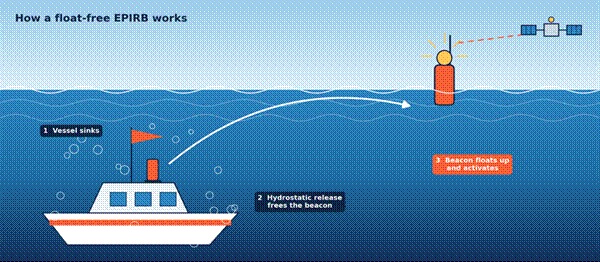
Figure 5. How a float-free EPIRB separates from a sinking vessel and activates.
This feature can be important if:
• The crew cannot reach the beacon
• The vessel sinks rapidly
• The boat is abandoned in an emergency
• Everyone onboard is injured or incapacitated
• The vessel is required to carry an automatically deployable beacon
A float-free EPIRB must be installed correctly. Its release mechanism should be inspected and replaced according to the manufacturer’s schedule. Do not obstruct the unit with rails, covers, equipment, or other objects that could prevent it from floating free.
Not every EPIRB is float-free. Some models are manually activated and must be taken from their bracket by a crew member.
Many boat owners rely on shore power and onboard electrical equipment, making safe power connections an important part of boating. Learn what to consider when choosing a durable cord in our guide Best Marine Extension Cord: How to Choose the Right One for Your Boat.
Can a PLB Replace an EPIRB?
Usually, a PLB should not be considered a complete replacement for an EPIRB when an EPIRB is required by regulation or appropriate for the vessel’s operating conditions.
A PLB may be smaller and easier to carry, but it may not offer the same features as an EPIRB, such as:
• Marine-specific flotation
• Automatic float-free deployment
• Vessel-based registration
• Longer operating duration
• Vessel emergency identification
• Purpose-built mounting
• Required regulatory approval
Whether a PLB can serve as an alternative depends on the type of vessel, its operating area, local laws, and the specific equipment requirements that apply.
If your boat is required to carry an EPIRB, carrying a PLB instead may not meet the requirement.
Can an EPIRB Replace a PLB?
An EPIRB generally should not replace a PLB for personal protection.
An EPIRB remains associated with the vessel. If someone falls overboard or becomes separated from the boat, the EPIRB may remain aboard or drift away with the vessel. A PLB carried on the person is more appropriate for a person-overboard or individual emergency.
For vessels operating offshore, carrying an EPIRB and giving each crew member access to a PLB can provide more complete protection.
Which Has Better Battery Life?
Battery life varies by model, certification, operating temperature, and manufacturer specifications. In general, EPIRBs are built for marine emergencies and may be designed to operate for a longer period after activation than many PLBs.
This does not mean every EPIRB has more useful battery life than every PLB. Compare the actual specifications for:
• Operating time after activation
• Battery replacement interval
• Storage temperature
• Activation temperature
• Self-test requirements
• Expiration date
• Authorized battery replacement procedures
Do not wait until the battery expiration date is close. Replace or service it according to the manufacturer’s instructions.
Do PLBs and EPIRBs Require a Subscription?
PLBs and EPIRBs generally do not require a monthly subscription to send a distress alert through the COSPAS-SARSAT system.
However, both devices generally need to be registered with the appropriate national authority. Registration provides important information that can help search-and-rescue officials identify the beacon and contact the owner or emergency contacts.
Registration information may include:
• Owner name
• Vessel name
• Vessel identification information
• Emergency contacts
• Home port
• Communication details
• Trip or operating information
Registration requirements differ by country. Keep the information current, especially after:
• Selling the beacon
• Buying a used vessel
• Changing emergency contacts
• Renaming the vessel
• Changing vessel ownership
• Moving to another country
• Replacing the beacon
A beacon that is not registered correctly may delay the identification process during an emergency.
PLB vs. EPIRB for Person-Overboard Emergencies
A PLB is generally the more appropriate device for a person-overboard emergency because it stays with the person.
However, a PLB is not an immediate substitute for the boat’s person-overboard response. The crew should still:
1. Shout “man overboard” or alert the crew.
2. Keep visual contact with the person.
3. Throw flotation equipment.
4. Mark the position electronically if possible.
5. Turn the boat safely toward the person.
6. Contact emergency services when appropriate.
7. Use the PLB if the person is separated, unable to return, or in serious danger.
A PLB may help search teams locate a person, but its signal may not be received instantly. Use it as part of a complete person-overboard plan.
PLB vs. EPIRB for Offshore Cruising
For offshore cruising, the best answer may be both.
An EPIRB can serve as the primary vessel distress beacon. A PLB can provide individual protection for each crew member or for selected people who may operate away from the vessel.
This combination provides redundancy if:
• The vessel sinks
• A person falls overboard
• The crew becomes separated
• The main beacon cannot be reached
• Someone leaves the boat in a tender
• A crew member needs help away from the vessel
Additional communication equipment may include:
• VHF marine radio
• Handheld VHF radio
• Satellite messenger
• Satellite phone
• Radar reflector
• AIS personal locator beacon
• Flares
• Emergency position equipment
Each device has a different purpose. A PLB or EPIRB should not replace the rest of your emergency communication and signaling equipment.
What Is an AIS MOB Beacon?
An AIS man-overboard beacon is different from a PLB or EPIRB. It transmits a signal that can be received by AIS-equipped vessels or systems nearby.
An AIS MOB beacon may help nearby crew and vessels see a person’s location on an electronic chart or navigation display. Some models may also include other signaling functions.
AIS equipment is primarily useful to nearby vessels with compatible receivers. It does not replace a 406 MHz PLB or EPIRB, which connects to the international satellite search-and-rescue system.
Some products combine multiple technologies, but you should understand exactly which functions the device provides.
How to Choose a PLB
When selecting a PLB, consider:
GPS or GNSS capability
A PLB with an integrated location receiver may provide rescuers with a more accurate position than a beacon relying only on radio-signal calculations.
Size and carrying method
The device should be comfortable and easy to attach to a life jacket or clothing without interfering with movement.
Waterproofing and flotation
Check whether the PLB is waterproof and whether it floats. A floating PLB may be easier to recover if dropped, but flotation should not be assumed.
Activation design
Look for controls that are easy to operate under stress but protected against accidental activation.
Strobe and homing signal
These features can help rescuers locate the user once they reach the general area.
Battery service interval
Confirm the operating time, expiration date, and replacement procedure.
Registration eligibility
Make sure the beacon can be registered in the country where it will be used.
How to Choose an EPIRB
When selecting an EPIRB, consider:
Manual or float-free operation
Determine whether you need a manual beacon, an automatically deployable float-free model, or both capabilities.
GPS or GNSS capability
Location-enabled models may provide a more accurate position to rescuers.
Marine durability
The unit should be designed to withstand saltwater, spray, vibration, and temperature changes.
Mounting system
The bracket should keep the EPIRB accessible and secure while allowing quick removal.
Hydrostatic release unit
If using a float-free EPIRB, inspect the release unit and replace it on schedule.
Battery duration and service
Review the operating time, battery expiration, and authorized service requirements.
Vessel registration
Confirm that the beacon’s registration is associated with the correct vessel and emergency contacts.
How to Maintain a PLB or EPIRB
Emergency beacons should be inspected regularly, even when they are rarely used.
For both devices
• Check the expiration date.
• Inspect the housing for cracks.
• Confirm that the antenna is undamaged.
• Check the activation cover and controls.
• Inspect the strobe lens.
• Clean away salt and dirt as directed.
• Perform only the manufacturer-approved self-test.
• Confirm the registration information is current.
• Store the device where it is easy to reach.
• Review the user instructions before each season.
For EPIRBs
• Inspect the mounting bracket.
• Check the hydrostatic release unit if installed.
• Confirm that nothing obstructs float-free deployment.
• Verify that the beacon is not buried under equipment.
• Check that the automatic activation system is armed as instructed.
Do not perform an actual distress transmission as a test unless specifically directed by the manufacturer or the appropriate authority.
Staying connected on the water can involve more than emergency beacons alone. If you want better internet access while boating, see our guide Best Boat Wi-Fi Extender: How to Improve Internet on the Water for practical tips on extending wireless coverage.
What to Do After Activating a Beacon
If you activate a PLB or EPIRB during a genuine emergency:
1. Keep the beacon operating.
2. Move it to an open area with a clear view of the sky if it is safe.
3. Keep the antenna upright.
4. Do not cover the unit with your body or equipment.
5. Remain near the beacon if possible.
6. Use other communication devices to provide details.
7. Follow instructions from rescue authorities.
8. If the alert was activated accidentally, contact the appropriate authority promptly.
Do not turn off the beacon simply because you see a boat or aircraft in the area. Wait for clear instructions or confirmation that assistance has identified you.
Frequently Asked Questions
Is a PLB or EPIRB better?
Neither is universally better. A PLB is better for locating an individual, while an EPIRB is better for locating a vessel. Offshore boaters may benefit from carrying both.
Can I use a PLB on a boat?
Yes. PLBs are commonly carried by boaters, anglers, sailors, and crew members. They are particularly useful for person-overboard emergencies and individual trips away from the vessel.
Does an EPIRB work if I am in the water?
An EPIRB may work if it is floating and has a clear view of the sky, but it is designed primarily for vessel emergencies. A PLB carried on the person is generally more suitable for an individual in the water.
Does a PLB automatically call the Coast Guard?
A PLB does not normally place a telephone call. It transmits a distress alert through the satellite search-and-rescue system, which routes the alert to the relevant rescue coordination authority.
Does an EPIRB need to be mounted outside?
The correct mounting location depends on the type of EPIRB and the vessel. A manually activated unit should be accessible and protected from damage. A float-free unit must be installed where it can release and float free if the vessel sinks.
Do I need a PLB if my boat has an EPIRB?
An EPIRB protects the vessel. A PLB can protect an individual who falls overboard or becomes separated from the boat. For offshore operations, carrying both may provide better overall coverage.
Final Verdict: PLB or EPIRB?
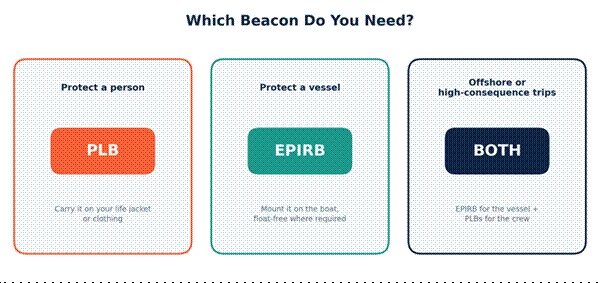
Figure 6. Which beacon do you need?
Choose a PLB if your main priority is protecting a person. It is compact, portable, and designed to stay with the individual who needs help.
Choose an EPIRB if your main priority is protecting a vessel. It is designed for marine distress situations such as sinking, abandonment, or major vessel emergencies.
For offshore cruising, commercial operations, long-distance sailing, and other high-consequence activities, carrying both a properly registered EPIRB and one or more PLBs may provide the most comprehensive emergency setup.
Whichever beacon you choose, register it, maintain it, keep it accessible, and learn how to activate it before an emergency occurs. A beacon is most valuable when it is ready to use, correctly registered, and carried where you can reach it quickly.
📅 Last updated: