

Last Updated: May 20, 2026
This post delves into why it is illegal to use a marine radio on land, focusing on its intended usage on water and the regulations surrounding it. It’s perfect for anyone curious about maritime communication laws and radio usage protocols.
The most important thing for a ship is maintaining contact with each other and the Coast Guard when needed. But how will this be possible? Marine radios play the most effective role in this case. It is used for its great ability to transmit signals between water and land over large areas of water.
Some people can get these radios for use on the ground. But is it important to know that radio works on the ground?
Marine Radio Equipment
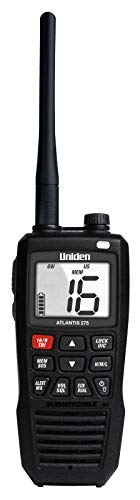
Uniden Atlantis 275 Handheld Two-Way VHF Marine Radio, Floating IPX8 Submersible Waterproof, Large Dual-Color Screen, 6-Watt, All USA/International/Canadian Marine Channels, NOAA Weather Alerts
Uniden Atlantis 275 Handheld Two-Way VHF Marine Radio, Floating IPX8 Submersible Waterproof,…
VIEW LATEST PRICE
Cobra BlueBound 350 VHF Handheld Marine Radio – White – 6-Watt, Floating, Long Range, NOAA Weather Alerts, International Functionality, IPX7 Waterproof, USB-C, Submersible, LCD Screen, Belt Clip
Cobra BlueBound 350 VHF Handheld Marine Radio – White – 6-Watt, Floating,…
VIEW LATEST PRICE![Standard Horizon HX210 6W Floating Handheld Marine VHF Transceiver [HX210]](https://m.media-amazon.com/images/I/31rWoLjz3rL._SL500_.jpg)
Standard Horizon HX210 6W Floating Handheld Marine VHF Transceiver [HX210]
Standard Horizon HX210 6W Floating Handheld Marine VHF Transceiver [HX210]
VIEW LATEST PRICEMarine radios can operate on land, but since they are originally built specifically for ships, it is illegal for anyone to use them on land without a Coast Station license.
But do you know why it is illegal to use a marine radio on land? If not, then we can help you. Let us know everything in detail through this article.

Understanding What Marine Radio Is
Before we know why it is illegal to use a marine radio on land, it’s important to have a clear idea. A marine radio is also commonly referred to as VHF radio, a two-way communication system used on ships.
These continue to be used not only from ship to ship but also from ship to land. Sometimes it is used for aircraft communication from ships. These are some of the scenes that work.
As long as the antenna is above the horizon, they can send and receive messages to each other, and this distance is about three miles.
Marine radio channels
We first mentioned that marine radio is like a two-way communication device. They have different channels that serve a unique purpose. Let’s find out.
The most important channel used in a marine radio is Channel 1. It is an emergency channel and is most commonly used for distress calls. Everyone who has a VHF radio must monitor Channel 16 to know if they are near the ship in danger.
Channel 22 is another important channel used by the Coast Guard to announce security broadcasts.
Commercial channels on VHF radio are used by cruise liners, merchant ships, and cargo ships. These channels are channels 1, 7A, 8, 10, 11, 18A, 19A, 63, 77, 79A, 80A and 88A. Pleasure boaters are meant to stay away from these channels.
In marine radio, channels 1, 5, 12, 14, 20, 63, 65A, 66A, 73, 74 and 77 are used for port management. Often pleasure boats, or recreational boats, use this channel to communicate in places without port operation.
Several other channels are used in marine radio. For example, Channel 6 is used for internship security communications. Channel 13 is used to request the opening of a bridge.
According to maritime regulatory bodies, approximately 85% of marine distress calls are handled faster because vessels keep their radios on the correct channels.
Licensing Requirements for Using Marine Radios
It is very important to have a license to use Marine Radios. You may never use it on water or land without a license. Many people ask why is it illegal to use a marine radio on land?
The main reason for this is that the radios are built to control the communication system from the ship. No one can use it if they want to. They will need a license.
If you want to use a marine radio at sea, the first step is to find out if your ship needs to have a law. From there, you can determine if you are eligible to apply for a radio use license.
Steps to Obtain a Marine Radio License
This is a very important question. In the United States, the Federal Communications Commission (FCC) is responsible for issuing radio-permitting licenses. Whether you want to obtain a Ship Station License, Coast Station License, or Marine Radio Operator Permit, you must first go through the FCC.
If you need a Coast Station License, you will need to fill out several forms with the FCC, including:
- Form 605
- Schedule 605B
- Form 159
If this is your first time filling out a form with the FCC, you will need a Federal Registration Number (FRN). In general, getting a ship station license is easier than getting a radio operator’s permit – which can prove quite difficult.
Final Thoughts on Marine Radio Use
Though marine radio is a very important thing to maintain connection, not everyone can use it. It is specially designed to use on the ship. If you don’t have a license, then you can’t use it on land.
Do you know why it is illegal to use a marine radio on land? If not, then this article will surely help you. Here we try to discuss everything related to it. Thank you all.
Frequently Asked Questions
Can I use a marine radio on land for emergencies?
Using a marine radio on land without a license, even for emergencies, is generally not permitted. However, in critical situations where no other means of communication is available, exceptions might be considered by authorities after proper review.
What makes marine radios different from regular radios?
Marine radios are designed for two-way communication over water, providing reliable long-range communication thanks to their frequency bands. They support specific marine channels crucial for distress calls and official communications, distinct from regular consumer radios.
What penalties exist for unauthorized use of marine radios?
The penalties for unauthorized use of marine radios can include fines, confiscation of the radio equipment, and potential legal actions. These penalties ensure compliance with maritime communication regulations and prevent interference with licensed communications.
Do marine radios ever interfere with other communication systems?
Yes, improper use of marine radios, especially on land, can interfere with emergency channels, Coast Guard operations, and other critical maritime communications. This interference can disrupt vital communications and pose safety risks.
Is a special radio license needed to operate a marine radio on a ship?
Yes, a special radio license is required to operate a marine radio on a ship legally. The license ensures that operators are properly trained and understand how to use the equipment without interfering with other essential maritime operations.
📅 Last updated: