
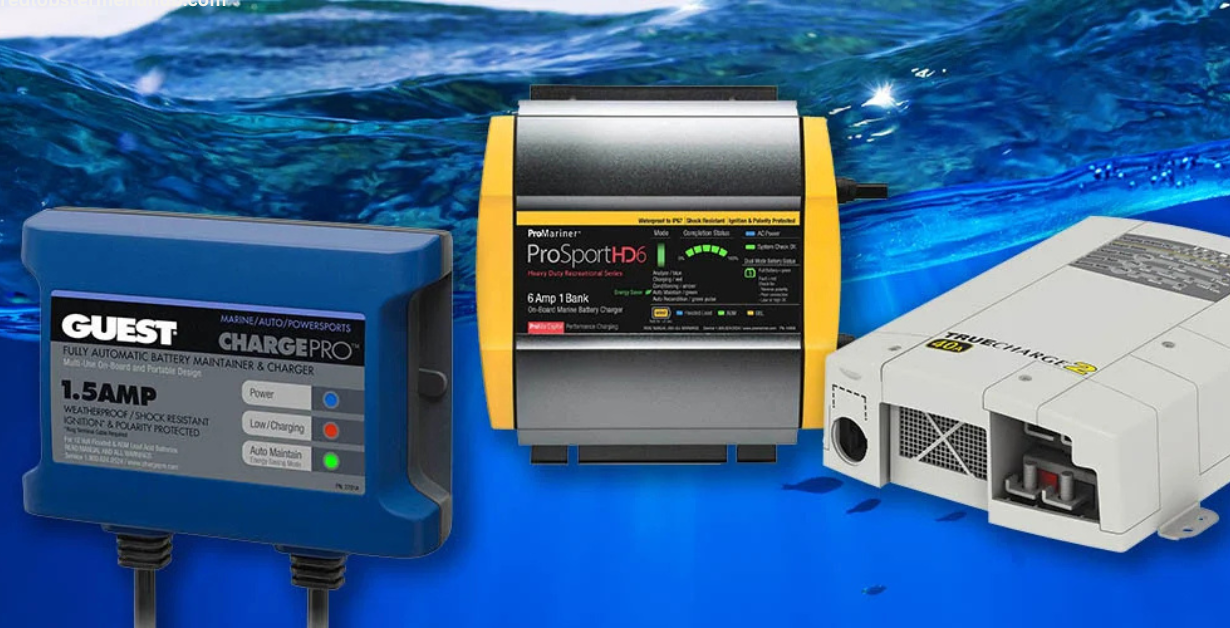
A reliable boat battery charger is essential for keeping your marine batteries ready for the next trip. The right charger can extend battery life, prevent unexpected starting problems, and safely maintain your batteries during storage.
But choosing the best boat battery charger is not as simple as picking the highest-amperage model. Marine batteries come in different types and sizes, and chargers vary in output, charging stages, weather resistance, installation style, and compatibility.
This guide explains what to look for in a marine battery charger and how to choose the best option for your boat.
A reliable battery is important for powering many of the electronics you use on the water, including your depth sounder. If you want to understand how this equipment measures water depth and why the transducer matters, read our guide How Boat Depth Sounders Really Work: A Simple Guide for Boaters.
What Is a Boat Battery Charger?
A boat battery charger is a device that replenishes electrical energy in one or more marine batteries. Depending on the design, it may be used to:
● Recharge a battery after use
● Maintain battery voltage during storage
● Charge multiple batteries at once
● Power onboard electrical systems
● Protect batteries from overcharging
● Support starting, trolling, and house batteries
Boat battery chargers may be portable or permanently installed. Portable chargers are useful for occasional maintenance, while onboard chargers are convenient for boats with multiple batteries or regular electrical demands.
What Makes the Best Boat Battery Charger?
The best boat battery charger should match your boat’s battery type, capacity, voltage, and intended use. It should also be designed for the marine environment.
Important features include:
● Compatibility with your battery chemistry
● Correct voltage and charging output
● Automatic multi-stage charging
● Waterproof or water-resistant construction
● Reverse-polarity and short-circuit protection
● Temperature compensation
● Multiple charging banks, if needed
● A suitable warranty and safety certifications
A charger that works well for one boat may be unsuitable for another. Start by identifying the battery system before comparing specific models.
Types of Marine Battery Chargers
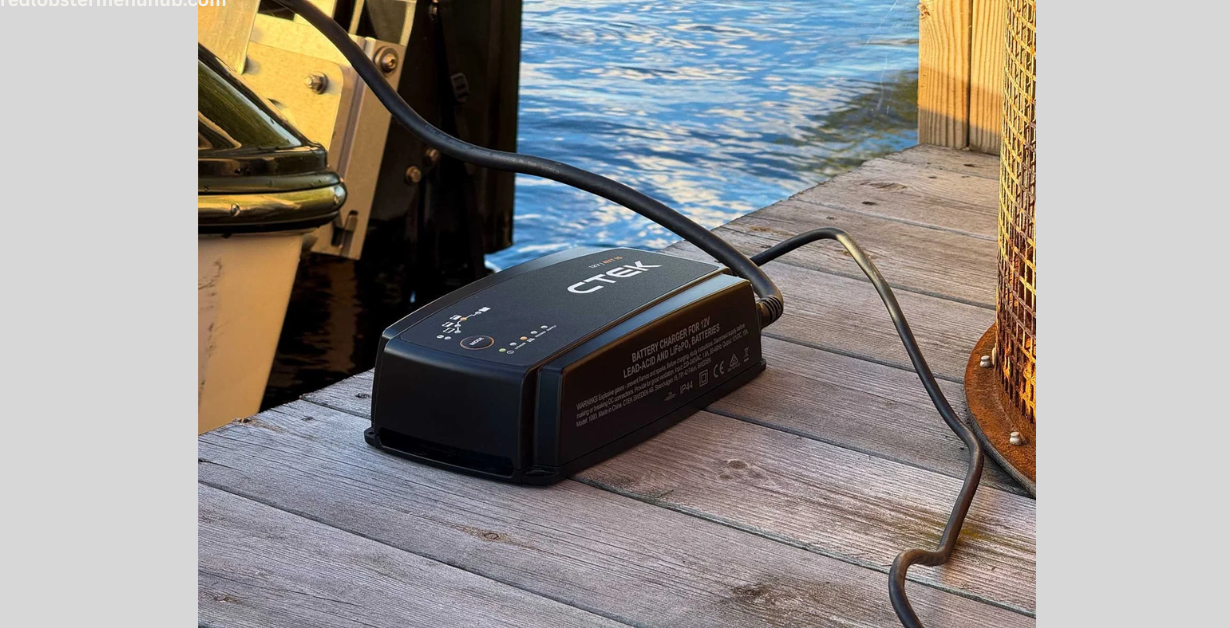
Portable battery chargers
Portable chargers connect to a battery when charging is needed. They are easy to move between boats, batteries, and vehicles.
Advantages
● Lower purchase cost
● Easy to store
● Useful for occasional charging
● Can serve multiple batteries one at a time
Limitations
● Must be connected manually
● May be left behind or improperly connected
● Usually less convenient for multiple batteries
● Requires access to the battery compartment
Portable chargers are a practical choice for smaller boats or owners who remove their batteries for seasonal storage.
Onboard battery chargers
An onboard charger is permanently installed near the batteries. It connects to shore power through a dedicated AC input and can charge one or more battery banks.
Advantages
● Convenient connection to shore power
● Good for boats with multiple batteries
● Can remain installed during normal use
● Often includes automatic maintenance charging
● Reduces the need to access the battery compartment
Limitations
● Higher upfront cost
● Requires proper installation
● Adds permanent equipment to the boat
● Must be selected for the vessel’s electrical system
An onboard charger is often the best choice for fishing boats, cruisers, pontoons, and other boats that regularly use multiple batteries.
Solar battery chargers
Solar chargers use photovoltaic panels to provide a low-level charge or maintain battery voltage. They can be useful for boats stored away from shore power.
Keeping your boat’s electrical equipment ready is only one part of good preparation. Basic line-handling skills are also useful for docking, securing your boat, and managing lines safely. Learn the most useful techniques in our guide to 7 Essential Boating Knots Every Boat Owner Should Know.
Solar charging may help maintain:
● Starting batteries
● House batteries
● Electronics batteries
● Auxiliary battery banks
Solar chargers are usually best for battery maintenance rather than quickly recharging a deeply discharged battery. Performance depends on sunlight, panel size, shading, and controller quality.
Match the Charger to the Battery Type
Before buying a charger, identify the type of marine battery installed on your boat.
Flooded lead-acid batteries
Flooded lead-acid batteries are common and generally affordable. They contain liquid electrolyte and may require periodic inspection and maintenance.
A compatible charger should support the charging profile recommended for flooded batteries. Do not use a sealed-battery setting unless it is appropriate for the battery.
AGM batteries
Absorbent Glass Mat, or AGM, batteries are sealed lead-acid batteries that are resistant to spills and vibration. They often require a different charging profile from traditional flooded batteries.
A charger designed for AGM batteries should regulate voltage carefully and provide a suitable absorption stage.
Gel batteries
Gel batteries use a gelled electrolyte. They can be sensitive to excessive charging voltage, so the charger must have a proper gel setting if specified by the battery manufacturer.
Using an unsuitable charging profile may reduce battery life or damage the battery.
Lithium marine batteries
Lithium iron phosphate, or LiFePO₄, batteries require a charger designed specifically for lithium chemistry. Lithium batteries do not use the same charging profile as lead-acid batteries.
A lithium-compatible charger may include:
● Lithium-specific charging stages
● Battery management system compatibility
● Low-temperature charging protection
● Appropriate voltage limits
● Automatic shutoff or fault protection
Never assume that a charger designed for lead-acid batteries is suitable for a lithium marine battery.
Understand Charging Voltage
Most marine batteries are part of a 12-volt system, but the actual charging voltage is higher than 12 volts. Some boats use 24-volt or 36-volt systems, particularly for electric trolling motors.
Check whether your battery bank is:
● 12 volts
● 24 volts
● 36 volts
● A combination of separate voltage systems
A charger must match the voltage of the battery bank it is intended to charge. Connecting the wrong charger can prevent charging or damage the batteries and electrical system.
Battery care is one part of routine boat maintenance, but mechanical equipment also needs proper attention. If your boat uses a winch, our guide Can You Over-Grease a Boat, Winch? Causes, Risks & Prevention explains how excessive grease can affect winch performance and contribute to premature wear.
How Many Amps Should a Boat Battery Charger Have?
Charger output is measured in amps. The correct amperage depends on battery capacity, how deeply the battery is discharged, and how quickly you need to recharge it.
A small charger may be sufficient for maintaining a starting battery, while a larger charger may be necessary for a large house bank or trolling-motor batteries.
A commonly used guideline is to choose a charger output equal to roughly 10% to 20% of a lead-acid battery bank’s amp-hour capacity, although the ideal rate depends on the battery manufacturer’s specifications and the battery type.
For example, a battery bank with a capacity of 100 amp-hours might be paired with a charger capable of approximately 10 to 20 amps. This is only a general starting point—not a universal rule.
Consider a higher-output charger when:
● The battery bank is large
● The batteries are frequently deeply discharged
● The boat needs a quick turnaround between trips
● Multiple onboard systems consume power while charging
● The manufacturer permits a higher charging rate
Choose a lower-output charger when:
● The battery is small
● The main purpose is long-term maintenance
● The battery manufacturer specifies a lower charging rate
● The boat is stored for extended periods
More charging current is not automatically better. Excessive current or incorrect voltage can shorten battery life.
Single-Bank vs. Multi-Bank Chargers
The number of charger banks determines how many separate battery banks the charger can manage.
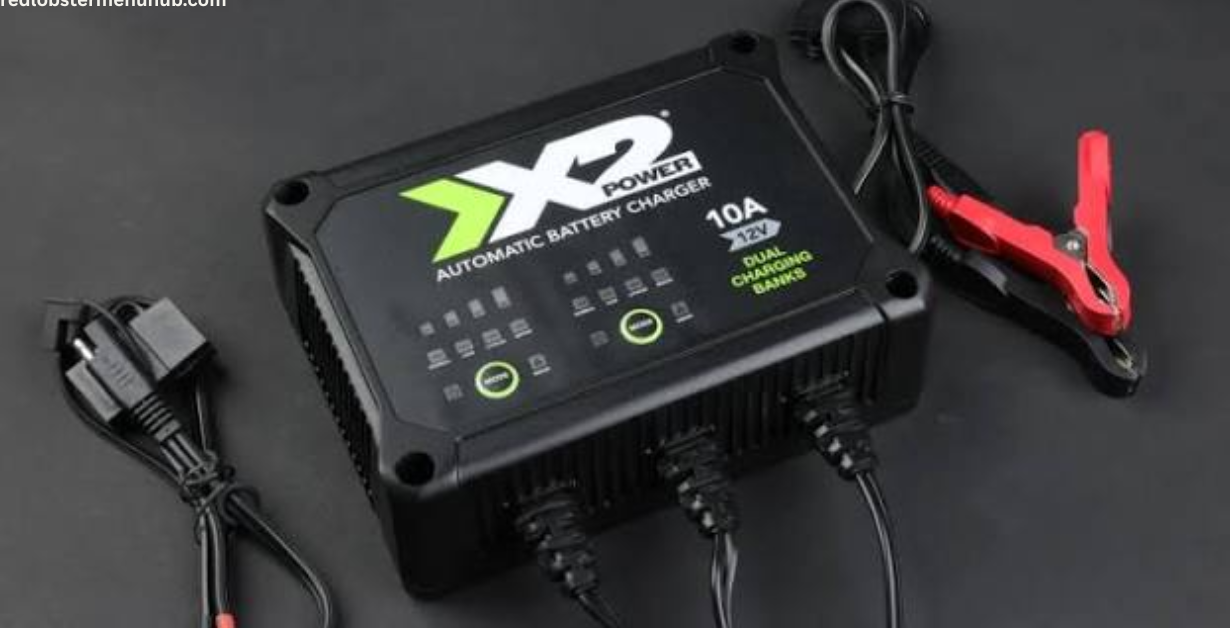
Single-bank chargers
A single-bank charger charges one battery or one connected battery bank. It may be suitable for a small boat with one starting battery.
Two-bank chargers
A two-bank charger can independently charge two battery banks, such as:
● A starting battery
● A trolling-motor battery
● A starting battery
● A house battery
Three-bank chargers
Three-bank chargers are common on fishing boats with separate batteries for:
● Starting the engine
● Operating electronics and accessories
● Powering a trolling motor
Each bank should be rated for the voltage and battery configuration it will charge. A multi-bank charger should not be selected based only on the total amp rating. Check the output per bank.
Independent Charging Is Important
A quality multi-bank charger should monitor each battery bank independently. This allows one battery to receive a different amount of charge from another based on its state of charge.
Independent charging helps prevent problems caused by connecting batteries of different ages, conditions, or discharge levels as though they were one battery.
Before installation, confirm how the charger is designed to connect to:
● Separate batteries
● Batteries connected in series
● Batteries connected in parallel
● Battery selector switches
● Engine charging systems
● Shore-power systems
Improper wiring can damage the charger or create an electrical hazard.
Look for Multi-Stage Charging
The best boat battery chargers use automatic multi-stage charging. Instead of applying maximum power continuously, the charger adjusts its output as the battery becomes full.
Bulk stage
During the bulk stage, the charger delivers relatively high current to restore most of the battery’s capacity.
Absorption stage
During absorption, the charger holds the battery at a controlled voltage while the charging current gradually decreases.
Float or maintenance stage
Once the battery is charged, the charger reduces its output to maintain the battery without excessive overcharging.
Some chargers also include a conditioning or desulfation mode. These features may help with certain lead-acid batteries, but they should be used only as recommended by the battery manufacturer.
Why Automatic Charging Matters
An automatic charger reduces the need for constant monitoring. It can switch between charging stages and maintain the battery during storage.
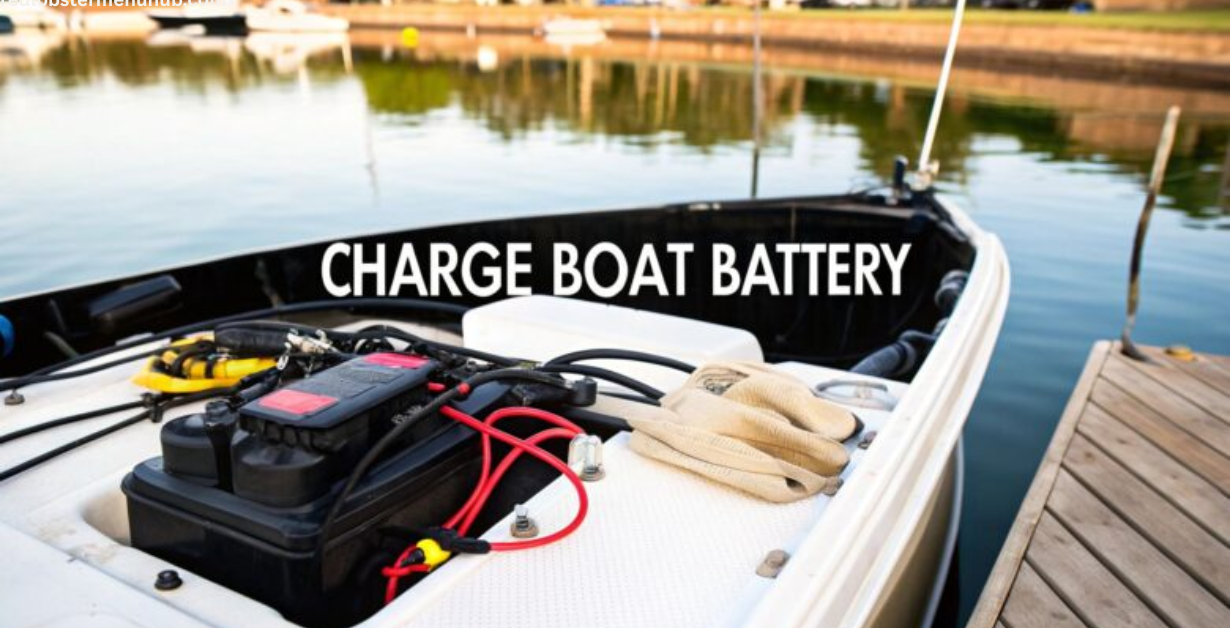
Useful automatic features may include:
● Automatic shutoff
● Float maintenance
● Battery fault detection
● Reverse-polarity protection
● Short-circuit protection
● Over-temperature protection
● Overcharge protection
● Low-voltage recovery
Automatic charging does not mean the system can be ignored completely. Batteries, cables, terminals, and charger connections should still be inspected regularly.
Marine Protection and Waterproofing
A boat battery charger operates in an environment with water, spray, vibration, salt, and temperature changes. A standard indoor automotive charger may not be appropriate for permanent marine installation.
When comparing chargers, look for:
● A marine-rated housing
● Water-resistant or waterproof construction
● Corrosion-resistant connections
● Sealed electronics
● Vibration resistance
● Appropriate ingress protection rating
● Protection against overheating
No charger should be submerged unless it is specifically rated for that use. Keep the unit away from bilge water, fuel vapors, and areas where water can pool.
Battery Temperature Compensation
Battery temperature affects charging requirements. A battery may require different charging voltage in cold conditions than in hot conditions.
A charger with temperature compensation can adjust its charging behavior based on battery temperature. This may help prevent:
● Overcharging in hot weather
● Undercharging in cold weather
● Excessive battery stress
● Reduced service life
Temperature compensation is particularly useful for boats exposed to large seasonal temperature changes or batteries installed in poorly ventilated compartments.
Charging in a Marine Environment
Battery charging can produce heat and, depending on the battery type, potentially release gases. Proper ventilation is important.
Follow these precautions:
● Install the charger in a dry, ventilated location.
● Keep it away from fuel tanks and fuel vapors.
● Do not cover the charger while operating.
● Keep battery terminals clean and tight.
● Use properly sized cables and fuses.
● Follow the manufacturer’s installation instructions.
● Disconnect power before servicing wiring.
● Check for corrosion around terminals and connections.
If you smell fuel or suspect a gas buildup, do not activate electrical equipment. Ventilate the area and follow appropriate marine safety procedures.
Does a Boat Battery Charger Charge While the Engine Is Running?
An onboard charger usually operates from shore power, not from the engine alternator. While the engine is running, the alternator may recharge the starting battery and possibly other battery banks through an isolator, combiner, or charging system.
Some boats use battery-to-battery chargers or advanced charging systems to transfer energy between battery banks. These systems should be designed and installed for the boat’s electrical configuration.
Do not assume that installing an onboard charger automatically solves every charging need. The charger, alternator, solar system, battery bank, and switching equipment should work together.
Best Boat Battery Charger Features to Consider
Battery chemistry selection
Choose a charger that specifically supports your battery type. If the boat uses multiple battery chemistries, confirm that the charger can safely manage each one.
Correct output per bank
Compare the output of each charging bank, not just the total advertised amperage.
Automatic multi-stage operation
This helps charge the battery efficiently and maintain it during storage.
Marine-rated construction
The charger should be built to withstand moisture, vibration, and corrosion.
Temperature monitoring
Temperature compensation can improve charging performance and protect the battery.
Status indicators
LED lights, digital displays, or app-based monitoring can help you understand the charging status and identify faults.
Protection features
Look for safeguards against:
● Reverse polarity
● Short circuits
● Overcharging
● Overheating
● Excessive current
● Incorrect battery connection
Easy installation
Check the charger’s dimensions, cable length, mounting requirements, AC input, and DC output connections before buying.
Service and warranty support
A reputable manufacturer with a useful warranty can make ownership easier, especially for permanently installed equipment.
Portable Charger vs. Onboard Charger: Which Is Better?
A portable charger may be the better choice if:
● You own a small boat
● You have one battery
● You charge only occasionally
● You store the battery away from the boat
● You want a low-cost solution
● You do not have shore power at the dock
An onboard charger may be better if:
● Your boat has multiple batteries
● You regularly use a trolling motor
● The boat is connected to shore power
● You want convenient battery maintenance
● You frequently leave batteries installed
● You need independent charging for separate banks
Some boat owners use both: an onboard charger for routine maintenance and a portable charger as a backup.
Common Boat Battery Charger Mistakes
Using an automotive charger without checking compatibility
Some automotive chargers are not designed for permanent marine use, multiple batteries, or the battery chemistry installed on the boat.
Choosing based only on amperage
A high-amperage charger may be unsuitable if it does not support the correct battery type or voltage.
Installing the charger in a wet location
Even marine-rated equipment should be mounted where it is protected from direct water exposure and bilge flooding.
Ignoring cable size and fusing
Undersized cables can overheat and cause voltage loss. Follow the manufacturer’s recommendations for wire size, fuse placement, and circuit protection.
Connecting banks incorrectly
A multi-bank charger must be connected according to its wiring diagram. Incorrect connections may prevent proper charging or damage the electrical system.
Mixing battery types or ages
Batteries connected in the same bank should generally be matched in type, capacity, age, and condition. A charger cannot correct problems caused by an unsuitable battery bank.
Leaving damaged batteries connected
A charger is not a substitute for battery inspection. Swollen, cracked, leaking, or severely corroded batteries should be removed from service.
How to Maintain a Boat Battery Charger
A charger needs less maintenance than a battery, but regular inspection is still important.
1. Check the housing for cracks or water damage.
2. Inspect AC and DC cables for cuts, heat damage, or corrosion.
3. Confirm mounting screws remain secure.
4. Check that ventilation openings are clear.
5. Inspect battery terminals and connections.
6. Look for error lights or unusual charger behavior.
7. Test the charger before long-term storage.
8. Keep the charger clean and dry.
9. Follow the manufacturer’s service recommendations.
10. Replace damaged cables or connectors promptly.
If the charger becomes unusually hot, emits an odor, repeatedly trips a breaker, or displays a fault, disconnect it safely and have the system inspected.
How to Choose the Best Boat Battery Charger for Your Needs
Use this checklist before purchasing:
Step 1: Identify the battery chemistry.
Determine whether your batteries are flooded lead-acid, AGM, gel, lithium, or another type.
Step 2: Confirm the voltage.
Check whether the battery system is 12, 24, or 36 volts.
Step 3: Count the battery banks.
Decide whether you need one, two, three, or more independent charging banks.
Step 4: Check battery capacity
Review the amp-hour rating and the manufacturer’s recommended charging current.
Step 5: Choose portable or onboard.
Consider whether you’ll use the charger occasionally or keep it installed on the boat.
Step 6: Evaluate the installation environment
Look for a charger with appropriate marine protection and enough cable length for your setup.
Step 7: Compare safety features
Prioritize overcharge, short-circuit, reverse-polarity, and over-temperature protection.
Step 8: Confirm wiring requirements
Check cable sizes, fuses, connectors, AC input requirements, and installation instructions.
Frequently Asked Questions
What is the best boat battery charger?
The best charger is one that matches your battery chemistry, voltage, capacity, and number of battery banks. It should also have marine-rated construction, automatic multi-stage charging, and appropriate safety protections.
Can I use a car battery charger on a boat battery?
A portable automotive charger may work for some marine batteries, but it should not be used automatically. Confirm that the charger supports the battery type, voltage, charging rate, and marine application.
How many amps should a marine battery charger have?
The correct amperage depends on battery capacity and manufacturer specifications. A general starting point for many lead-acid systems is approximately 10% to 20% of the bank’s amp-hour capacity, but the battery manufacturer’s guidance should take priority.
Should I leave my boat battery charger plugged in?
Many modern automatic marine chargers are designed to maintain batteries while connected to shore power. However, the charger and batteries should be installed correctly and inspected regularly. Follow the manufacturer’s instructions.
Can one charger charge multiple boat batteries?
Yes, a multi-bank charger can independently charge multiple batteries or battery banks. Make sure the charger is rated for the number, voltage, and chemistry of the batteries being charged.
Is a solar charger enough for a boat battery?
A solar charger may be sufficient for maintaining a battery during storage, but it may not provide enough power to recharge a deeply discharged battery or support heavy onboard electrical loads.
📅 Last updated: