

Last Updated: May 17, 2026

Navigating open waters safely requires reliable equipment, and perhaps no tool is more fundamental than a quality boat compass. Whether you’re piloting a small fishing vessel or commanding a large yacht, your marine compass serves as the cornerstone of navigation, operating independently of batteries or electronics. This comprehensive guide will help you understand the various types of compasses available, essential features to consider, and how to select the perfect compass that matches your vessel’s specific needs for safe navigation in any condition. It is specifically curated for both novice boaters and experienced captains seeking to upgrade their navigation tools.
What types of boat compasses are available for different sized vessels?
Marine compasses come in various sizes and configurations, each designed to accommodate specific vessel types and sizes. The compass you select should be proportional to your boat’s dimensions, with larger vessels typically requiring more substantial compasses with increased readability from greater distances. Every boat compass uses the earth’s magnetic field to orient itself, but the housing, mounting options, and features vary considerably across different models. According to maritime experts, over 80% of navigation mishaps could be avoided by using the correct compass for your vessel size and type.
Boat Compasses

Marine Compass, Car Marine Navigation Compass with Adjustable Mounting Bracket, Car Marine Accessories, Marine RV Truck Accessories
Marine Compass, Car Marine Navigation Compass with Adjustable Mounting Bracket, Car Marine…
VIEW LATEST PRICE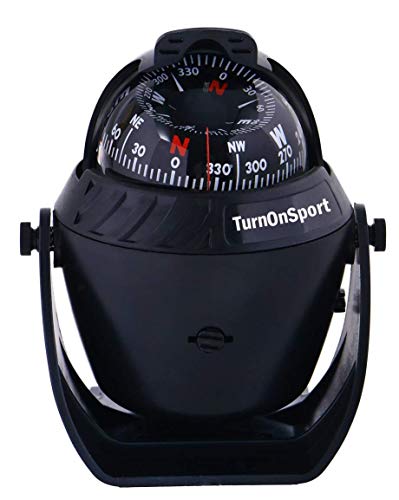
Boat Compass Dash Mount Flush – Boating Compass Dashboard Suction – Navigation Marine Compass Boats Surface Mount – Illuminated Dashboard Compass Ship – Electronic Sea Compass Suction Cup (Black)
Boat Compass Dash Mount Flush – Boating Compass Dashboard Suction – Navigation…
VIEW LATEST PRICE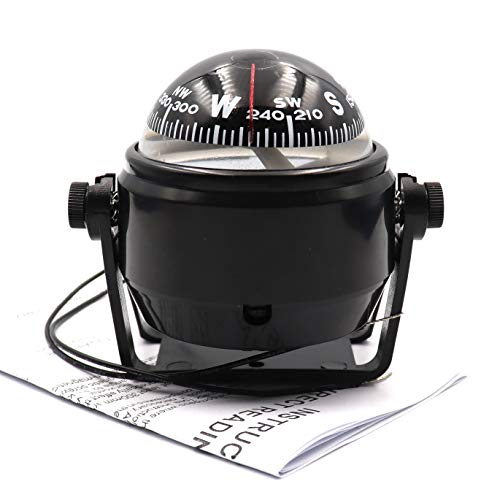
DETUCK Boat Compass Dashboard Marine Compass for Boat Dash Mount with Night Lighting
DETUCK Boat Compass Dashboard Marine Compass for Boat Dash Mount with Night…
VIEW LATEST PRICESmall boat compass options for vessels under 20 feet
For small boats under 20 feet, compact and lightweight marine compass options are ideal. These vessels typically benefit from simple, direct-read compass designs that don’t take up excessive space on limited dashboards.
The Ritchie RitchieSport compass series is particularly popular among owners of small boats, offering reliable navigation capabilities in a compact form factor.
These compasses typically feature a smaller compass card but maintain excellent readability even in challenging conditions. Many small boat compasses utilize bracket mount systems, allowing for flexible positioning and the ability to remove the compass when the boat is not in use.
This mounting style is particularly advantageous for open vessels where equipment may be exposed to the elements. Small boat compasses often incorporate basic illumination systems for night lighting, typically powered by internal batteries rather than connecting to the vessel’s electrical system, making them self-contained units ideal for simpler boat configurations with limited electrical systems.
Mid-sized boat compass solutions including the Ritchie Voyager compass
Mid-sized vessels between 20 and 30 feet require more robust navigation tools, and the Ritchie Voyager compass represents an excellent option in this category.
The Voyager compass is designed specifically for the cruising boater who needs reliable performance during extended journeys.
These mid-range compasses typically feature larger, easy to read dials with prominent lubber lines for precise heading information. The Voyager and similar models often incorporate more sophisticated gimbal systems to maintain stability and readability even in rougher waters, ensuring the compass card remains level regardless of the boat’s movement.
Mid-sized boat compasses frequently come with enhanced illumination options, including 12V connections to the boat’s electrical system for consistent night lighting. Many boaters in this category opt for dash mount installations, integrating the compass into the helm area for convenient reference while piloting.
The increased size of these compasses allows for more detailed directional markings, improving navigation accuracy and making course adjustments more precise. Ritchie Navigation has established itself as a leader in this segment, offering various models that balance durability, accuracy, and value for the recreational cruise enthusiast.
Large vessel options including the 5″ Globemaster and binnacle mounted compasses
Large vessels over 30 feet demand premium navigation equipment, and compasses like the 5″ Globemaster by Ritchie Navigation meet these requirements with exceptional performance features.
The Globemaster represents the pinnacle of magnetic compass technology, offering superior readability from anywhere on the helm. Large vessel compasses typically feature substantial dial sizes, often 5 inches or larger, ensuring the helmsman can easily read headings from various positions.
For substantial yachts and commercial vessels, binnacle mounted compasses provide both functionality and aesthetic appeal. These traditional installations place the compass within a pedestal or binnacle, elevating it to an optimal viewing height while adding a classic nautical element to the vessel’s helm station.
Premium large vessel compasses incorporate sophisticated engineering elements including precision machined pivot points and sapphire jewel bearings that reduce friction and enhance accuracy.
The compass card in these high-end models often features more detailed directional markings, allowing for navigation with greater precision. Many large vessel compass options include advanced compensation systems to account for deviation caused by the boat’s own magnetic fields, ensuring accurate readings regardless of the vessel’s construction materials or electronic equipment.
The illumination systems in these premium compasses typically offer variable brightness settings, allowing for optimal readability in any lighting condition without compromising the navigator’s night vision.
How do I choose the right mounting style for my boat compass?

Selecting the appropriate mounting style for your marine compass is crucial for both functionality and convenience. The mounting method affects everything from readability to compass performance, and different boat types may require specific mounting approaches.
Understanding the advantages and limitations of each mounting style will help you make an informed decision that enhances your navigation experience.
Bracket mount vs. dash mount: Which is best for your boat?
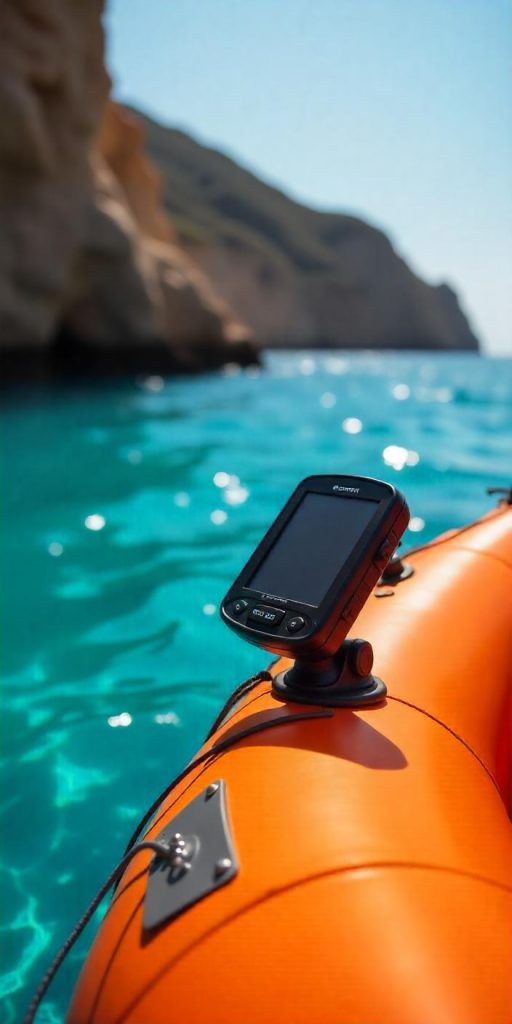
When choosing between bracket mount and dash mount compasses, several factors should influence your decision. Bracket mount compasses offer excellent flexibility, allowing the boater to adjust the angle and position of the compass for optimal visibility from the helm.
This mounting style is particularly beneficial for boats with limited dashboard space or those where the compass might need to be repositioned based on different operators. Ritchie Navigation offers several excellent bracket mount options, including models from their RitchieSport compass line, which are designed to withstand vibration while maintaining accurate readings.
The bracket itself serves as a protective element, often absorbing impacts that might otherwise damage the compass. Dash mount compasses, by contrast, integrate more seamlessly into your boat’s helm station, creating a cleaner, more permanent installation.
These models are typically positioned directly in the line of sight of the helmsman, ensuring constant visibility without having to look away from the forward view. Most dash mount compasses from companies like Ritchie offer standardized sizing, making replacement or upgrades straightforward when needed.
For boats that cruise in rougher waters, dash mount compasses may provide superior stability as they’re secured directly to the vessel’s structure. When considering which style works best, evaluate your typical navigation patterns—dash mounts excel for long-distance cruising where consistent heading information is crucial, while bracket mounts offer advantages for multipurpose vessels where flexibility is valued.
Understanding flush mount compass installation requirements
Flush mount compass installations create a streamlined, professional appearance on your vessel’s dashboard but require more precise preparation and installation. A flush mount compass sits recessed into the dashboard with only the compass dial and bezel visible above the surface.
This installation style requires cutting an appropriately sized hole in your dashboard, making it a more permanent decision than other mounting options. Before selecting a flush mount compass, carefully measure the available depth behind your dashboard, as these compasses require sufficient clearance for their housing.
Most flush mount compass models, including popular options from Ritchie Navigation, come with detailed templates and installation guides to ensure proper fitting. The installation process typically involves creating a precise cutout, installing mounting hardware, and sealing the compass to prevent water intrusion.
One significant advantage of flush mount compasses is their protection from accidental impacts and exposure to the elements, potentially extending the compass’s operational life. Ritchie’s flush mount options often feature enhanced illumination systems that integrate seamlessly with the boat’s electrical system, providing superior night lighting for safe navigation after dark. When properly installed, a flush mount compass maintains excellent stability even in rough conditions, as it’s secured directly to the vessel’s structure.
For boats with limited helm space, flush mount installations maximize available real estate while still providing the critical navigation information needed for safe boating. Remember that proper installation is crucial—any deviation in mounting angle can affect compass accuracy, so many boaters opt for professional installation of flush mount compasses.
Surface mount options for different boat configurations
Surface mount compasses offer a balance between installation simplicity and permanent positioning, making them popular choices for many boat configurations. Unlike flush mount options, surface mount compasses sit entirely above the dashboard or mounting surface, requiring no cutting or recessing of the mounting platform. This makes them ideal for fiberglass or metal dashboards where cutting might compromise structural integrity. Ritchie Navigation’s surface mount compass lineup includes versatile options like certain models in the Supersport series, which provide reliable performance with straightforward installation.
The installation process typically involves drilling small holes for mounting screws and possibly a larger hole for illumination wiring if connecting to the boat’s 12V electrical system. Surface mount compasses are particularly well-suited for center console boats, pontoons, and other vessels where the compass needs to be prominently positioned for maximum visibility.
Many surface mount models feature adjustable mounting bases that allow for fine-tuning the compass orientation to account for any inherent deviation caused by the boat’s construction or nearby magnetic influences. This mounting style also facilitates easier maintenance and potential replacement compared to flush mount options.
For boats that cruise in various conditions, including rough waters, quality surface mount compasses incorporate robust gimbal systems that maintain the compass card’s horizontal position regardless of the boat’s movement.
When selecting a surface mount compass, consider the viewing distance from typical helmsman positions—larger dial models like Ritchie’s Helmsman series offer enhanced readability from greater distances, ideal for larger cockpits or helm stations.
What features should I look for in a quality marine compass?
A reliable marine compass incorporates numerous features that enhance functionality, durability, and ease of use in various boating conditions. Understanding these key features will help you select a compass that meets your specific navigation needs while providing dependable service in challenging marine environments.
Compass illumination options including 12V systems
Effective compass illumination is essential for safe navigation during low-light conditions, dawn, dusk, or night cruising. Modern marine compasses offer various illumination solutions, with 12V systems being particularly popular for vessels with onboard electrical capabilities.
These systems connect directly to your boat’s electrical network, providing consistent compass lighting without requiring battery replacements. Ritchie Navigation compasses often feature sophisticated illumination options with adjustable brightness controls, allowing the boater to customize the lighting intensity based on ambient conditions.
This adjustability helps preserve night vision while ensuring the compass remains easily readable. Quality compass light systems illuminate the entire compass card evenly, avoiding bright spots or shadows that might obscure critical directional information. Some premium models incorporate red or green lighting options, which have less impact on night vision than white light, making them ideal for nocturnal navigation. When selecting a compass with 12V illumination, consider whether it includes reverse polarity protection to prevent damage from incorrect wiring connections.
For vessels without extensive electrical systems, many manufacturers offer alternative illumination solutions, including solar-charged options or battery-powered lights that can be activated as needed. Some high-end compasses from brands like Ritchie and Plath feature illumination systems with automatic ambient light sensors, adjusting brightness automatically based on surrounding conditions. Proper illumination not only enhances readability but also contributes to safer navigation by allowing the helmsman to maintain course accurately regardless of lighting conditions.
Flat dial vs. traditional dial designs
The compass dial design significantly impacts readability and functionality in different boating scenarios. Traditional dial compasses feature a domed or curved face with the compass card visible beneath, while flat dial designs present a more contemporary appearance with potential advantages in certain applications.
Flat dial compasses, popular in many Ritchie Navigation models, offer excellent readability from wider viewing angles, making them ideal for helm stations where multiple crew members might need to reference the compass. These compasses typically present a direct-read format where the lubber line aligns with current heading numbers on a flat compass card, simplifying quick heading identification.
By contrast, traditional domed dial compasses often provide better stability in rough conditions, as the curved design helps dampen liquid movement inside the compass housing.
Many experienced boaters prefer traditional dials for open-water navigation where consistent, accurate readings are paramount. The choice between flat and traditional dials often comes down to personal preference and specific boating environments—coastal cruisers may benefit from the enhanced readability of flat dials, while offshore vessels might favor the stability of traditional designs.
Modern manufacturing techniques have allowed companies like Ritchie to enhance both styles with anti-glare treatments and high-contrast markings that improve visibility in bright sunlight.
Some premium compass models offer innovative hybrid designs that combine the readability advantages of flat dials with the stability benefits of traditional configurations. Regardless of dial style, quality compasses feature clearly marked cardinal points and precise degree increments for accurate course plotting and maintenance.
Gimbal systems and their importance for stability
The gimbal system represents one of the most critical components of a quality marine compass, ensuring the compass card remains level regardless of the boat’s movement through waves and chop. Advanced gimbal designs utilize precision engineering to allow the compass to pivot freely on multiple axes, maintaining a horizontal position even when the vessel pitches and rolls in rough conditions.
Ritchie Navigation’s premium compass models employ sophisticated gimbal mechanisms featuring sapphire jewel bearings that reduce friction and enhance responsiveness to the earth’s magnetic field.
These high-quality components ensure the compass provides accurate readings even in challenging sea states. The gimbal’s materials significantly impact performance—marine-grade brass or stainless steel components offer superior corrosion resistance and durability compared to plastic alternatives found in budget options.
For boats that frequently navigate choppy waters, investing in a compass with a robust gimbal system proves essential for maintaining reliable headings when they matter most. Many advanced compasses incorporate dampening systems that work in conjunction with the gimbal to stabilize the compass card’s movement, preventing excessive oscillation that might make readings difficult to interpret.
Ritchie’s Supersport and Voyager compass lines feature particularly effective stabilization systems, explaining their popularity among serious boaters who demand reliable performance in diverse conditions.
When evaluating compass options, inspect the gimbal mechanism for smoothness of operation and build quality—a well-constructed gimbal system should allow the compass to remain perfectly level when the housing is tilted at various angles. Remember that even the most sophisticated gimbal system requires proper installation with the compass mounted parallel to the boat’s waterline to function as designed, highlighting the importance of careful installation for optimal performance.
How do Ritchie Navigation compasses compare to other brands?
Ritchie Navigation has established itself as a leading manufacturer of marine compasses, but understanding how their products compare to other brands helps boaters make informed purchasing decisions. This comparison explores various models and price points across manufacturers to identify the best options for different boating needs.
Ritchie Supersport vs. RitchieSport compass models
Within Ritchie Navigation’s product lineup, the Supersport and RitchieSport compass series target different segments of the boating market with distinct features and capabilities. The Ritchie Supersport represents the company’s premium recreational offering, featuring larger dial sizes (typically 4.5 inches) that provide exceptional readability from greater distances.
These compasses incorporate Ritchie’s most advanced internal mechanisms, including high-performance gimbal systems and precision pivots that ensure accurate readings in diverse conditions.
The Supersport series typically features enhanced illumination options with 12V connections for integrated night lighting that’s bright and evenly distributed across the compass card. By comparison, the RitchieSport compass line offers more compact, economical options designed primarily for smaller vessels and day cruising.
These compasses generally feature smaller dial sizes (around 2.75 inches) that still provide adequate readability while consuming less dashboard space. Though more affordable, RitchieSport compasses still maintain Ritchie’s reputation for reliability, incorporating quality materials and precision engineering that exceed most competitors at similar price points.
Both series utilize Ritchie’s distinctive direct-read compass card design with prominent lubber lines for straightforward heading interpretation. The mounting options differ between lines, with Supersport models often available in flush mount, surface mount, and bracket mount configurations, while RitchieSport options typically focus on bracket and surface mount designs ideal for smaller vessels.
For boaters who frequently navigate in challenging conditions or undertake longer journeys, the Supersport’s superior stability and readability justify its higher price point. However, weekend boaters with smaller vessels may find the RitchieSport provides all necessary functionality at a more attractive price.
Comparing Ritchie Navigation with Plath and other premium brands
When evaluating high-end marine compasses, Ritchie Navigation competes with prestigious brands like Plath, offering different approaches to precision navigation equipment. Plath compasses, manufactured in Germany, have long been considered the pinnacle of traditional magnetic compass craftsmanship, featuring exceptional hand-built quality and classic designs.
These compasses typically utilize the finest materials, including premium metals and specialized compass fluid formulations that maintain performance across extreme temperature ranges.
Ritchie Navigation, by contrast, has focused on combining modern manufacturing techniques with innovative designs, resulting in highly reliable compasses at more accessible price points than Plath.
While Plath compasses might feature more traditional aesthetics that appeal to classic yacht owners, Ritchie’s designs often incorporate contemporary elements that integrate seamlessly with modern helm stations. Both manufacturers produce compasses with exceptional accuracy, but Ritchie’s models frequently offer more extensive mounting options and standardized sizing that simplifies installation across diverse vessel types.
The internal mechanics reveal different philosophies—Plath typically employs traditional approaches refined over decades, while Ritchie has embraced modern engineering solutions like their Power damp system that stabilizes the compass card in rough conditions.
For the serious boater considering premium options, Ritchie Navigation generally offers excellent value with performance comparable to more expensive European alternatives. The illumination systems represent
Frequently Asked Questions
What is the best compass for open water navigation?
For open water navigation, it is crucial to select a compass with a stable gimbal system, large readable dial, and reliable illumination. Models like the Ritchie Voyager or Globemaster are highly recommended for their robust construction and excellent readability, even in rough conditions.
Can a marine compass work without electricity?
Yes, a marine compass does not require electricity to function as it relies on Earth’s magnetic fields for operation. However, many compasses offer illumination options that do require electrical power, such as 12V connections to a boat’s electrical system.
How often should I calibrate my boat compass?
It is advisable to calibrate your boat compass at least once each season or after any major equipment changes on your boat. Calibration ensures accuracy by compensating for local magnetic variations that can affect compass readings.
What causes compass deviation and how can I correct it?
Compass deviation is caused by ferrous metals and electronic equipment on board your vessel, which can disturb the magnetic field. Installing a deviation card or using compensation settings on digital compasses can help correct for deviation and ensure accurate readings.
Are there specific compass certifications I should look for?
Marine compasses can have certifications from organizations such as ISO (International Organization for Standardization) or BSH (Federal Maritime and Hydrographic Agency of Germany), indicating compliance with international safety and performance standards. It’s advisable to choose models with recognized certifications for assurance of quality.
How can I improve night visibility of my compass?
Improving night visibility can be achieved by selecting a compass with integrated illumination options, such as 12V systems. Opting for models with adjustable brightness and color options like red or green lighting also preserves night vision while enhancing visibility of the compass card.
📅 Last updated: