

If you want the short answer, here it is: The best handheld VHF marine radio for the money is the Standard Horizon HX890, and the best fixed-mount option for the money is the Standard Horizon GX1400 Eclipse Matrix.
The HX890 offers high-end features like built-in GPS and DSC calling for a mid-range price, giving you safety capabilities usually reserved for much more expensive units. For fixed radios, the GX1400 strips away unnecessary bells and whistles to give you a rugged, reliable, DSC-capable radio at the most accessible price point on the market.
VHF Marine Radios

Standard Horizon HX890 Black Handheld VHF – Floating 6 Watt Class H DSC Two Way Radio
Standard Horizon HX890 Black Handheld VHF – Floating 6 Watt Class H…
VIEW LATEST PRICE
Standard Horizon HX891BTBK
Standard Horizon HX891BTBK
VIEW LATEST PRICE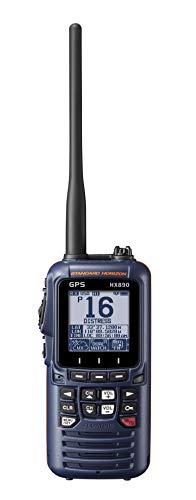
Standard Horizon HX890 Handheld VHF Navy Blue – Floating 6 Watt Class H DSC Two Way Radio
Standard Horizon HX890 Handheld VHF Navy Blue – Floating 6 Watt Class…
VIEW LATEST PRICEValue isn’t just about the lowest price tag. It’s about what you get for that price. A $50 radio that corrodes after one season is expensive; a $200 radio that lasts ten years and saves your life is a bargain. This guide breaks down the specific models that hit that “sweet spot” of performance, durability, and cost.
Key Takeaways
- Best Handheld Value: The Standard Horizon HX890 balances professional features (GPS, DSC) with an affordable price tag.
- Best Fixed Mount Value: The Standard Horizon GX1400 is the industry standard for reliable, no-frills communication.
- GPS is Worth the Extra Cost: For handhelds, paying extra for built-in GPS (like in the HX890) is a massive safety upgrade over basic models.
- Don’t Skip DSC: Digital Selective Calling (DSC) is a mandatory safety feature on fixed mounts and highly recommended on handhelds; never buy a fixed radio without it.
- Installation Matters: A budget fixed-mount radio can become expensive if you need complex wiring; compact models like the Icom M330G simplify this.
- Battery Life = Value: Cheap handhelds often have poor battery retention; look for Li-ion batteries that hold a charge for months.
Best Handheld VHF for the Money: Standard Horizon HX890
When looking for the best return on investment for a handheld, the Standard Horizon HX890 is the clear winner. It sits in the middle of the price pack but includes features typically found in flagship models costing 50% more.
Most handhelds in the “budget” category lack GPS. This means if you hit the distress button, the Coast Guard gets a signal, but they don’t get your location. The HX890 includes a built-in GPS receiver. When you press the distress button, it transmits your exact coordinates. That single feature makes it an incredible value for safety-conscious boaters.
It also floats, is rated IPX8 submersible (1.5 meters for 30 minutes), and includes an FM radio receiver. The interface is easier to navigate than many competitors, which is critical when you are stressed or in rough water.
Why It Wins on Value
- GPS Built-in: No need to buy a separate GPS unit or rely on a fixed radio.
- DSC Calling: Allows for direct digital calling to other boats or shore stations.
- Complete Kit: Comes with a charging cradle, alkaline battery tray (backup power), and 12V charger.
If you need more background on why handhelds are essential for sailors, check out our essential guide to choosing the best handheld VHF radio for sailors and cruisers.
Best Budget Handheld: Cobra MR HH350 FLT
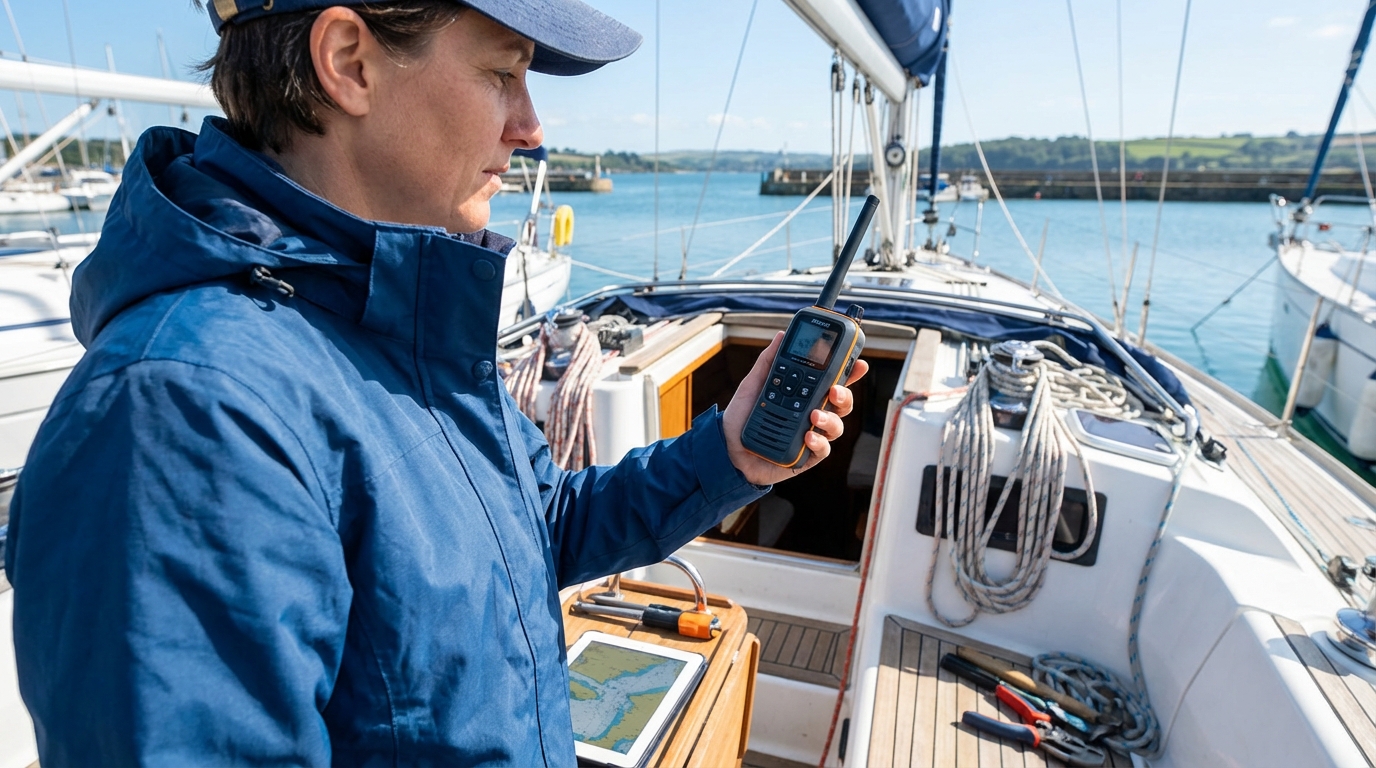
If you strictly need a backup radio or are equipping a “ditch bag” on a tight budget, the Cobra MR HH350 FLT is the smart choice. It costs significantly less than the HX890. You lose the GPS and DSC features, but you get a radio that transmits clearly, floats, and survives getting wet.
The “Burp” feature is a clever addition at this price point—it vibrates water out of the speaker grill after the radio takes a dunk, ensuring your audio is clear immediately. It transmits at the full 6 watts (many budget radios max out at 5 watts), giving you slightly better range.
Pros:
- Floating design with an orange core for visibility.
- 6-Watt transmission power.
- Noise-canceling microphone blocks wind and engine noise.
Cons:
- No GPS or DSC: You cannot send a digital distress signal with coordinates.
- Proprietary charging cable can be annoying if lost.
Best Fixed Mount VHF for the Money: Standard Horizon GX1400
For a permanent installation, the Standard Horizon GX1400 Eclipse Matrix is the definition of “best for the money.” It is the most affordable reliable Class D DSC fixed-mount radio available from a major brand.
You aren’t paying for NMEA 2000 networking (it uses the older NMEA 0183) or a built-in AIS receiver. You are paying for a waterproof chassis, clear voice transmission, and DSC capabilities. For 90% of small center consoles, runabouts, and older sailboats, this is all the radio you need.
It is compact, making it easy to fit into crowded dashboards. The display is a dot-matrix screen, which is sharper and easier to read in bright sunlight than the blocky segment displays found on other cheap radios.
If you are looking for more options in this category, read our review of the best fixed mount VHF marine radio.
Best Compact Fixed Mount with GPS: Icom M330G
Sometimes “value” means saving time and frustration during installation. The Icom M330G is a compact fixed-mount radio that includes a built-in GPS receiver (the “G” stands for GPS).
Why does this matter? With a standard radio like the GX1400, you must wire it to your chartplotter to get GPS coordinates for the DSC distress function. That involves splicing tiny wires and configuring NMEA settings—a headache for many boaters. The M330G knows its own location right out of the box. You just connect power and an antenna, and your safety features work immediately.
It costs a bit more than the GX1400, but for many DIYers, the saved installation time and the elimination of wiring headaches make it the better value.
Why choose the M330G:
- Zero-hassle GPS: No networking required.
- Tiny Footprint: Fits in the smallest helms.
- AquaQuake: Icom’s draining function clears water from the speaker.
Why “Cheap” Radios Can Be Expensive
You will see unbranded VHF radios on online marketplaces for $40 or $50. They often look like military walkie-talkies. Buying one of these is usually a mistake for marine use.
Battery Drain: Cheap radios use poor-quality electrical components that drain the battery even when the unit is off. You grab your radio for a trip, and it’s dead.
Corrosion: “Water resistant” is not the same as “Marine Rated IPX7/8.” Salt air destroys cheap electronics quickly. A $50 radio you replace every year costs more than a $150 radio that lasts five years.
Illegal Frequencies: Many generic radios are programmable ham radios that are not legally certified for marine use in the US. Using them can result in fines from the FCC.
Handheld vs. Fixed Mount: Where is the Better Value?
If you can only buy one, which offers better value?
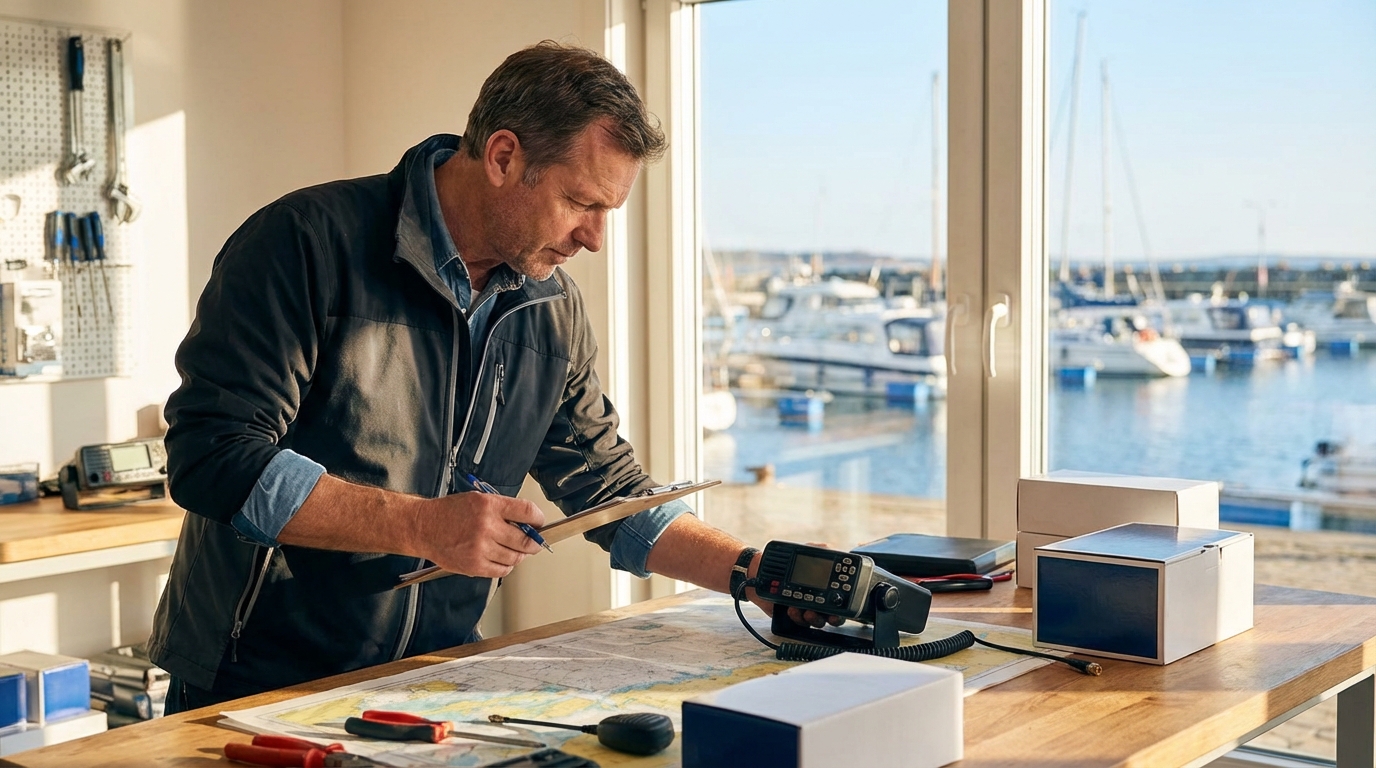
Fixed Mounts generally offer better communication value. They have 25 watts of power (vs. 5 or 6 watts for handhelds) and use a large external antenna. This gives them 3-4 times the range of a handheld. For $150, a fixed mount gives you reliable 20-mile communication.
Handhelds offer better safety value for the individual. If you fall overboard, the fixed radio stays on the boat. The handheld attached to your life jacket goes with you.
For the best setup, you should have both. But if you are starting with zero budget, start with a handheld VHF radio with GPS like the HX890. It travels with you and works on any boat you step onto.
Key Features That Define Value
When comparing radios, look for these three features. If a radio lacks them, its lower price isn’t a deal—it’s a liability.
1. Digital Selective Calling (DSC)
DSC allows you to send data over the radio. The most important function is the red “Distress” button. Pressing it sends an automated digital MAYDAY to the Coast Guard and all nearby vessels. It continues transmitting until someone acknowledges it. This is standard on fixed mounts and available on better handhelds.
2. Floating Chassis
For handhelds, this is non-negotiable. If you drop a non-floating radio, it’s gone. A floating radio turns a disaster into a minor inconvenience.
3. IPX7 or IPX8 Waterproofing
IPX7 means the radio can survive being submerged in 1 meter of water for 30 minutes. IPX8 is even better (usually 1.5 meters). Anything less (like IPX4 “splash proof”) is insufficient for the marine environment.
Installation Costs: The Hidden Factor
When budgeting for a “best for the money” fixed radio, remember the antenna. A fixed mount radio is useless without an external antenna.
- Radio: ~$170 (GX1400)
- Antenna: ~$60 – $100
- Mount/Cable: ~$30
Your $170 radio is actually a $300 project. This is why the Icom M330G is such a strong competitor. By including the GPS inside the radio, you save the cost of NMEA cables and the labor of wiring it to a plotter. If you have to pay a marine electrician $120/hour to wire your radio to your GPS, the “cheaper” GX1400 suddenly becomes more expensive than the M330G.
Real-World Range: What Your Money Buys
Don’t be fooled by packaging that claims “20-mile range” on a handheld. VHF range is line-of-sight.
- Handheld (5-6 Watts): Realistically gets 3-5 miles range when you are standing at sea level. The value here is portability, not distance.
- Fixed Mount (25 Watts): Can achieve 15-25 miles depending on antenna height.
If your boating style involves going offshore, a handheld is a backup, not a primary radio. No matter how much money you save on a handheld, it’s bad value if it can’t reach the shore when you need help.
FAQ
What is the difference between a $100 and a $300 VHF radio?
The main differences are GPS integration, battery technology, and AIS (Automatic Identification System). A $300 handheld usually includes GPS and DSC, allowing you to send emergency coordinates. A $100 handheld is just a voice radio. For fixed mounts, higher prices often add AIS receivers (to see other boats) and NMEA 2000 networking.
Do I need a license for these radios?
For recreational boaters in the US staying in domestic waters, you generally do not need a license for a VHF radio. However, if you travel to international waters (like the Bahamas) or use an SSB radio, a license is required.
Can I just use my cell phone instead?
No. Cell phones often lose signal a few miles offshore. They are not waterproof, and you cannot call “every boat around me” for help. A VHF radio broadcasts to everyone nearby, which is critical for immediate rescue.
How long do marine radio batteries last?
A quality Li-ion battery in a radio like the Standard Horizon HX890 or Icom M25 should last 8-12 hours of normal use (mostly listening, occasional talking). Cheap radios with NiMH batteries often lose their charge while sitting in the drawer.
Is Uniden a good brand for marine radios?
Yes, Uniden makes excellent radios. The Uniden MHS75 is a popular budget choice. We highlighted Standard Horizon and Icom in this guide because they currently offer slightly better feature-to-price ratios in the mid-tier category, but a Uniden radio is a safe and reliable purchase.
Making the Right Investment for Your Boat
Choosing the best VHF marine radio for the money comes down to being honest about your needs. If you are a kayaker or coastal cruiser, the Standard Horizon HX890 gives you maximum safety per dollar. It’s a radio that punches well above its weight class.
For powerboaters needing a permanent install, the Standard Horizon GX1400 or Icom M330G are the workhorses of the fleet. They aren’t flashy, but they work every time you key the mic.
Don’t overspend on features you won’t use, like built-in AIS transmit or Bluetooth handset remote control, unless you have a specific need for them. Stick to the reputable brands, ensure you have DSC and GPS capability, and invest the money you save into a high-quality antenna—that’s where the real performance lives.
📅 Last updated: