

Navigating the open waters requires reliable equipment, and few tools are as fundamental as the magnetic compass on your boat. Despite modern GPS systems, a properly calibrated compass remains an essential backup navigation tool that doesn’t require batteries or satellite signals.
Understanding how to calibrate a compass ensures you’ll have accurate readings when you need them most. This comprehensive guide will walk you through the process of boat compass calibration, helping you maintain precise navigation capabilities whether you’re cruising familiar waters or venturing beyond sight of land.
Boat Compass Calibration Tools

Land Nav Kit with Lensatic Compass, Protractor, Pace Counter & Map Markers
Land Nav Kit with Lensatic Compass, Protractor, Pace Counter & Map Markers
VIEW LATEST PRICE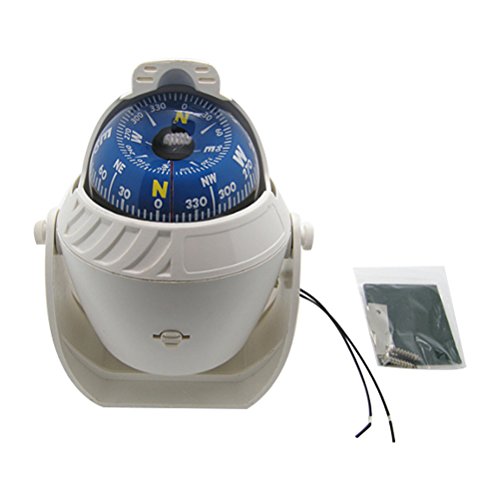
Odowalker Incandescent Light Illuminated White Marine Compass Suitable for Car Boat and Truck (White)
Odowalker Incandescent Light Illuminated White Marine Compass Suitable for Car Boat and…
VIEW LATEST PRICE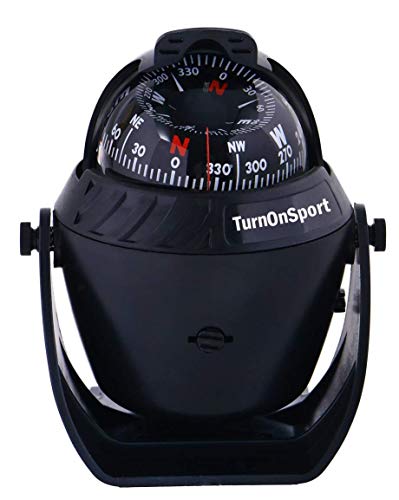
Boat Compass Dash Mount Flush – Boating Compass Dashboard Suction – Navigation Marine Compass Boats Surface Mount – Illuminated Dashboard Compass Ship – Electronic Sea Compass Suction Cup (Black)
Boat Compass Dash Mount Flush – Boating Compass Dashboard Suction – Navigation…
VIEW LATEST PRICEWhy is boat compass calibration important for navigation?
Proper compass calibration is critical for safe and accurate navigation on the water. A magnetic compass that hasn’t been calibrated can lead to significant navigation errors, potentially causing you to veer off course or, worse, into dangerous situations.
The compass needle in an uncalibrated device may not accurately point to magnetic north due to various interference factors, leading to unreliable compass readings.
When sailing or motoring, even a small compass error of just a few degrees can result in being miles off your intended destination after traveling a significant distance. This emphasizes why proper calibration is not merely a recommendation but a necessity for responsible boating.
How does an uncalibrated compass affect your navigation accuracy?
An uncalibrated compass introduces serious inconsistencies in your navigation capabilities. When your compass reading doesn’t accurately reflect your true heading, you’re essentially navigating blindly regardless of how confidently you might be following the compass needle.
Compass deviation—the difference between the magnetic bearing indicated by your compass and the actual magnetic bearing—can cause you to sail in an unintended direction.
This deviation compounds over distance, potentially placing you miles from your intended position. In situations where you find yourself without electronic navigation aids or in poor visibility, an inaccurate compass reading could mean the difference between safely reaching your destination and becoming disoriented far from shore, beyond sight of land.
The magnetism from various boat components can significantly impact compass accuracy, making calibration essential for correcting these influences.
When should you calibrate your boat’s magnetic compass?

Knowing when to calibrate the compass is crucial for maintaining reliable navigation. You should perform compass calibration immediately after installing a new compass on your boat.
Additionally, recalibration is necessary whenever you make significant changes to your vessel that might affect the local magnetic field, such as installing new electronic equipment, changing engine components, or adding substantial metal fixtures. Many experienced sailors recommend checking and potentially recalibrating your compass at the beginning of each boating season.
If you notice that your compass heading consistently differs from known fixed points or from your GPS course, this indicates it’s time to recalibrate. Furthermore, if you’re planning a long-distance journey where you’ll be relying heavily on your compass for navigation, it’s prudent to ensure your compass has been recently calibrated.
Some boaters also find it necessary to calibrate after traveling to regions with significantly different magnetic declination values, as the compass may require adjustments to account for these regional magnetic variations.
Understanding the difference between magnetic north and true north
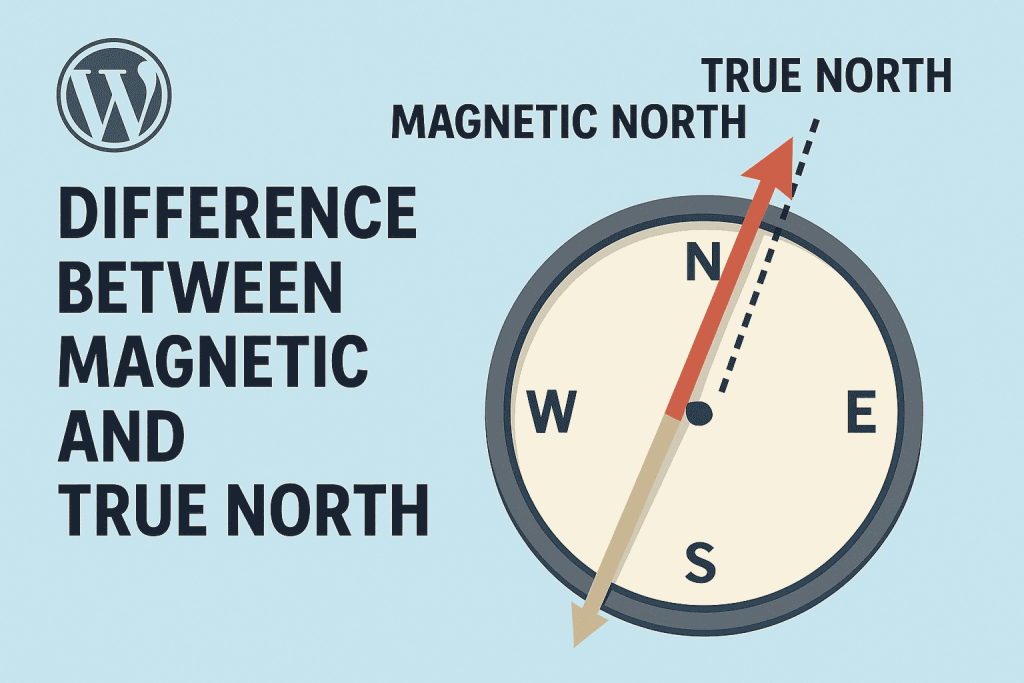
One of the fundamental concepts in compass calibration is understanding the distinction between magnetic north and true north.
True north refers to the geographic North Pole—the point around which the Earth rotates. Magnetic north, on the other hand, is where your compass needle naturally points, determined by the Earth’s magnetic field.
The angular difference between these two north points is called magnetic declination or magnetic variation. This variation isn’t consistent globally but changes based on your location on Earth.
When plotting a course on a nautical chart, you’re typically working with true north, but your compass is reading magnetic north. To convert between the two, you must add or subtract the declination value.
Remember the navigational adage: “East is least, West is best,” meaning you subtract easterly declination and add westerly declination when converting from magnetic to true bearings.
Understanding this relationship is essential when calibrating your compass and establishing accurate compass courses for navigation. The declination value changes over time due to the shifting of the Earth’s magnetic field, which is why updated declination charts are necessary for precise navigation.
How to calibrate a compass on your boat step-by-step
Calibrating a boat compass involves a methodical process that, when done correctly, ensures your compass provides reliable heading information. Before beginning the actual calibration, remove all portable magnetic items from the vicinity of the compass.
Items like speakers, tools with magnetic components, electronic devices, and even some watches can influence the compass needle. The calibration process essentially involves “swinging” the boat—rotating it through a complete 360-degree turn while comparing compass readings to known reference bearings.
This allows you to identify how your boat’s magnetic field affects the compass at different headings around the compass rose. By documenting these variations, you can create a deviation card that allows you to adjust compass readings for accurate navigation.
Remember that proper compass calibration isn’t a one-time procedure but rather a maintenance task that should be performed periodically to ensure continued accuracy in your navigation.
Tools needed for proper compass calibration
Assembling the right tools before beginning your compass calibration will make the process more efficient and accurate. The most essential tool is a non-magnetic screwdriver, which allows you to adjust the compass compensator without introducing additional magnetic interference.
You’ll need a detailed deviation table or worksheet to record your compass readings at various headings. A handheld bearing compass can serve as a reference tool when calibrating your main compass.
For professional-level calibration, a fluxgate compass or a GPS with a reliable heading sensor can provide accurate reference headings. Many mariners find a pelorus (a sighting device for taking bearings) helpful during the calibration process.
You’ll also need appropriate markers to create your deviation card once calibration is complete. If your compass has adjustment magnets, you’ll need the specific tools recommended by the manufacturer to make these adjustments.
For calibration using the sun as a reference, a watch set to accurate time and a current nautical almanac are necessary to calculate the sun’s true bearing. Finally, having a second person to help record readings while you maintain the boat’s heading can significantly simplify the calibration process.
Finding an ideal location for calibration
The location you choose for compass calibration can significantly impact the accuracy of your results. Ideally, you should select an area with minimal external magnetic interference.
This means staying away from large metal structures, underwater cables, and areas with known magnetic anomalies that could affect your compass reading. Choose calm waters with minimal current, as maintaining steady headings is crucial during the calibration process.
A large, open body of water gives you sufficient room to complete full 360-degree turns without obstruction. Many professional calibrators prefer to conduct compass calibration in the early morning when winds are typically lighter, making it easier to maintain consistent headings.
If possible, perform the calibration in the same waters where you’ll be doing most of your boating, as local magnetic conditions can vary regionally.
Some marinas have designated calibration areas marked with known magnetic bearings to reference points, which can be immensely helpful during the process.
If you’re calibrating using the sun as a reference point, choose a clear day when the sun is visible and not too low on the horizon for the most accurate results. Remember that the proximity of other boats with large metal structures can introduce magnetic interference, so maintain appropriate distance from other vessels during calibration.
The swinging process for calibrating your boat compass
The swinging process is the heart of compass calibration and involves rotating your boat through a complete circle while recording compass readings at regular intervals.
Begin by establishing a stable, slow turning speed that allows for accurate readings without introducing dynamic errors from the momentum of the compass card.
Most professionals recommend recording readings at minimum intervals of 30 degrees around the compass, though readings every 15 degrees provide more detailed calibration data.
Start by pointing your boat toward magnetic north (a compass reading of 0 or 360 degrees), then proceed clockwise, stopping at each interval to allow the compass card to settle before recording the reading.
At each heading, record both the compass reading and the reference heading (from a known fixed point, GPS heading sensor, or calculated sun bearing).
The difference between these readings is your compass deviation at that particular heading. Once you’ve completed a full 360-degree turn, analyze your deviation pattern. If the deviation exceeds 5 degrees at any heading, you may need to adjust the compass using the built-in compensators (typically adjusted with a non-magnetic screwdriver) to minimize the overall deviation.
After making adjustments, repeat the swinging process to verify improvements. Remember that it’s virtually impossible to eliminate all deviation at every heading—the goal is to minimize deviation across the compass rose, particularly for the headings you use most frequently during normal navigation.
What causes compass deviation and how to address it during calibration?
Compass deviation occurs when the compass needle is influenced by magnetic fields other than the Earth’s natural magnetism.
Unlike magnetic declination, which is consistent for a given location, deviation varies with the boat’s heading as different onboard magnetic influences come into play at different angles relative to the Earth’s magnetic field.
Understanding the causes of this deviation is crucial for effective calibration. The primary cause is the boat itself—its metal structure, engine, and various equipment all contribute to the local magnetic field that affects your compass.
Even seemingly non-magnetic items can contain enough ferrous material to influence sensitive compass readings. Modern boats with extensive electronics create complex magnetic environments that make proper calibration increasingly important.
During calibration, you’re essentially mapping these influences at different headings and either adjusting the compass’s compensator magnets to counteract them or creating a deviation card that allows you to mentally correct for known errors when taking compass bearings.
Common sources of magnetic interference on boats
Numerous components on your boat can introduce magnetic interference that affects compass readings. The boat’s engine block, particularly in inboard configurations, contains significant ferrous metal that can strongly influence nearby compasses.
Electronic equipment such as radios, speakers, radar systems, and even chart plotters emit magnetic fields during operation. Wiring runs carrying DC current create magnetic fields proportional to the current strength, with particular interference issues when these runs pass near the compass.
Metal hatches, cleats, winches, and stanchions contribute to the overall magnetic signature of your vessel. Even items that don’t seem magnetic, like stainless steel components, often contain enough ferromagnetic material to affect sensitive compass needles.
Portable electronics like smartphones and tablets should be kept away from the compass during navigation, as they contain magnets for speakers and various sensors. Battery banks, especially when charging or under heavy load, create substantial magnetic fields.
When performing compass calibration, be aware that the configuration of your boat during normal operation matters—if certain electronics are typically on while navigating, they should be on during calibration to account for their magnetic influence.
Similarly, large movable metal objects (like anchors or tools) should be in their normal stowed positions during calibration to ensure the compass is calibrated for typical operating conditions.
How to identify and measure compass deviation
Identifying compass deviation requires methodical comparison between your compass readings and known accurate reference bearings. There are several methods to establish these reference bearings.
Using fixed landmarks with known magnetic bearings provides one approach—align your boat precisely toward the landmark and note the compass heading.
The difference between the known magnetic bearing and your compass reading is the deviation for that heading. Another technique involves using the sun as a reference point. By knowing the exact time and your position, you can calculate the sun’s true bearing, convert it to magnetic bearing by applying the local magnetic declination, and then compare this to your compass reading.
GPS heading information (when moving at sufficient speed for accurate GPS heading determination) can serve as a modern reference, though it’s important to verify that your GPS is set to display magnetic rather than true headings for direct comparison. When measuring deviation, make at least two complete circles around the compass—one clockwise and one counterclockwise—to account for potential lag in the compass card movement.
Record readings at regular intervals (typically every 15-30 degrees) and calculate the deviation at each point. A properly designed deviation worksheet helps organize this data. Analyze the pattern of deviation—look for maximum deviation points and note whether the deviation is easterly (compass reads less than actual magnetic heading) or westerly (compass reads more than actual magnetic heading).
This pattern information is crucial when adjusting compensator magnets to minimize overall deviation.
Creating a deviation card for your boat compass
After completing the calibration process and determining the remaining compass deviation at various headings, creating a deviation card is essential for accurate navigation. This card serves as a quick reference that allows you to mentally adjust your compass readings while underway.
Start by organizing your calibration data into a clear, readable format—typically a table showing compass headings in 15 or 30-degree increments and the corresponding deviation at each point.
Indicate whether the deviation is easterly (E) or westerly (W), as this determines whether you add or subtract the deviation value when converting between compass heading and magnetic heading. Remember the navigational rule: “Compass least, magnetic best” (subtract easterly deviation, add westerly deviation when converting from compass to magnetic).
Create a durable, waterproof card that can be mounted near your compass for easy reference. Many boaters find it helpful to include a simple reminder of conversion rules on the card itself. For headings between the measured points, you’ll need to interpolate the deviation value.
Some sailors prefer to create a graphical representation of deviation around the compass rose, which makes interpolation more intuitive. Once completed, mount the deviation card where it’s easily visible when taking compass bearings. Remember to update this card whenever you recalibrate your compass or make significant changes to your boat’s configuration that might affect the magnetic environment.
A well-maintained deviation card transforms an imperfect compass into a reliable navigation tool by allowing you to compensate for known errors in compass readings.
Professional vs DIY compass calibration: which navigation approach is best?
Deciding between professional compass calibration and doing it yourself depends on several factors including your navigation needs, budget, technical skills, and the importance of absolute precision.
DIY calibration can be sufficient for recreational boaters who primarily navigate in familiar waters with multiple navigation aids and good visibility.
The process, while time-consuming, allows you to develop a deeper understanding of your boat’s magnetic properties and how they affect your compass.
Professional calibration, performed by trained marine electronics technicians, typically achieves higher precision through specialized equipment and experienced interpretation of deviation patterns.
They can often minimize deviation more effectively by making optimal adjustments to compensator magnets and positioning the compass itself. For vessels undertaking extensive offshore passages, commercial operations, or navigation in challenging conditions where precise compass headings are critical, professional calibration provides valuable peace of mind.
Many experienced sailors take a middle-ground approach—learning to perform basic calibration themselves for regular maintenance while occasionally employing professional services for more comprehensive adjustments, particularly after significant changes to the boat’s configuration.
When to call a professional for compass calibration
There are several scenarios where professional compass calibration becomes particularly advisable. If you can’t calibrate your compass to achieve acceptable deviation levels despite multiple attempts, a professional can identify whether the issue stems from your technique, equipment problems, or unusual magnetic interference sources.
Boats undertaking long offshore passages where reliable navigation is critical should consider professional calibration as cheap insurance against navigation errors. If your vessel has particularly complex electronic systems or unusual metal configurations that create challenging magnetic environments, professionals have the expertise to address these complications.
After major refits or installations that significantly change your boat’s magnetic signature, professional calibration ensures these changes are properly accounted for. Vessels with multiple compasses should consider professional calibration to ensure consistency between all navigation instruments.
Some insurance policies for commercial vessels or charter boats may require professional compass adjustment with documentation. If your compass requires internal repairs or has developed bubbles in the fluid, combining repair with professional calibration makes sense.
Additionally, if you’re simply uncomfortable with the technical aspects of compass calibration or lack confidence in your ability to perform it correctly, the peace of mind from professional service may well justify the cost, especially when considering the potential consequences of navigation errors in challenging conditions.
Cost comparison between professional and DIY calibration
The financial considerations between professional and DIY compass calibration extend beyond the immediate service cost. Professional calibration typically ranges from $150 to $500 depending on your location, the type of vessel, compass complexity, and the calibrator’s experience level.
This service usually includes adjusting compensator magnets, swinging the boat through a complete compass rose, creating a professional deviation card, and often a written report documenting the calibration process and results.
Some professionals charge a flat rate while others bill hourly, potentially adding costs if your compass proves particularly challenging to calibrate. DIY calibration primarily costs you time—typically 3-5 hours for a thorough calibration—plus minimal expenses for tools like a non-magnetic screwdriver if you don’t already own one.
The cost analysis should include consideration of your confidence in the results. A poorly calibrated compass can lead to navigation errors with potentially expensive consequences, from wasted fuel to groundings or collisions in worst-case scenarios.
For recreational boaters in familiar waters with multiple navigation aids, the risk from minor compass errors may be acceptable. For offshore passages or commercial operations, the additional precision from professional calibration might represent excellent value despite the higher upfront cost.
Many boat owners find a middle path most economical—learning to perform basic calibration themselves for regular maintenance while investing in professional calibration after major equipment changes or before significant voyages where navigation accuracy is paramount.
📅 Last updated: