
Key Takeaways
- Channel 16 is the universal priority frequency for distress, safety, and initial calling, monitored by the Coast Guard and all nearby vessels.
- The marine VHF band spans 156.0 to 174.0 MHz, using 25 kHz spacing between channels to prevent signal overlap.
- Simplex channels use the same frequency for transmitting and receiving, while duplex channels use two different frequencies to allow for public correspondence or repeater use.
- US, International, and Canadian channel sets vary significantly, meaning you must switch your radio’s internal settings to match your current geographic region.
- Channel 70 is reserved strictly for Digital Selective Calling (DSC) and cannot be used for voice communication.
- Low power (1 watt) settings are mandatory on specific channels like 13 and 67 to prevent signal “skip” and reduce congestion in busy harbors.
- NOAA Weather Radio channels (WX1-WX10) provide continuous, region-specific atmospheric updates and emergency alerts for mariners.
Identify the Marine VHF Radio Frequency Spectrum
The marine VHF radio frequency spectrum occupies the Very High Frequency band between 156.0 MHz and 174.0 MHz. This specific range is chosen because VHF waves travel primarily by line-of-sight, which is ideal for maritime environments where large obstacles like mountains are less common than on land. The band is globally standardized by the International Telecommunication Union (ITU), though regional variations exist in how specific channels are used within that range.
Marine radios use Frequency Modulation (FM) to transmit audio. Each channel is spaced 25 kHz apart. This spacing is wide enough to maintain high audio quality and clear voice transmission even in harsh weather conditions. Unlike land-based AM radio, VHF FM is highly resistant to static caused by lightning or engine ignition noise, which is critical for emergency communications at sea.
Marine VHF Radio Equipment
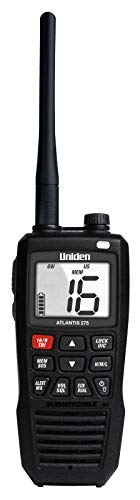
Uniden Atlantis 275 Handheld Two-Way VHF Marine Radio, Floating IPX8 Submersible Waterproof, Large Dual-Color Screen, 6-Watt, All USA/International/Canadian Marine Channels, NOAA Weather Alerts
Uniden Atlantis 275 Handheld Two-Way VHF Marine Radio, Floating IPX8 Submersible Waterproof,…
VIEW LATEST PRICE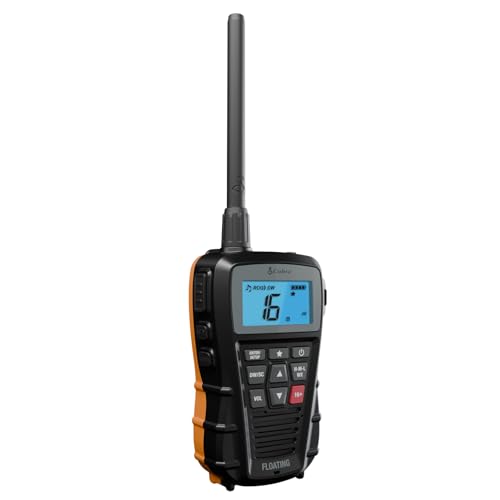
Cobra BlueBound 150 VHF Handheld Marine Radio – Black – 3-Watt, Floating, Long Range, NOAA Weather Alerts, International Functionality, IPX7 Waterproof, USB-C, Submersible, LCD Screen, Belt Clip
Cobra BlueBound 150 VHF Handheld Marine Radio – Black – 3-Watt, Floating,…
VIEW LATEST PRICE
Uniden Atlantis 155 Handheld Two-Way VHF Marine Radio, Floating IPX8 Submersible Waterproof, Dual-Color Screen, All USA/International/Canadian Marine Channels, NOAA Weather Alert, 10 Hour Battery
Uniden Atlantis 155 Handheld Two-Way VHF Marine Radio, Floating IPX8 Submersible Waterproof,…
VIEW LATEST PRICEIn the United States, the Federal Communications Commission (FCC) and the Coast Guard manage these frequencies. Most channels are “simplex,” meaning the radio transmits and receives on the exact same frequency. However, some are “duplex,” using one frequency to send and another to receive. This allows for telephone-like communication through marine operators, although this practice has largely been replaced by cellular and satellite technology.
| Frequency Feature | Specification | Purpose |
|---|---|---|
| Frequency Range | 156.050 – 162.025 MHz | Voice and Data Communication |
| Channel Spacing | 25 kHz | Prevents interference between adjacent channels |
| Modulation | Frequency Modulation (FM) | High-fidelity, low-interference audio |
| Primary Band | VHF High Band | Optimized for line-of-sight water travel |
Memorize Priority Channels for Safety and Distress
Channel 16 (156.800 MHz) is the international distress, safety, and calling frequency that every boater must know by heart. If you are in immediate danger of losing your vessel or life, this is the frequency where you broadcast a Mayday. It is also the channel used for “Pan-Pan” (urgency) and “Securite” (safety) messages. Because it is a shared resource, you should only use it for initial contact before moving your conversation to a working channel.
According to the Coast Guard, you must maintain a “watch” on Channel 16 whenever your radio is turned on and you are not actively communicating on another frequency. This ensures you can hear distress calls from nearby boaters who may need your assistance. Many modern radios have a “Dual Watch” or “Tri-Watch” feature that allows you to monitor Channel 16 while listening to your favorite fishing or weather channel.
Beyond Channel 16, Channel 06 (156.300 MHz) is designated for intership safety traffic. This is often used during search and rescue operations to coordinate between the Coast Guard and civilian vessels. If you are involved in a rescue, expect to be directed to Channel 06 to keep Channel 16 clear for other potential emergencies. For more details on these life-saving frequencies, you can read our guide on what are the VHF radio safety and distress calling channels to ensure you are prepared for an emergency.
Select Intership Channels for Boat-to-Boat Communication
Intership channels are designated for non-commercial communication between recreational boaters, such as discussing fishing spots or coordinating a meeting point. In the United States, the primary working channels for recreational boaters are 68, 69, 71, 72, and 78A. These are often referred to as “working channels” because they are where the bulk of casual conversation happens.
When using these channels, you must remain brief and professional. It is illegal to use a marine VHF radio for “chitchat” that doesn’t relate to the safe operation or business of the vessel. For example, telling a friend where the fish are biting is generally accepted, but long-winded personal stories are not. Channel 09 was once designated as the primary calling channel for recreational vessels to relieve congestion on Channel 16, and it remains a common choice in many busy coastal areas.
- Check the channel: Listen for 30 seconds to ensure the frequency is not already in use.
- State your target: “Vessel Sea Sprite, this is Blue Moon on Channel 68.”
- Keep it short: Once contact is made, relay your message and clear the air quickly.
- Use Low Power: If the other boat is within a mile or two, switch your radio to 1-watt mode to avoid blocking the channel for boaters 20 miles away.
Navigate Port Operations and Bridge-to-Bridge Channels
Port operations and bridge-to-bridge channels are strictly for the movement and safety of vessels in commercial waterways and harbors. Channel 13 (156.650 MHz) is the primary bridge-to-bridge frequency used by large ships, tugs, and pilots to coordinate passing arrangements. If you are navigating a narrow channel and a container ship is approaching, you should monitor Channel 13 to hear their intentions.
By law, transmissions on Channel 13 must be made at low power (1 watt). This is because the communication is only relevant to vessels in the immediate vicinity. If everyone used 25 watts in a busy port like Miami or New York, the channel would be a constant wall of noise. Some radios have a “LO/HI” button, while others automatically default to 1 watt when you select Channel 13.
Commercial vessels also use channels like 12 and 14 for port operations. These are used to talk to harbor masters, pilot stations, and VTS (Vessel Traffic Services). As a recreational boater, you should avoid these channels unless you need to contact a specific marina or port authority for docking instructions. Understanding the international VHF marine radio channels and frequencies is vital when navigating busy shipping lanes used by global commerce.
Differentiate Between US, International, and Canadian Channel Sets
The US, International, and Canadian channel sets differ in how they handle duplex frequencies, which can lead to communication failures if your radio is on the wrong setting. Many frequencies that are “duplex” in the International set are “simplex” (using only the ship-transmit frequency) in the US and Canada. These are often denoted with an “A” suffix in the US (e.g., Channel 22A).
If your radio is set to “International” while you are in US waters, you might be able to hear the Coast Guard on Channel 22A, but they won’t be able to hear you. This is because your radio would be transmitting on a frequency they aren’t monitoring. Most modern fixed mount VHF marine radios allow you to toggle between these three modes with a single button press.
- US Mode: Uses “Alpha” channels for simplex communication on previously duplex frequencies.
- International Mode: Adheres to the ITU standards used in Europe, Asia, and offshore.
- Canadian Mode: Similar to the US mode but includes specific frequencies for the Canadian Coast Guard and local commercial fishing fleets.
In Canada, specific rules apply to the use of VHF radios, including mandatory operator certificates (ROC-M). You can find more information about VHF marine radio in Canada to ensure you are compliant when crossing the border into Canadian waters.
Monitor Weather Channels for Real-Time Marine Forecasts
Weather (WX) channels are receive-only frequencies that provide continuous broadcasts from NOAA (National Oceanic and Atmospheric Administration) in the US and Environment Canada. There are 10 designated WX channels, but most areas only utilize WX1, WX2, or WX3. These broadcasts include small craft advisories, gale warnings, and local sea state conditions.
Your radio does not transmit on these frequencies; it only listens. Many high-quality handheld VHF marine radios include a “Weather Alert” feature. When this is active, the radio stays silent but monitors a sub-audible tone transmitted by the weather station. If a severe weather warning is issued, the radio will emit a loud siren to alert you, even if the volume is turned down.
| WX Channel | Frequency (MHz) | Common Usage |
|---|---|---|
| WX1 | 162.550 | Primary NOAA Forecasts |
| WX2 | 162.400 | Secondary NOAA Forecasts |
| WX3 | 162.475 | Tertiary NOAA Forecasts |
| WX4 | 162.425 | Less Common / Regional |
| WX5 | 162.450 | Less Common / Regional |
Employ Digital Selective Calling via Channel 70
Channel 70 (156.525 MHz) is a digital-only frequency used by the Digital Selective Calling (DSC) system for automated distress and individual calling. You will never hear voice traffic on Channel 70; instead, you will hear brief data bursts that sound like static or a fax machine. This channel is the heart of the Global Maritime Distress and Safety System (GMDSS) for smaller vessels.
When you press the red “Distress” button on a DSC-equipped radio, it sends a digital packet on Channel 70. This packet includes your MMSI (Maritime Mobile Service Identity) number and, if connected to a GPS, your exact latitude and longitude. This is far more effective than a voice Mayday because it is instantaneous and repeats automatically until acknowledged by the Coast Guard.
To use DSC, you must obtain an MMSI number and program it into your radio. If you have one of the best handheld VHF marine radios with GPS, the system is entirely self-contained. Without the MMSI and a GPS feed, the DSC distress button is virtually useless. Channel 70 also allows you to “direct dial” another boat if you know their MMSI, causing their radio to beep and automatically switch to a working channel you select.
Understand Duplex vs Simplex Channel Operations
Simplex channels allow communication in both directions but only one person can speak at a time on a single frequency. This is the “over and out” style of communication most boaters are familiar with. Simplex is used for all ship-to-ship and most ship-to-shore safety communications. It is simple, reliable, and requires less sophisticated equipment.
Duplex channels use two separate frequencies: one for transmitting and one for receiving. This was originally designed for the Marine Operator (Public Correspondence) system. The boat would transmit on one frequency, the shore station would receive it and patch it into the telephone landline, and then transmit the caller’s voice back to the boat on a different frequency. This allowed for simultaneous talking and listening, similar to a modern cell phone.
Today, duplex channels are less common for recreational use but are still used for certain port operations and automated systems. If you see a channel listed with two different frequencies (e.g., Channel 25: 157.250 TX / 161.850 RX), it is a duplex channel. If you try to talk to another boat on a duplex channel, you won’t hear each other because you are both listening on the same frequency but transmitting on a different one.
Adhere to Federal Licensing and Regulatory Requirements
In the United States, the FCC does not require a license for recreational boaters operating domestically on VHF radios. This “license by rule” applies to boats that do not travel to foreign ports and do not have a mandatory requirement to carry a radio (like large commercial ships). However, you still must follow all operational rules, such as using proper channel assignments and maintaining a watch on Channel 16.
If you plan to sail to international destinations, such as the Bahamas, Mexico, or Canada, you are required to have a Restricted Radiotelephone Operator Permit. Additionally, your vessel must have a Ship Station License. These licenses carry a fee and are valid for ten years. They provide you with an official call sign and ensure your vessel is registered in the international database.
It is a federal crime to transmit a false distress signal. Doing so can result in massive fines and even jail time. Furthermore, using a marine VHF radio on land is strictly prohibited unless you have a specific coastal station license. The frequencies are reserved for maritime use to prevent interference with emergency services and marine navigation.
Implement Professional Marine Radio Communication Etiquette
Radio etiquette is about more than just sounding like a professional; it is about keeping the airwaves clear for everyone. Because VHF is a shared medium, only one person can talk at a time on a given channel. If you “step on” someone else’s transmission, neither of you will be heard. Always listen for a few seconds before keying the mic to ensure you aren’t interrupting an ongoing conversation.
Use standard prowords to keep transmissions brief. “Over” means you have finished speaking and are waiting for a response. “Out” means the conversation is finished and the channel is clear. Never say “Over and Out,” as they are contradictory. Use the NATO phonetic alphabet (Alpha, Bravo, Charlie) when spelling out vessel names or locations to ensure clarity, especially when signal quality is poor.
- Mayday: Use only for immediate danger to life or vessel. Repeat three times.
- Pan-Pan: Use for urgent situations that are not yet life-threatening (e.g., engine failure in a shipping lane).
- Securite: (Pronounced Say-cure-it-tay) Used by the Coast Guard or ships to announce navigation hazards or weather warnings.
- Identification: Always identify your vessel by its name at the beginning and end of each transmission.
Optimize VHF Signal Range Through Proper Installation
VHF radio range is primarily limited by the “radio horizon,” which is determined by the height of your antenna. Because these waves travel in a straight line, they eventually head out into space as the Earth curves away. To get more range, you don’t necessarily need more power; you need a higher antenna. A 25-watt radio with an antenna 20 feet up will almost always outperform a 25-watt radio with an antenna 5 feet up.
The quality of your coaxial cable and connectors is also vital. Marine environments are incredibly corrosive. A tiny amount of saltwater in a PL-259 connector can ruin your signal. I have seen countless boaters complain about “bad radios” when the actual issue was a corroded cable that was leaking signal into the shielding. Use high-quality RG-8X or RG-213 cable for longer runs to minimize signal loss.
- Mount high: Place the antenna at the highest point possible (masthead for sailors, hardtop for powerboaters).
- Check VSWR: Use a SWR meter to ensure your antenna is properly tuned. A reading below 1.5:1 is ideal.
- Inspect Connections: Use heat-shrink tubing and dielectric grease to seal every connection from the elements.
- Power Supply: Ensure your radio is wired with the correct gauge wire directly to a fused bus bar to prevent voltage drops during transmission.
Choose the Right Hardware for Marine VHF Communication
Selecting between a fixed mount and a handheld radio depends on your boating style and primary use case. A fixed mount radio, typically 25 watts, offers the maximum legal power and is usually connected to a large external antenna. This setup is the gold standard for offshore fishing and coastal cruising where long-distance communication is a safety requirement. You can find detailed comparisons in our marine VHF radio reviews to help you decide.
Handheld radios are limited to 5 or 6 watts of power and have much smaller antennas. While their range is shorter (usually 3-8 miles compared to 20+ miles for fixed mounts), they are portable and waterproof. They are perfect for kayaks, small center consoles, or as a backup to your main radio. Many offshore sailors keep a handheld in their “ditch bag” in case they have to abandon ship.
For those who want the best of both worlds, modern high-end handhelds now include GPS, DSC, and even AIS (Automatic Identification System) receivers. These units can show you the position of nearby ships on a small screen, adding a significant layer of safety. Whether you choose a base station or a portable unit, ensure it is rated at least IPX7 or IPX8 for water resistance.
Mastering Your Marine Radio for Professional Navigation
Navigating the marine VHF frequency channel list is a skill that separates prepared mariners from casual boaters. By understanding the specific roles of safety, intership, and port channels, you ensure that the airwaves remain an effective tool for everyone on the water. My years of working with marine electronics have shown that the most expensive radio is useless if the operator doesn’t know which channel to turn to in a crisis.
Treat your radio as a piece of survival equipment, not a toy. Maintain your antenna system, keep your MMSI updated, and always practice disciplined radio etiquette. When you key that microphone, you are participating in a global safety network that has protected mariners for over a century. Use that power responsibly, stay informed on local frequency variations, and always keep a sharp ear on Channel 16.
📅 Last updated: