

Navigating the waters has been a challenge since ancient times, and even with modern technology, the magnetic compass remains an essential tool for mariners. However, understanding compass error is crucial for safe navigation.
This comprehensive guide explores the various factors affecting compass accuracy on boats, how to properly read and maintain your magnetic compass, and when to rely on traditional navigation methods versus electronic alternatives. Let’s delve into what boaters often discuss on boating forums as “the hull truth” about magnetic compasses.
Boat Magnetic Compass and Navigation Tools

Keenso Boat Compass, Waterproof Marine Compass for Boats Dash Mount Hiking Camping Magnetic Compass for Boat Caravan Truck
Keenso Boat Compass, Waterproof Marine Compass for Boats Dash Mount Hiking Camping…
VIEW LATEST PRICE
Kodrily Car Compass Marine Dash Mount, LED Boat Compasses with Adjustable Mounting Bracket, Outdoor Marine Compass for Boats Cars 3.4 x 2.9 x 2.4IN
Kodrily Car Compass Marine Dash Mount, LED Boat Compasses with Adjustable Mounting…
VIEW LATEST PRICE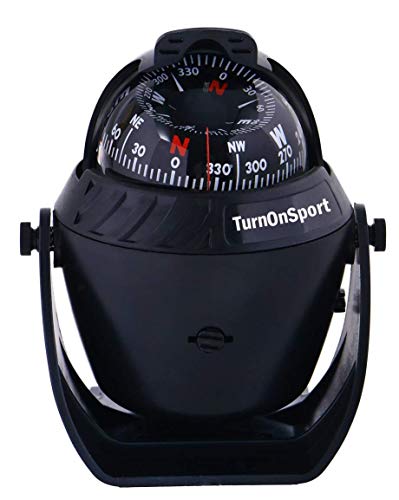
Boat Compass Dash Mount Flush – Boating Compass Dashboard Suction – Navigation Marine Compass Boats Surface Mount – Illuminated Dashboard Compass Ship – Electronic Sea Compass Suction Cup (Black)
Boat Compass Dash Mount Flush – Boating Compass Dashboard Suction – Navigation…
VIEW LATEST PRICEWhat causes compass error on a boat?

Compass error on a boat stems from several factors that interfere with the compass needle’s natural alignment with Earth’s magnetic field. These errors can be significant, sometimes causing degree errors of 10 degrees or more, which could lead to serious navigation mistakes.
Understanding these errors requires knowledge of how magnetic fields interact with your compass and how your boat’s structure influences these interactions.
The relationship between true north and magnetic north is fundamental to understanding why compass readings aren’t always accurate. True north refers to the geographic North Pole, while magnetic north refers to the magnetic North Pole, which is where the Earth’s magnetic field lines converge in the northern hemisphere.
How do magnetic fields on a boat affect compass readings?
A boat creates its own magnetic environment that interferes with compass readings. The hull truth about boats is that they contain numerous sources of magnetic fields, including engines, speakers, electrical systems, and even the metal hull itself.
These local magnetic fields interact with the Earth’s magnetic field and cause the compass needle to deviate from pointing toward magnetic north. When a boat turns, these magnetic influences change in relation to the Earth’s magnetic field, creating what navigators call turning error.
This dynamic relationship between the boat’s magnetic environment and the Earth’s magnetic field means that compass readings can vary depending on the boat’s heading.
For instance, when heading northerly, the effect might be different than when heading toward the south pole direction. The presence of magnets or magnetized objects near the compass can cause significant interference, sometimes creating errors of up to 30 degrees in extreme cases.
What is the difference between deviation and variation in compass error?

Two primary types of compass error affect navigation: deviation and variation. Magnetic variation (also called declination) is the angular difference between true north and magnetic north at your specific location.
It occurs naturally due to the Earth’s magnetic field and varies depending on your geographic position. Variation is consistent for all vessels in the same location and can be found on navigation charts as compass rose notations.
Magnetic deviation, however, is unique to your individual boat. It results from the magnetic fields generated by the boat itself and varies with different compass headings. Understanding this distinction is crucial—variation affects all compasses in an area equally, while deviation is specific to your vessel’s magnetic signature.
A reliable compass requires accounting for both these factors to provide accurate navigational guidance. Magnetic deviation can change if you add or move equipment on your boat, while variation changes very slowly over time due to the drift of the magnetic north pole.
How does proximity of metal objects near the compass impact accuracy?
Metal objects near the compass significantly impact its accuracy by distorting the local magnetic field that the compass needle responds to. The closer a metal object is to the compass, the greater its influence.
Ferrous metals (containing iron) have the strongest effect, but even non-ferrous metals can create electrical currents that generate their own magnetic fields. Common culprits on boats include electronics, speakers, fire extinguishers, and even metal sunglasses placed near the compass.
These objects can cause the compass needle to deflect by several degrees, leading to navigation errors that compound over distance. For example, a hand bearing compass held near a metal railing may show a completely different reading than when held away from metal objects.
This is why proper mounting location for the compass is crucial, and why many experienced boaters maintain a “compass-safe” zone where no metal objects or electronic devices are permitted. Even small items like screws or brackets used to mount the compass can affect its readings if they’re made of ferromagnetic materials.
How to properly read a magnetic compass for navigation?
Reading a magnetic compass accurately is a fundamental skill for boat navigation. Despite the proliferation of electronic navigation aids, understanding how to interpret compass indications properly ensures you have a reliable backup system.
A properly read magnetic compass provides magnetic heading information that, when corrected for variation and deviation, gives you your true heading. This process requires understanding the relationship between different types of headings and how to apply the necessary corrections consistently.
Many navigational errors occur not because the compass itself is faulty, but because the navigator misinterprets the readings or fails to apply the proper corrections.
What is the relationship between compass heading and true heading?
The relationship between compass heading and true heading involves understanding several directional concepts. Compass heading is what your magnetic compass displays—the direction your boat is pointing relative to magnetic north. True heading refers to your direction relative to true north (the geographic North Pole).
To convert between these headings, you must account for both variation and deviation. The formula mariners use is: True Heading = Compass Heading + Variation + Deviation. Variation can be either east (positive) or west (negative), depending on your location relative to the magnetic north pole.
For example, if your compass heading reads 45 degrees, and you’re in an area with 10 degrees west variation and 2 degrees east deviation, your true heading would be 45° – 10° + 2° = 37°. Understanding this relationship is essential for plotting accurate courses on nautical charts, which are typically oriented to true north.
Many experienced navigators use the mnemonic “Can Dead Men Vote Twice At Elections” to remember the conversion sequence: Compass to Deviation to Magnetic to Variation to True when going from compass heading to true heading.
How do you interpret the compass card correctly?
The compass card is the graduated dial face of your magnetic compass, typically marked in degrees from 0 to 359. Interpreting it correctly requires understanding that the compass card appears to rotate as your boat turns, but it’s actually the boat turning around the relatively fixed card.
The lubber line (a fixed mark on the compass housing) indicates your boat’s heading relative to the compass card. When reading the compass, always read the degree marking at the lubber line, not where the compass needle points.
Most marine compasses have the card divided into 5-degree increments, with major markings at cardinal (N, E, S, W) and intercardinal points (NE, SE, SW, NW). Some compass cards are also color-coded: north is typically red, east is green or black, south is also black, and west may be blue or black.
When taking a bearing, many navigators reduce oscillation error by mentally averaging the swing of the compass as the boat moves through waves.
Proper interpretation also requires understanding that the compass card shows magnetic headings, not true headings, so all navigational calculations must account for this fundamental distinction.
What adjustments are needed when reading a magnetic compass?
Several adjustments must be applied when reading a magnetic compass for accurate navigation.
First, you need to account for magnetic variation, which is the difference between magnetic north and true north at your location. This information is available on navigation charts as isogonic lines or within the compass rose.
Next, you must apply deviation corrections specific to your boat, using your deviation table or deviation card that shows how your compass behaves at different headings. Additional adjustments may be necessary for magnetic dip (the vertical component of Earth’s magnetic field), which increases as you sail toward either magnetic pole and can cause compass errors, especially at higher latitudes.
Another important adjustment involves accounting for the parallax error when reading the compass from different viewing angles.
Experienced navigators also mentally adjust for the compass’s oscillation in rough seas by taking the average of the swinging readings. Finally, temporary adjustments may be needed when operating electrical equipment that creates magnetic fields near the compass.
All these adjustments require practice and understanding of how magnetic fields interact with your compass needle to ensure accurate navigation.
How does magnetic variation affect boat navigation?
Magnetic variation significantly impacts boat navigation by creating a discrepancy between the direction indicated by your magnetic compass and true geographic directions.
This natural phenomenon results from the fact that the Earth’s magnetic poles don’t align with its geographic poles. For mariners, this means that plotting a course requires constant awareness of the local magnetic variation to ensure they’re heading in the intended direction.
The magnitude of this effect varies dramatically depending on where you are sailing in the world, with some regions experiencing minimal variation and others facing substantial differences that can lead to navigational errors of many miles if not properly accounted for.
Why does magnetic variation change based on geographic location?
Magnetic variation changes based on geographic location because Earth’s magnetic field isn’t uniformly distributed across the globe.
The magnetic field lines flowing between the magnetic south pole and magnetic north pole don’t run parallel to the geographic meridians. Instead, they curve and twist based on various factors, including the composition of the Earth’s core and crust.
This creates areas of significant variation in some regions and minimal variation in others. For example, along what’s called the agonic line (where true north and magnetic north align), the variation is zero.
However, as you move east or west from this line, variation increases in opposite directions. The magnetic north pole itself is not stationary—it moves over time due to changes in the Earth’s core, further complicating the pattern of variation.
Regions near magnetic anomalies, such as large iron ore deposits, can experience unusual local variations that differ from the broader regional pattern. Understanding these geographic differences is essential for navigators, as a compass that works perfectly in one location may need significant correction in another.
How does latitude impact magnetic variation?
Latitude significantly impacts magnetic variation because the Earth’s magnetic field lines become more vertical (or have greater magnetic dip) as you approach either the magnetic north pole or magnetic south pole.
At higher latitudes, magnetic variation tends to be more pronounced, and compass readings become less reliable due to the increased magnetic dip.
This phenomenon causes the compass needle to want to point downward rather than horizontally, reducing its ability to pivot freely and accurately indicate direction. The effect is particularly noticeable above 60 degrees latitude in either hemisphere.
For example, in northern Canada or Norway, a navigator might encounter variations of 30 degrees or more, requiring substantial corrections to compass readings. Additionally, as you move along the same latitude, the variation changes as your relationship to the magnetic poles changes.
At the equator, magnetic dip is minimal, and compasses generally perform more reliably, though variation still exists based on longitude.
Many hand bearing compasses are designed with counterweights to compensate for magnetic dip at specific latitude ranges, which is why a compass designed for use in the northern hemisphere may not work properly in the southern hemisphere.
How often should you update your navigation charts for magnetic variation?
Navigation charts should be updated regularly to account for changes in magnetic variation, as the magnetic north pole drifts approximately 25-40 miles per year.
Most nautical charts include the annual rate of change for magnetic variation, typically expressed in minutes per year. For most recreational boaters, updating charts every 3-5 years provides sufficient accuracy for magnetic variation information.
However, professional mariners and those navigating in high latitudes, where the effects of variation are more pronounced, may need more frequent updates.
Modern electronic charts often receive updates that include current variation data, but paper charts must be manually corrected using Notices to Mariners or by purchasing new editions. It’s important to check the publication date of any chart and apply the annual change rate to calculate current variation.
For example, if a chart from 2015 shows 8°W variation with an annual increase of 8′ (minutes) eastward, by 2023 the variation would be approximately 7°4’W (8 years × 8′ = 64′ or 1°4′ eastward shift). This level of precision is necessary for safe navigation, especially on longer passages where small errors compound over distance.
What is compass deviation and how to compensate for it?
Compass deviation is the error caused by magnetic influences within the boat itself that deflect the compass needle from magnetic north.
Unlike variation, which is consistent for all vessels in a given location, deviation is unique to each individual boat and changes with different headings.
The combination of all magnetic fields on board—from engines, electronics, speakers, and even the hull structure—creates a complex magnetic environment that interacts with the compass. Compensating for deviation requires understanding its patterns on your specific vessel and applying appropriate corrections during navigation.
Without proper compensation, deviation can lead to significant navigational errors, especially on longer passages where small directional mistakes compound over distance.
How do you create a deviation table for your boat’s compass?
Creating an accurate deviation table for your boat’s compass involves systematically measuring how your compass behaves on different headings.
Begin by finding a day with calm conditions and minimal current. Select a known reference point visible from various directions, such as a prominent landmark or navigation aid with a known position.
Then, steer your boat on various headings—typically at 30-degree intervals covering a full 360-degree circle—and record the difference between the magnetic bearing to your reference point (taken with a hand held compass away from the boat’s magnetic influence) and what your boat’s compass shows.
These differences represent your compass’s deviation at each heading. For example, if your boat’s compass shows you’re heading 90 degrees, but a hand bearing compass confirms the actual magnetic heading is 93 degrees, your deviation at that heading is +3 degrees. Record these values in a table showing headings and corresponding deviations.
For thoroughness, conduct this process with all normal electronic equipment both on and off, as some devices may influence deviation. Once completed, this deviation table should be mounted near your compass for quick reference during navigation.
Most boaters find that their deviation varies in a somewhat predictable pattern around the compass rose, often forming a sine wave pattern when plotted on a graph.
When should you consult a professional compass adjuster?
Consulting a professional compass adjuster becomes necessary in several situations. If your boat’s compass shows deviations greater than 5 degrees on any heading, professional adjustment is recommended for safe navigation.
After significant modifications to your vessel—such as adding large metal equipment, changing engine components, or installing new electronics near the compass—the magnetic profile of your boat changes, necessitating professional recalibration.
Similarly, if you notice inconsistent performance where compass readings don’t match expected headings, or if the compass needle appears sluggish, sticks, or oscillates excessively, professional intervention is warranted.
Professional compass adjusters use specialized equipment to measure magnetic fields around your vessel and employ compensator magnets to counteract the boat’s magnetic influences.
They also create precise deviation tables showing any residual errors that cannot be eliminated through adjustment. This service is particularly important for vessels undertaking long offshore passages where navigation errors compound over distance.
While many boating forums suggest DIY approaches to compass adjustment, the precision and expertise provided by professional compass adjusters often justify their cost, especially considering that proper adjustment can last for years if the boat’s magnetic environment remains relatively stable.
What are common sources of deviation on modern boats?
Modern boats harbor numerous sources of magnetic deviation that affect compass readings. The most significant contributors include engines and their components, particularly alternators and starters which generate substantial magnetic fields during operation.
Marine electronics—chart plotters, radios, radar systems, and entertainment systems—all produce electromagnetic fields that can influence a nearby compass. Even seemingly innocent items like speakers contain magnets that can cause considerable deviation if mounted close to the compass.
Structural elements of the boat, including steel or iron in the hull, deck hardware, and steering components, create permanent magnetic fields that affect the compass differently depending on the boat’s heading. Wiring runs carrying DC current generate magnetic fields proportional to the current flowing through them, with the effect being particularly pronounced near the compass.
Battery banks, especially when charging or under heavy load, produce varying magnetic fields. Even portable electronics like smartphones, tablets, and handheld VHF radios can cause temporary deviation when brought near the compass.
On modern powerboats, the dashboard often concentrates multiple deviation sources in proximity to the helm compass. Sailboats may experience fewer electronic sources of deviation but often have issues with metal hardware near the binnacle compass.
Understanding these common sources helps boaters make informed decisions about equipment placement and when consulting deviation tables becomes necessary for accurate navigation.
How to maintain accuracy of your boat’s magnetic compass?
Maintaining the accuracy of your boat’s magnetic compass is essential for reliable navigation, especially when electronic systems fail. A properly maintained compass provides consistent readings that, when corrected for deviation and variation, give you accurate directional information.
Regular maintenance extends the life of this critical instrument and ensures it performs reliably when needed most.
Many boaters neglect compass maintenance until problems arise, but preventative care can avoid navigational errors and potentially dangerous situations on the water.
The magnetic compass has survived as a navigation tool for centuries precisely because of its reliability when properly maintained, making it one of the most trusted instruments on any vessel.
What regular maintenance does a marine magnetic compass require?
Marine magnetic compasses require specific regular maintenance to ensure accurate performance. First, inspect the compass housing for cracks, leaks, or discoloration in the fluid, which should remain clear and bubble-free. If air bubbles appear.
📅 Last updated: