
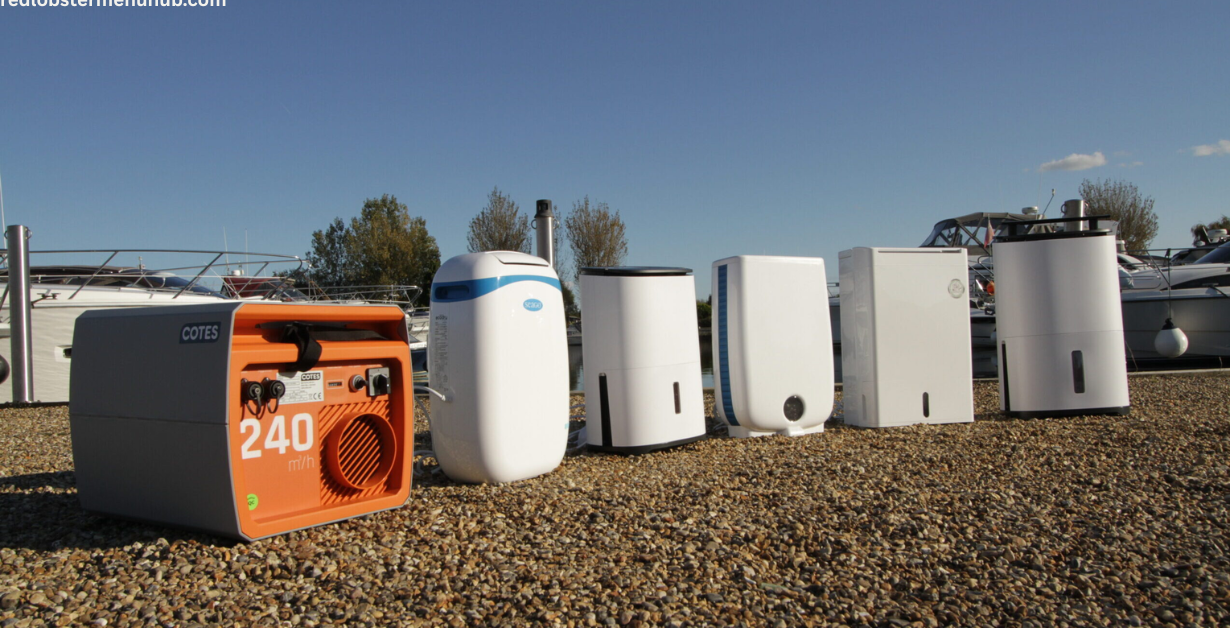
Moisture is one of the biggest threats to a boat during storage. Humid air can lead to mold, mildew, musty odors, corrosion, damaged upholstery, fogged electronics, and deteriorating woodwork. A good boat dehumidifier can help protect the cabin and make the vessel more comfortable when you return.
But choosing the best boat dehumidifier depends on more than buying the most powerful unit available. Boat size, cabin layout, shore power, ventilation, temperature, and storage conditions all affect which type will work best.
This guide explains the main types of marine dehumidifiers, what features to look for, and how to control moisture safely aboard your boat.
A reliable battery is important for powering many of the electronics you use on the water, including your depth sounder. If you want to understand how this equipment measures water depth and why the transducer matters, read our guide How Boat Depth Sounders Really Work: A Simple Guide for Boaters.
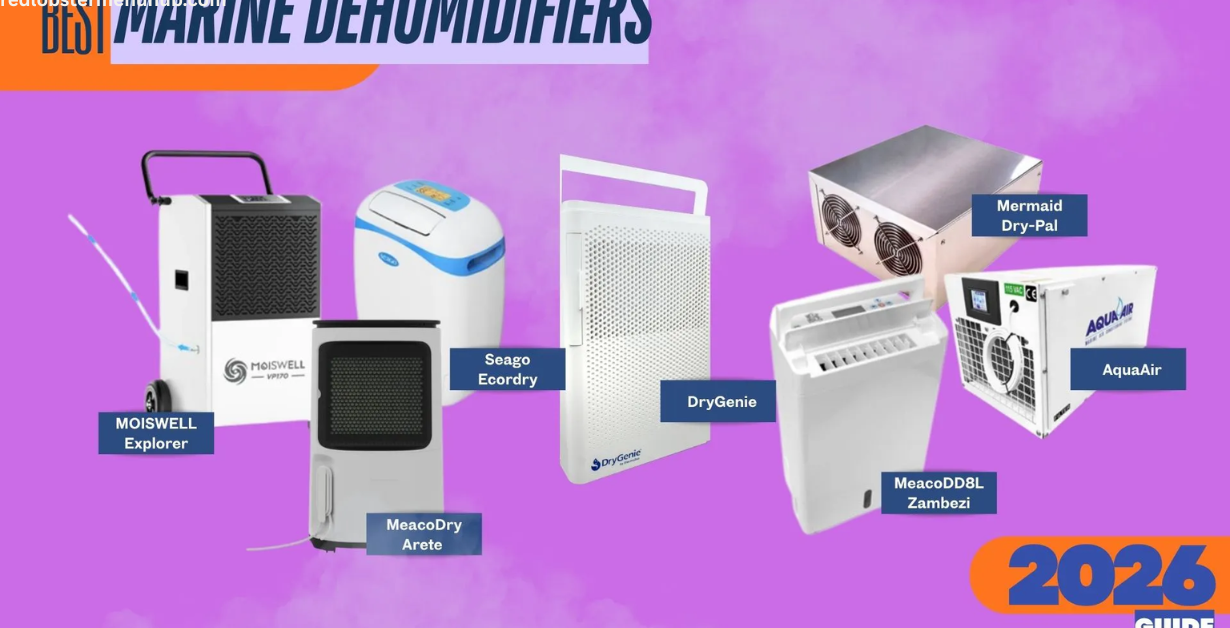
Why Does a Boat Need a Dehumidifier?
Boats are naturally exposed to moisture. Water can enter through:
● Wet clothing and towels
● Open hatches and ports
● Leaking seals
● Condensation
● Rain and spray
● Damp bilges
● Wet carpets and upholstery
● Poor ventilation
● Humid outside air
When moisture remains trapped inside a closed cabin, it can create a favorable environment for mold and mildew. Over time, high humidity may also contribute to:
● Musty smells
● Mildew on cushions and curtains
● Corrosion on electrical connections
● Rust on tools and hardware
● Swollen wood panels
● Peeling finishes
● Damaged books, charts, and clothing
● Condensation on windows and electronics
A dehumidifier helps remove water vapor from the air. It is most effective when used as part of a broader moisture-control plan.
What Is the Best Boat Dehumidifier?
The best boat dehumidifier is one that:
● Has enough capacity for the cabin
● Is suitable for the expected temperature
● Can operate safely for extended periods
● Includes automatic shutoff or drainage
● Uses reasonable power
● Fits securely aboard the boat
● Can withstand the marine environment
● Does not create an electrical or fire hazard
For many boats with reliable shore power, a compact marine-suitable compressor dehumidifier with a built-in humidistat and continuous drainage is a practical choice.
For boats without shore power, a rechargeable or low-power desiccant solution may be more convenient, although these options typically remove less moisture than powered compressor units.
Types of Boat Dehumidifiers
Keeping your boat’s electrical equipment ready is only one part of good preparation. Basic line-handling skills are also useful for docking, securing your boat, and managing lines safely. Learn the most useful techniques in our guide to 7 Essential Boating Knots Every Boat Owner Should Know.
Compressor dehumidifiers
Compressor dehumidifiers use a refrigerated coil to cool humid air. Water condenses on the coil and collects in a tank or drain line.
Advantages
● Good moisture removal in warm, humid conditions
● Effective for larger cabins
● Often available with automatic humidity controls
● Suitable for continuous operation when properly installed
● Can remove a significant amount of water from the air
Limitations
● May use more electricity than passive options
● Performance can decline in cold conditions
● Produces heat and fan noise
● Requires a secure location and drainage plan
● The collection tank must be emptied unless connected to a drain
Compressor units are often a strong choice for larger cabins, boats stored in humid climates, and vessels with shore-power access.
Desiccant dehumidifiers
Desiccant dehumidifiers use a moisture-absorbing material to remove water vapor from the air. Some are passive containers, while others use electricity to regenerate the desiccant.
Advantages
● Can work effectively at lower temperatures
● Often compact and lightweight
● Some models use relatively little power
● Useful for lockers, cabins, and enclosed compartments
● Passive products require no electrical connection
Limitations
● Passive products have limited capacity.
● Desiccant may need to be replaced or dried
● Powered models may use heat during operation.
● They may not be sufficient for a large, highly damp cabin.
Desiccant products are useful for small spaces and cold-weather storage. They can also supplement a powered dehumidifier by protecting lockers, cabinets, and enclosed compartments.
Thermoelectric dehumidifiers
Thermoelectric models use an electronic cooling system rather than a conventional compressor.
Advantages
● Compact
● Relatively quiet
● Lightweight
● May use less power than larger compressor units
● Suitable for small cabins, heads, and enclosed areas
Limitations
● Usually removes less moisture than compressor models
● May struggle in very humid environments
● Often have small collection tanks
● May not be suitable for large boats
A thermoelectric dehumidifier can work well in a small cabin or berth, but it may not be the best choice for a spacious interior with substantial moisture.
Passive moisture absorbers
Passive absorbers use crystals or salts that draw moisture from the air and collect it in a container.
Battery care is one part of routine boat maintenance, but mechanical equipment also needs proper attention. If your boat uses a winch, our guide Can You Over-Grease a Boat, Winch? Causes, Risks & Prevention explains how excessive grease can affect winch performance and contribute to premature wear.
Advantages
● No electricity required
● Low purchase cost
● Easy to place in lockers and compartments
● Useful when a boat has no shore power
● Silent during operation
Limitations
● Limited moisture-removal capacity
● Require replacement or emptying
● Can spill if knocked over
● May not control humidity throughout a large cabin
● Some products can become corrosive if spilled
Passive absorbers are best viewed as supplemental moisture control rather than a complete solution for a damp boat cabin.
How to Choose a Boat Dehumidifier
1. Consider the size of the cabin.
A small unit may be adequate for a compact cuddy cabin but ineffective in a larger cruiser. Check the manufacturer’s recommended room size, but remember that a boat cabin is not the same as a sealed room in a house.
Boats may have:
● Separate cabins
● Open companionways
● Curtains or doors
● Bilge spaces
● Lockers
● Poor air circulation
● Multiple levels
A dehumidifier’s published capacity is only a starting point. Airflow and placement are equally important.
2. Match the unit to the temperature
Compressor dehumidifiers generally work best in warmer conditions. If the boat is stored in a cold climate, a compressor may remove less moisture or enter a defrost cycle frequently.
A desiccant dehumidifier may perform better in colder storage conditions. Check the operating-temperature range before purchasing.
3. Check the water-removal capacity
Dehumidifier capacity is usually expressed as the amount of water the unit can remove over a specified period under stated test conditions.
Actual performance aboard a boat can vary because of:
● Cabin temperature
● Relative humidity
● Air leakage
● Ventilation
● Interior volume
● Moisture entering from outside
● Damp upholstery and bilges
Do not compare capacity figures without checking the test conditions. A unit that removes a certain amount of water in a warm room may remove less in a cold boat cabin.
4. Look for a built-in humidistat
A humidistat monitors relative humidity and allows the dehumidifier to switch on or off automatically.
This feature can:
● Reduce power consumption
● Prevent unnecessary operation
● Help maintain a target humidity level
● Reduce wear on the unit
● Make unattended use more practical
A humidistat is especially valuable when the boat is connected to shore power for extended periods.
5. Choose continuous drainage when possible
A collection tank can fill quickly in a damp boat. If the tank reaches capacity, many dehumidifiers shut off automatically.
A continuous drain hose can direct collected water to an appropriate drain or container. Before using this feature, confirm that:
● The hose is properly secured
● Water cannot flow back into the cabin
● The drain path remains open
● The container cannot overflow
● The hose is protected from kinks
● The unit remains level
Never route water toward electrical equipment, batteries, bilge wiring, or areas where standing water can cause damage.
6. Consider power consumption
Power use matters if the boat is connected to shore power, a generator, an inverter, or a limited battery bank.
A compressor dehumidifier may remove more moisture but consume more electricity. A passive absorber uses no electrical power but has much less capacity.
If the boat is not connected to shore power, calculate whether the dehumidifier can run from your battery system without excessively discharging the batteries.
7. Evaluate noise
A fan and compressor can produce noticeable noise. This may not matter during unattended storage, but it can be important if the boat is occupied while the dehumidifier runs.
For sleeping aboard, consider:
● Noise level
● Vibration
● Compressor cycling
● Fan speed
● Placement near sleeping areas
A quiet thermoelectric unit may be suitable for a small cabin, while a larger compressor unit may be better for heavy moisture removal.
8. Look for automatic shutoff
Automatic shutoff can protect against overflow if the collection tank becomes full. It is a valuable feature for unattended use.
Additional protections may include:
● Overheat protection
● Compressor overload protection
● Anti-tilt shutoff
● Auto-restart after power loss
● Timer settings
● Fault indicators
No automatic feature replaces regular inspection, especially aboard a boat.
9. Check the physical design
A boat dehumidifier should be compact enough to fit securely in the cabin. It should not block doors, hatches, vents, or walkways.
Look for:
● A low center of gravity
● Stable feet
● A compact footprint
● Easy-to-access controls
● A manageable water tank
● A suitable cable length
● A design that can be secured against movement
A loose appliance can shift during rough weather or while the boat is being transported.
What Humidity Level Should You Maintain on a Boat?
A commonly recommended target is to keep indoor relative humidity below approximately 60%, with lower levels often helping reduce mold and mildew risk.
The ideal target depends on:
● Climate
● Cabin temperature
● Materials aboard the boat
● Ventilation
● Storage duration
● Presence of sensitive equipment
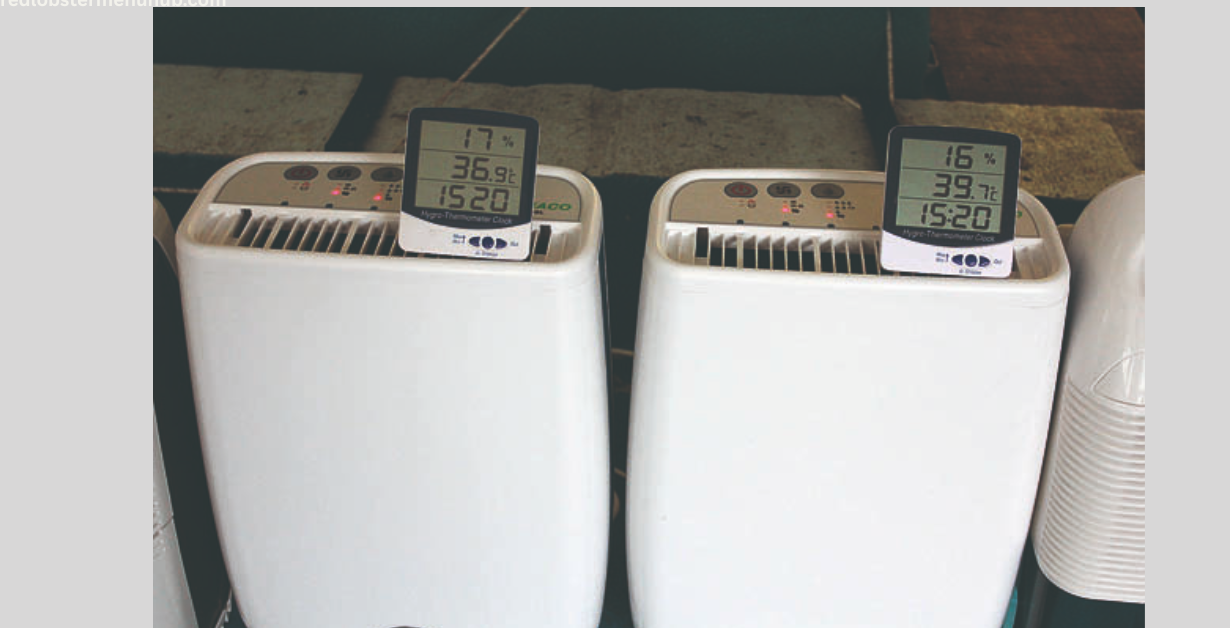
A humidity meter, or hygrometer, can help you determine whether the cabin is actually dry enough. Do not rely only on how the air feels. Humidity can remain high even when the cabin does not feel obviously damp.
Where Should You Place a Boat Dehumidifier?
Placement affects performance and safety.
Position the unit:
● On a stable, level surface
● Where air can circulate freely
● Away from curtains, bedding, and loose clothing
● Away from battery compartments and fuel sources
● Where the drain hose can run safely
● Near the dampest area if the cabin is divided
● Where the water tank can be accessed easily
Do not place the unit directly in a bilge or area where it may be splashed or submerged unless it is specifically designed for that environment.
If the boat has multiple cabins, a single dehumidifier may not circulate air effectively throughout the entire interior. Opening interior doors and lockers may improve airflow, but only when doing so is safe and appropriate for the boat.
Should You Leave a Dehumidifier Running Unattended?
Some dehumidifiers are designed for continuous operation, but unattended use aboard a boat requires caution.
Before leaving a unit running:
● Confirm it is approved for the intended environment.
● Inspect the power cord and plug.
● Use a properly protected electrical outlet.
● Ensure the unit is stable and level.
● Verify the drain system cannot overflow.
● Keep it away from water and fuel vapors.
● Clear the air intake and exhaust.
● Check that the boat has adequate ventilation.
● Follow the manufacturer’s instructions.
If the boat has unreliable shore power, a dehumidifier may stop and restart repeatedly or fail to operate as intended. A model with automatic restart may be useful, but it should not be treated as a guarantee of safe unattended operation.
Do Boat Dehumidifiers Need Ventilation?
A dehumidifier removes water from the air but does not eliminate the need for fresh-air exchange.
Limited ventilation can help reduce odors and prevent stagnant air. However, opening hatches or vents in a very humid environment may introduce more moisture than it removes.
The best approach depends on climate and storage conditions. Consider:
● Air circulation inside the cabin
● Rain protection
● Security
● Humidity outdoors
● Condensation risk
● Manufacturer recommendations
● Whether the boat is covered
Use properly designed marine ventilation rather than leaving large openings exposed to rain or spray.
Can a Dehumidifier Prevent Mold on a Boat?
A dehumidifier can reduce the humidity that supports mold growth, but it cannot remove existing mold or solve every moisture problem.
For better mold prevention:
1. Dry wet surfaces and upholstery.
2. Remove damp clothing and towels.
3. Clean mold promptly using appropriate products.
4. Repair leaks around hatches and ports.
5. Keep bilges clean and dry.
6. Improve air circulation.
7. Avoid storing wet gear inside.
8. Use a hygrometer to monitor humidity.
9. Inspect cushions, lockers, and hidden spaces.
10. Maintain a suitable moisture-control routine.
If mold is extensive, follow appropriate cleaning and health precautions or use a qualified remediation professional.
Dehumidifier vs. Moisture Absorber
Both options can help control moisture, but they serve different purposes.
| Feature | Electric dehumidifier | Passive moisture absorber |
| Power required | Usually yes | No |
| Moisture capacity | Moderate to high | Low to moderate |
| Best for | Cabins and larger interiors | Lockers and small spaces |
| Ongoing cost | Electricity and maintenance | Replacement containers or crystals |
| Noise | Fan or compressor noise | Silent |
| Unattended use | Requires safety precautions | Simple but limited |
| Cold-weather performance | Depends on type | Generally consistent |
| Drainage | Tank or hose | Collection container |
A powered dehumidifier is generally more effective for a damp cabin. Passive absorbers are useful in cupboards, storage compartments, and boats without electrical access.
Dehumidifier vs. Heater
Some boat owners use a low-level heater to reduce condensation. Heat can raise the air temperature and help dry certain surfaces, but it does not remove water from the boat.
A heater may:
● Increase the air’s capacity to hold moisture.
● Reduce condensation on cold surfaces
● Consume substantial power
● Create a fire risk if used improperly
● Leave humidity high if moisture is not removed
A dehumidifier removes water from the air, while a heater mainly changes temperature. In some situations, both may be used, but they must be selected and operated safely.
Never use an unapproved heater aboard a boat, especially near fuel, upholstery, curtains, or other combustible materials.
Common Boat Dehumidifier Mistakes
Choosing a unit that is too small
A small dehumidifier may run continuously without reducing humidity in a large or leaky cabin.
Ignoring the collection tank
If the tank fills, the unit may shut off. Check the tank regularly or use a properly installed continuous drain.
Blocking airflow
Placing the dehumidifier against a wall, cushion, curtain, or locker can reduce performance and increase overheating risk.
Using a household unit in an unsuitable location
A standard household dehumidifier may not be appropriate for a damp, salty, vibrating marine environment. Check the manufacturer’s instructions before using one aboard.
Relying only on passive absorbers
Moisture containers can help in small spaces but may not control humidity throughout a cabin.
Running the unit near fuel vapors
Electrical appliances should be kept away from fuel tanks, vents, engine compartments, and areas where flammable vapors may accumulate.
Failing to fix leaks
A dehumidifier cannot compensate for a leaking hatch, damaged seal, or persistent water intrusion.
Leaving wet items aboard
Wet towels, carpets, clothing, and cushions can release significant moisture. Dry or remove them before storing the boat.
How to Maintain a Boat Dehumidifier
Regular maintenance helps keep the unit effective.
1. Clean the air filter according to the manufacturer’s instructions.
2. Empty and clean the collection tank.
3. Inspect the drain hose for blockages and kinks.
4. Check the power cable and plug for damage.
5. Keep the intake and exhaust clear.
6. Clean dust and salt residue from the housing.
7. Confirm that the unit remains level.
8. Inspect for unusual noise, heat, or odors.
9. Store the unit dry when not in use.
10. Replace worn hoses, filters, or containers as needed.
Do not operate a unit that has been submerged, exposed to heavy spray, or damaged by corrosion until you inspect it.
Best Boat Dehumidifier by Use Case
Best for a small boat
A compact thermoelectric dehumidifier or passive moisture absorber may be adequate for a small cabin, especially when moisture levels are moderate.
Best for a larger cabin
A compressor dehumidifier with a humidistat and continuous drainage is often more suitable for removing substantial moisture from a larger interior.
Best for cold-weather storage
A desiccant dehumidifier may perform better than a compressor model in low temperatures. Check the operating range before selecting a unit.
Best for boats without shore power
Passive absorbers, rechargeable units, or low-power desiccant models may be practical. A solar charging system may support some low-power options, depending on the boat’s electrical setup and available sunlight.
Best for lockers and enclosed compartments
Small passive absorbers or compact desiccant units can help protect areas where air circulation is limited.
Frequently Asked Questions
What is the best type of dehumidifier for a boat?
For many boats with shore power, a compact compressor dehumidifier with automatic humidity control and continuous drainage is a practical choice. Smaller boats or cold storage environments may benefit from thermoelectric or desiccant models.
Can I use a regular home dehumidifier on my boat?
Possibly, but check the manufacturer’s instructions and the operating environment. A household unit may not be designed for salt air, vibration, limited ventilation, or unattended marine use.
Do dehumidifiers work in cold boat cabins?
Compressor models may be less effective in cold conditions. Desiccant units are often better suited to lower temperatures, but confirm the model’s operating range.
Is a moisture absorber enough for a boat?
A passive absorber may help in a locker or small cabin, but it usually cannot control humidity throughout a large or persistently damp boat interior.
Where should I put a dehumidifier on my boat?
Place it on a stable, level surface with adequate airflow and a safe path for collected water. Keep it away from fuel vapors, batteries, bilges, curtains, and areas exposed to splashing water.
How long should I run a boat dehumidifier?
Run time depends on humidity, temperature, cabin size, and moisture sources. Use a hygrometer to monitor conditions rather than relying on a fixed schedule.
Final Thoughts
The best boat dehumidifier is the one that matches your boat’s size, storage conditions, temperature, available power, and moisture level.
For larger boats with shore power, a marine-suitable compressor unit with a humidistat and continuous drainage may provide the strongest moisture control. For small cabins, lockers, cold storage, or boats without shore power, thermoelectric, desiccant, or passive solutions may be more practical.
Whichever option you choose, use it alongside proper ventilation, leak prevention, dry storage practices, and regular inspections. A dehumidifier can reduce moisture and protect your boat, but it works best when the underlying sources of water are controlled as well.
📅 Last updated: